Free shipping · 0% for 6 months · White-glove available


Victorian Living Room Furniture

Reviewed by the Mobilia Cleopatra design team
Quick answer: Victorian living room furniture is the carved, richly upholstered seating and wood furniture of the 19th-century parlor: a tufted or camelback settee or sofa, a pair of parlor chairs (traditionally a larger armchair and a smaller armless side chair), often a loveseat, a carved coffee table with side tables, and a display cabinet or étagère. Look for dark wood tones such as mahogany, walnut, or rosewood, velvet or damask upholstery, button tufting, and a visible crest rail. Start with one sofa sized to your wall, then add chairs and tables once the scale works in the room.
A Victorian living room is a sofa decision before it is a matching-set decision. A tufted crest and a dark carved frame can lead the whole room, but they fail if the sofa blocks the walkway or if every table and cabinet repeats the same carving.
This guide is written for American homes that want the look at a livable scale, whether that is a formal front parlor or an open-plan family room. It covers the key pieces, how parlor sets were traditionally arranged, which materials and upholstery to look for, how to lay out and color the room, how to style Victorian pieces in a modern home, and what to check before you buy. Mobilia Cleopatra sells new Victorian-style furniture rather than antiques, so the buying advice focuses on new pieces, but the scale and layout checks apply to any set, including ours.
Key Pieces of Victorian Living Room Furniture
The Victorian parlor was the room where a household received guests, so its furniture was designed to be seen as much as used. If you want a quick refresher on the period itself, our overview of what defines Victorian furniture explains the hallmarks in more depth.
Sofa or settee
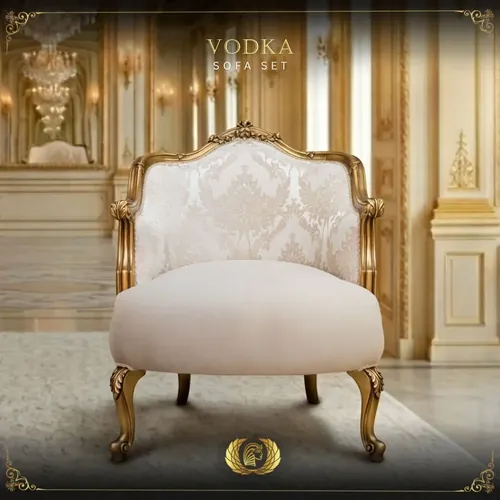
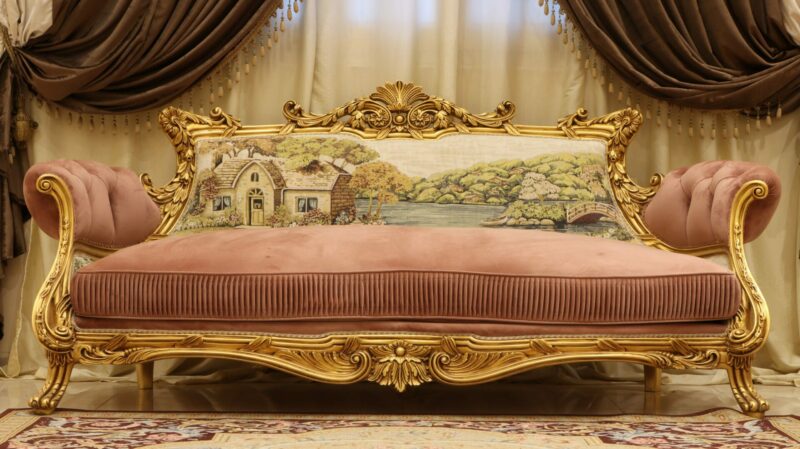
The settee is the anchor. Victorian examples tend to have a carved crest rail, a shaped back (camelback, medallion, or arched), button tufting, rolled or scrolled arms, and short carved or turned legs, sometimes on casters. A modern Victorian-style sofa keeps those lines but is usually deeper and more cushioned than an original parlor settee, which sat upright and fairly shallow.
Loveseat
A loveseat repeats the sofa’s frame at a smaller size. It is useful in a long room or opposite the sofa, but it is optional. In a small living room, one sofa plus two chairs often reads better than a sofa and loveseat crowding the coffee table. You can compare options in our range of Victorian sofas and loveseats.
Armchairs and parlor chairs
Victorian rooms used chairs generously: upholstered armchairs, smaller side chairs, slipper chairs, and occasionally a tufted chaise. Two chairs angled toward the sofa create the conversation group the period was known for. Carved arms and a matching crest tie them to the sofa even when the fabric differs.
Coffee, side, and center tables
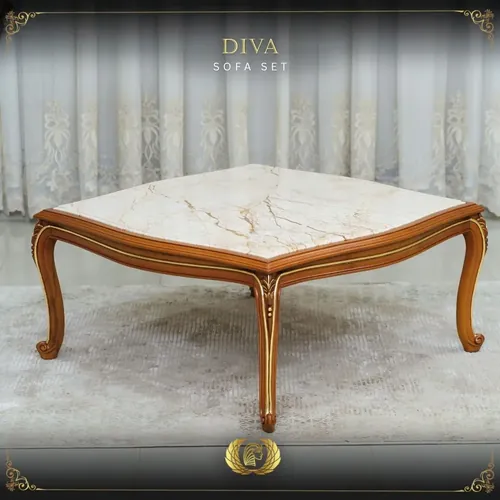
The true Victorian parlor often had a round or oval center table, frequently with a marble top. In a modern layout that role moves to the coffee table, supported by one or two side tables for lamps. Carved aprons, cabriole or turned legs, and stone or wood tops are typical.
Cabinets, étagères, and display pieces
Victorians collected, and they displayed their collections in glass-front cabinets, curio cabinets, étagères, and tall secretaries. One display piece is usually enough in a modern room; it gives the eye a vertical anchor and a place for a few meaningful objects rather than a crowded shelf.
The Victorian Parlor Set: Settee, Gentleman’s Chair, and Lady’s Chair
Many antique Victorian living room sets were sold as matched parlor suites. A common three-piece arrangement was a settee, a gentleman’s armchair, and a lady’s side chair. The two chairs looked related but were not identical: the gentleman’s chair was larger and had arms, while the lady’s chair was smaller, lower, and often armless. A walnut Eastlake-style parlor set in the Iowa State University museum collection shows exactly this pattern, and its museum label explains that the lower, armless lady’s chair made room for the layered skirts women wore at the time. Larger suites added side chairs, a second settee, or a matching table.
Styles shifted across the long Victorian era. Earlier pieces leaned toward Rococo Revival curves, balloon backs, and naturalistic carving, while later Eastlake designs favored straighter lines, geometric forms, and incised decoration. Our guide to early, mid, and late Victorian design walks through those sub-styles so you can choose a consistent look.
What this means for a modern buyer is simple: a Victorian living room set does not need every piece to be the same size or even the same fabric. The historic suites already mixed scales. A new set that pairs a sofa with chairs of slightly different form is true to the tradition, and it often fits a real room better than a row of identical seats.
It also helps to know what the style is not. Victorian furniture is about upholstered comfort, tufting, nailhead, and a crest rail you can see from the doorway. Baroque is heavier, more architectural, and less centered on the seat. If you are weighing the two, read our comparison of Victorian and Baroque furniture before you commit to a direction.
Materials, Wood Tones, and Upholstery
Materials are what separate a convincing Victorian living room from a costume version of one. The period favored dark, richly figured woods, and those tones still define the look.
Wood and finish
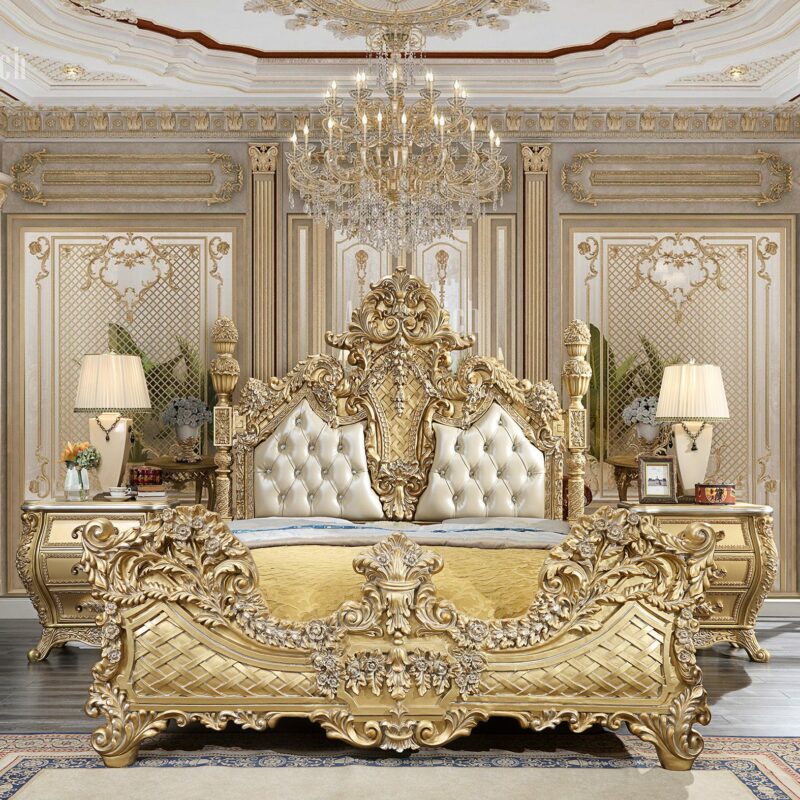
Mahogany, walnut, and rosewood are the classic Victorian woods, with oak more common in later, plainer pieces. On a new piece, ask whether the frame is solid hardwood and which species or finish it has. Fine veneers, marquetry, and inlay add depth on tables and cabinets. Gilded accents over carved wood are a finish; a gold coating over molded resin is a different object, so ask what is under the color. Brass, bronze, and antique-gold hardware sit naturally beside dark wood.
Stone tops
Marble on a coffee table, side table, or console connects the room to the classical European details Victorians loved, and it is practical for drinks and lamps.
Upholstery fabrics
Velvet is the signature Victorian fabric, with damask, brocade, chenille, and tapestry weaves close behind; historic parlor sets were also covered in horsehair for its durability. Cotton velvet crushes easily, which is the nature of the cloth rather than a defect. Performance velvet hides more everyday wear and suits a family room. Leather appears on some traditional sets as well.
Tufting, nailhead, and trim
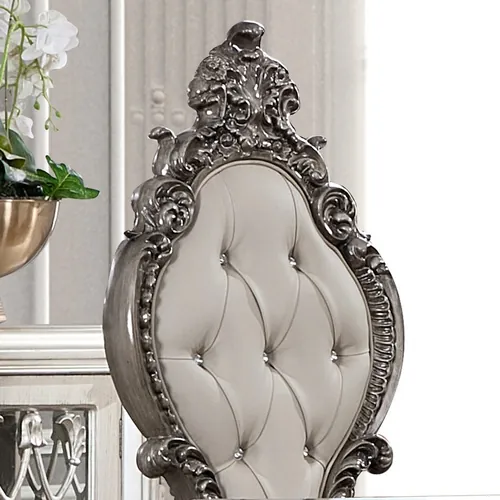
Buttons should be tied through the cushion, not glued to the surface. Nailhead should run in a clean, even line. One or two trim details per piece is plenty in a modern room.
Sofa Scale, Layout, and Construction Checks
Write down the wall length, the doorways, and the door swing before you look at a single set. Victorian frames are substantial, with tall backs and wide carved arms, so the overall footprint is often larger than the seat suggests.
- Seat depth and height: Ask for seat depth, seat height, and overall height in inches. A shallow, upright seat is a formal parlor seat; a deeper seat is for lounging. Neither is wrong, but they suit different rooms.
- Frame: The frame should be a named hardwood with corner blocks that are glued and screwed.
- Springs and cushions: Ask what spring system is used. Eight-way hand-tied springs are the traditional choice for a deep formal seat; sinuous springs are fine when the foam is documented. Replaceable cushions extend the life of the piece.
- Coffee table clearance: Many designers leave roughly 16 to 18 inches between the sofa and coffee table, with the table close to seat height.
- Walkways: Keep a clear path from the door to the seating. A carved set that blocks the entry is still the wrong set.
For the layout itself, place the sofa facing the room’s focal point, often a fireplace, a large window, or a display cabinet. Angle two chairs toward it to close the conversation group, and anchor all of it on a rug large enough for at least the front legs of every piece. In a long room, a loveseat opposite the sofa creates a formal symmetrical arrangement; in a square room, the sofa-and-two-chairs layout usually feels more open. If your wall length does not suit any standard size, a custom furniture order lets you adjust dimensions instead of forcing a stock piece.
Victorian Living Room Colors and Textiles
Victorian palettes were deep and saturated: emerald and forest green, sapphire and navy, burgundy, plum, and gold. Those jewel tones still define the look, but a modern room usually uses them selectively, on the sofa, a pair of chairs, the drapery, or one accent wall, rather than on every surface.
The most livable approach is to build a warm neutral foundation first, such as ivory, greige, taupe, mushroom, or charcoal walls, and let the furniture carry the richer color. A green velvet sofa with walnut wood, brass lamps, and charcoal walls feels layered without being heavy. Layering related tones works better than one dramatic color: deep green upholstery, olive pillows, and a rug with green and gold in its pattern hold together naturally.
Unexpected accents can update the scheme. Muted blush, smoky blue, or olive alongside traditional burgundy or navy make the room feel current rather than theatrical. Patterned wallpaper, a Persian-style rug, or a damask drapery can supply the pattern Victorians loved; just let one of them lead and keep the others quieter.
Textiles finish the room. A large area rug anchors the seating group, heavy drapery adds softness and color, and pillows let you introduce damask, brocade, or silk without committing a whole sofa to it. Linen drapery or pillows beside velvet seating relax a formal room and keep it from feeling like a period set.
How to Style a Victorian Living Room in a Modern Home
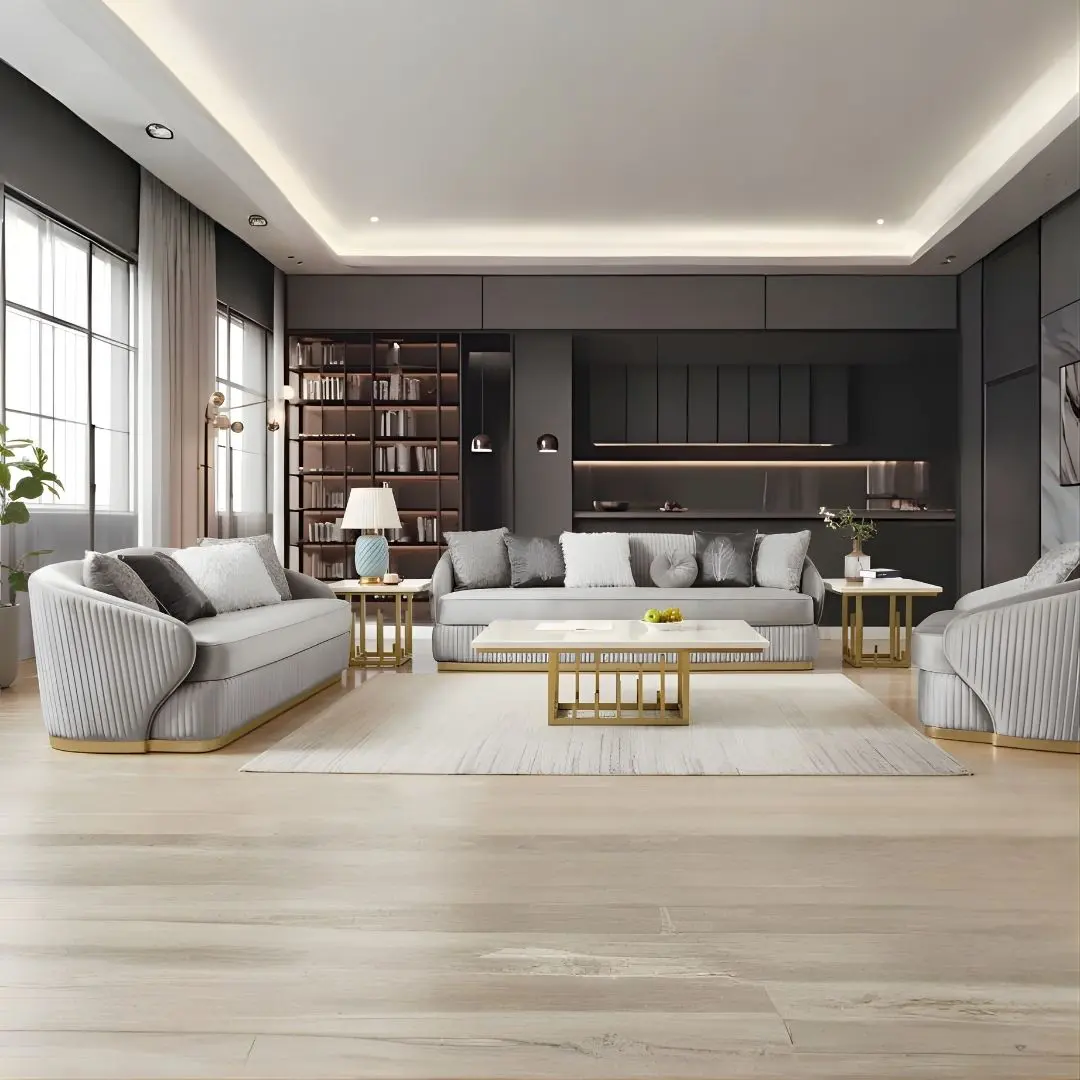
A modern Victorian living room is not a museum parlor. It borrows Victorian craftsmanship, ornament, and rich materials and pairs them with cleaner layouts, calmer walls, modern lighting, and everyday comfort. Most new homes lack original Victorian architecture, so the character comes from a few focal points rather than every detail.
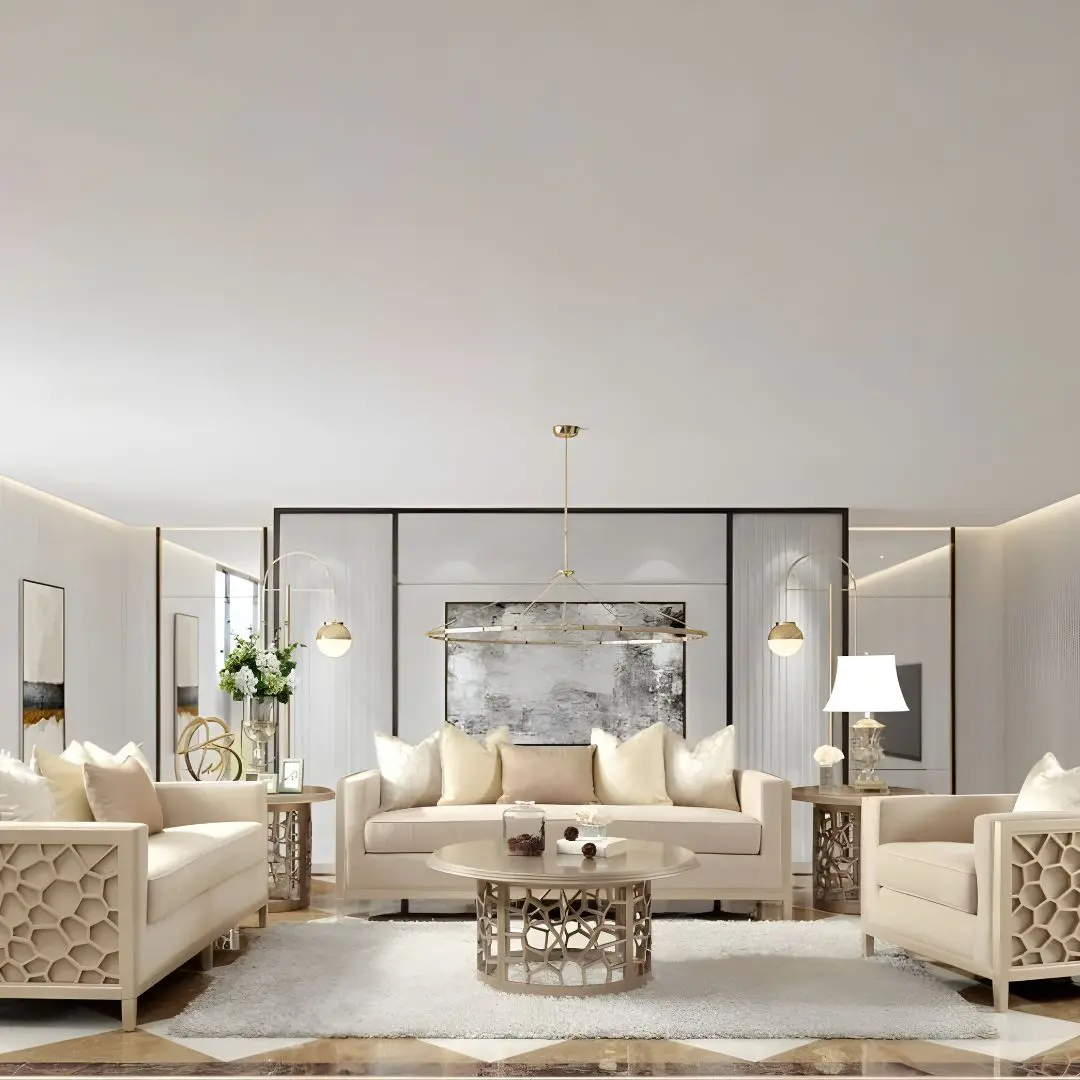
Modern home decorated with Victorian living room
Use a restrained framework with a few statement pieces
A useful rule of thumb is roughly 80/20: most of the room follows a calm, contemporary framework, and a smaller share consists of distinctive Victorian pieces. Choose one major focal point, such as a tufted sofa, a carved cabinet, or a marble-topped coffee table, and let the other pieces support it. Pairing a tufted sofa with a simpler coffee table, or a carved sideboard with contemporary art, creates a contrast that feels deliberate rather than nostalgic.
Add architectural detail where the house allows it
Crown molding, a ceiling medallion above a chandelier, painted wainscoting in warm white or charcoal, and trim around doors and windows give Victorian furniture a fitting backdrop. A fireplace with a marble surround or carved wood mantel is the natural anchor; if the home has none, a mantel or a large carved or gilded mirror over a console can play the same role.
Layer the lighting
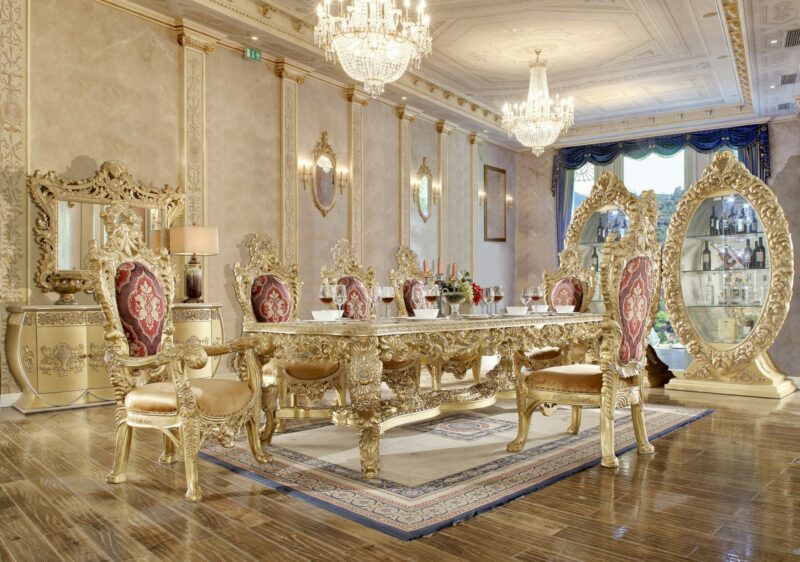
A crystal, brass, or bronze chandelier with classic proportions but a simpler silhouette adds elegance without excess. Add brass table lamps, wall sconces, and picture lights for warmth, and do not be afraid of a minimalist floor lamp beside a tufted sofa. Combining ambient, task, and accent light keeps the room bright by day and intimate at night.
Edit the accessories
Victorian rooms were famously full, but a modern version benefits from editing. A few brass candlesticks, a marble box, an antique-style clock, and a curated gallery wall mixing engravings with contemporary photography say more than a crowded mantel. Leave open space on bookshelves and consoles so each object reads.
Make it work in an open floor plan
Use the sofa, a rug, and a console table behind the sofa to define the living zone without walls. Keep large ornate pieces to one or two focal areas and repeat materials such as walnut, brass, or marble in the adjacent dining or kitchen area so the whole floor feels connected.
Mistakes to avoid
The most common problems are overdecorating, buying every piece from one carved set, ignoring scale in a smaller room, and choosing beauty over comfort. Prioritize a comfortable seat, practical lighting, and durable fabric, and let a few exceptional pieces carry the style.
Buying New Victorian-Style Living Room Furniture
The first decision is whether you want an antique or a new Victorian-style piece. A genuine antique Victorian living room set carries history and patina, but it can need reupholstery, may have fragile joints, and was built for smaller rooms and more upright sitting. A new Victorian-style set gives you the silhouette, carving, and tufting with modern cushioning, sizes suited to today’s rooms, and fabrics chosen for daily use. Mobilia Cleopatra sells new Victorian-style furniture, not antiques; if you own a valuable antique that needs work, consult a professional conservator.
Our Victorian living room sets range from three-piece sets to larger five-piece groups. They include traditional designs from vendor brands such as Homey Design, as well as pieces from Kleopatra Kingdom, our own collection, which is handmade with hand-carved frames, gold finishes, and premium upholstery, and can be custom-made to your size, wood finish, and upholstery. Individual pieces let you build the room gradually: start with the sofa, then add Victorian accent chairs or a carved Victorian coffee table once the scale is right.
Before you order, confirm a few things with the product listing or our team:
- Overall width, depth, and height of every piece, plus seat depth and height.
- What the set includes; piece counts do not always say which pieces are in the box.
- Frame material and finish, and whether gilded details are on wood or another material.
- Upholstery type and whether cushions are removable or replaceable.
- Delivery path: doorway, hallway, and stair widths for large carved frames.
When the furniture arrives, care is straightforward: dust carved wood with a soft cloth, keep pieces out of strong direct sun, and test any cleaner in a hidden spot first. Our guide on maintaining Victorian furniture covers wood, gilding, and upholstery in more detail. When you are ready to compare the full range across rooms, start with our Victorian-style furniture collection, or call (909) 999-1442 with your measurements.
Frequently Asked Questions
What is Victorian living room furniture?
It is the furniture of the 19th-century parlor: a carved, tufted sofa or settee, upholstered armchairs and side chairs, a loveseat, a carved coffee or center table, side tables, and display cabinets. Dark woods such as mahogany and walnut, velvet or damask upholstery, button tufting, and crest rails are the defining features.
Should I buy an antique Victorian living room set or a new one?
An antique set offers history and patina but may need reupholstery or repairs and was built for smaller rooms and upright sitting. A new Victorian-style set gives you the look with modern cushioning, practical fabrics, and sizes that fit today’s homes. For a valuable antique that needs restoration, consult a professional conservator.
What pieces were in a Victorian parlor set?
A typical three-piece parlor suite was a settee, a gentleman’s armchair, and a smaller, often armless lady’s chair. Larger suites added side chairs, a second settee, or a matching table.
Do I need a matching loveseat?
No. One sofa is enough if the wall is short. A loveseat is useful only if it clears the door and does not crowd the coffee table; otherwise, two chairs give a more open layout.
Can Victorian furniture work in a modern home?
Yes. Use one or two statement Victorian pieces, such as a tufted sofa or carved cabinet, against neutral walls with modern lighting and fewer accessories. The contrast makes the room feel intentional rather than themed.
What colors work best in a Victorian living room?
Jewel tones such as emerald, navy, burgundy, and plum are classic. Balance them with warm neutrals like ivory, greige, taupe, or charcoal so the richer colors appear on the upholstery and drapery rather than every surface.
Is a full matching set a better buy?
Only if every piece fits your room. A set can simplify coordination, but it is not worth a sofa that is too deep for the wall or chairs that block a walkway. Buying the sofa first and adding pieces later is often the safer path.
How do I care for velvet upholstery?
Vacuum with a soft brush attachment, blot spills rather than rubbing, and test any cleaner in a hidden spot first. Avoid steaming delicate blends, and expect some crushing on cotton velvet; it is a property of the cloth, not a defect.
Final Thoughts
The best Victorian living room furniture plan starts small and scales up. Choose a sofa that fits the wall and the walkway, give it a pair of chairs and a carved table, and let one display piece or fireplace anchor the room. Keep the wood tones consistent, use jewel-toned velvet or damask where it matters most, and edit the accessories so the craftsmanship stands out.
The historic parlor suites already mixed scales and forms, so you do not need every piece to match. What matters is proportion, honest materials, and comfortable seating. Measure first, order the sofa, and build the rest of the room once you see it in place.