Free shipping · 0% for 6 months · White-glove available


Custom Furniture Near Me: Upland and Inland Empire Guide

Reviewed by the Mobilia Cleopatra design team
Quick answer: When you search for custom furniture near you, you are looking for a maker or store that will change the size, wood, finish, and upholstery of a piece, show you drawings before anything is built, and give you a written quote you approve first. In the Inland Empire, you can see finishes and carved frames in person at our Upland showroom at 280 N Benson Ave, Suite 6, Upland, CA 91786, then start a request through our design-your-own furniture page.
A search for custom furniture near you is really a search for a workshop or design team that will name the wood, the size, and the lead time. A showroom that only resells stock is not that. A store that will change a table length, a sofa depth, or a headboard height is.
Mobilia Cleopatra is a luxury furniture store in Upland, California, in San Bernardino County, close to Ontario, Rancho Cucamonga, Claremont, and Pomona. This guide is written for homes in Southern California, but the questions in it work with any local maker. Use it to tell a real custom order from a stock piece with a new pillow, to prepare your measurements and photos, and to understand what actually moves the price of a made-to-order piece.
What Custom Furniture Near Me Should Really Mean
Made-to-order means the piece is designed, built, or finished after you approve its size and materials. It does not mean a warehouse sofa offered in a fabric the store already stocks. The fastest way to test a claim is to ask which parts can change. A genuine custom order can change outside dimensions, wood species, finish color, upholstery, hardware, and sometimes the shape itself. A weak one only changes the throw pillows.
There are a few common kinds of custom work, and it helps to know which one you need before you start calling around:
- Fully made-to-order: a new piece designed around your room, your measurements, and your material choices.
- Customizing an existing design: a known frame or table, changed in size, finish, or fabric.
- Built from a reference photo: a piece inspired by an image you bring, adapted to your space.
- A complete room: several coordinated pieces, such as a sofa set with matching tables, or a dining table, chairs, and buffet.
Lead time is part of the definition. If a piece can leave the store in a few days, it was already built. That can still be a good buy, and sometimes it is the right one. It just is not custom. When you compare a custom quote with a floor model, compare the full picture: dimensions, materials, construction, and the time it takes to build, not only the price.
If you are still deciding whether the custom route is right for your home, our comparison of custom-made and ready-made furniture for luxury interiors walks through the trade-offs in more depth.
Why a Local Showroom Visit Still Matters
Searching for a store near you makes sense because custom furniture is a tactile purchase. Photos flatten gold leaf, carved detail, and velvet pile. A finish that looks warm brown on a phone screen can read as cool gray in your living room, and a fabric that looks smooth online can have a visible texture in daylight. Seeing finishes, carving, and upholstery in person removes much of that guesswork.
A showroom visit matters most for the pieces you will live with for years: a sofa set, a bed, a dining table, or a carved accent chair. When you visit, sit on several seat depths and firmness levels, look at how a carved frame catches light, and compare wood tones side by side. Those impressions are hard to get from a screen.
For homeowners in the Inland Empire, our Upland showroom at 280 N Benson Ave, Suite 6, Upland, CA 91786 is the place to check scale, finish, and fabric before you approve a design. It sits in the foothill corridor near Ontario, Rancho Cucamonga, Claremont, and Pomona. If you are further away in Southern California, our guide to French-style furniture for Los Angeles homes covers the style questions that matter for carved, ornate pieces. Wherever you are, the same rule applies: approve from real samples and measured drawings, never from a photo alone.
Questions to Ask Any Local Custom Furniture Maker
A good maker or store will welcome detailed questions. Vague answers are a warning sign, whatever the price. Bring this list to any first conversation.
Materials and construction
Ask for the wood species, not just the word hardwood. Oak, maple, walnut, and mahogany are answers. Ask how corners and joints are built, what the seat suspension is on upholstered pieces, and what the cushion fill is. Ask for the fabric name and fiber content, and whether it is rated for upholstery. On ornate pieces, ask which details are carved from the frame and which are applied ornament. Our guide on how to identify high-quality furniture explains what each of these answers tells you.
Drawings and approval
Ask whether you will see a drawing with exact dimensions before anything is built, and whether you can review and revise it. For complex pieces, ask whether a 3D rendering or a physical mock-up is possible. Ask what exactly you are approving: overall size, seat height, arm height, leg style, finish, and fabric should all be on paper before work begins.
Samples
Ask for physical finish samples and fabric swatches. Screens distort color, and finish tones change under different light. Look at samples in your own room, in the morning and in the evening, next to your floor and wall color.
Timeline
Treat the timeline as a question, not an assumption. Ask what the current lead time is for your specific piece, what could extend it (a special finish, unusual hardware, a large set), and when the clock starts: at the first conversation, at drawing approval, or at the confirmed order. Ask how you will be kept informed while the piece is being made.
Quote and paperwork
Ask what the written quote will include. A complete quote lists dimensions, wood species, finish, fabric, construction details, and lead time. Ask the maker directly about any terms, charges, or arrangements that matter to you, and get the answers in writing before you approve. Blank lines on a quote are not a detail; they are a missing order.
What You Can Customize at Mobilia Cleopatra
Mobilia Cleopatra carries a broad catalog of name-brand furniture alongside its own Kleopatra Kingdom collection, and it also takes explicit custom orders. On our design your own furniture page, the options you can work through with our design team include:
- Wood selection: premium solid woods such as oak, maple, walnut, and mahogany.
- Finish and color: custom stains, lacquers, or paints in the palette that suits your room.
- Fabrics and upholstery: textiles and leathers, from natural linens to rich velvets, for chairs, sofas, and headboards.
- Furniture style: modern, traditional, transitional, or a blend of styles.
- Table options: the dimensions, shape, and extensions of a custom dining table.
- Modular seating: a sectional configured module by module, down to cushions and legs.
- Hardware and details: brass handles, carved wood accents, metal inlays, or custom motifs.
- Casegoods and storage: matching solid wood nightstands, dressers, or bookshelves, sized and styled to your needs.
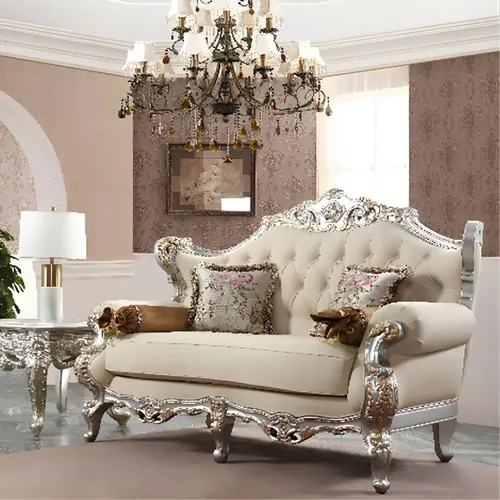
If you love ornate, old-world design, the Kleopatra Kingdom handmade collection is a natural starting point. It is Mobilia Cleopatra’s own line, spanning French, Victorian, classic, and Palace-style designs with Rococo and provincial detailing. Nearly every piece is built from solid wood, with carved frames, gilded accents, and finishes ranging from warm gold and bronze to champagne, ivory, and classic brown. Every item in that collection can be custom-made to your size, wood finish, and upholstery, so a set you like in the showroom can become the starting point for a piece sized to your room.
For seating in particular, our guide to custom sofa sets explains frame, depth, and fabric decisions before you approve a design.
How the Custom Order Process Works
Every maker runs its process a little differently, but a well-organized custom order follows a clear sequence. At Mobilia Cleopatra, the steps described on our design page look like this:
- Share your vision. Describe the project, choose the type of request (made-to-order, a change to an existing design, a piece based on a reference photo, or a full room), and upload inspiration photos or sketches if you have them.
- Design consultation. A design consultant learns your style, your room, and your preferences. Bring your measurements and ideas to this conversation.
- Concept development. Initial sketches or digital previews turn the idea into a design you can react to.
- Materials. You choose woods, fabrics, and finishes, ideally with physical samples in hand.
- Drawings and proposal. Our designers prepare detailed drawings with exact measurements, and a proposal can include 3D renderings, dimensions, material samples, and color options. For some commissions, a scale model or full-size mock-up can be built so you can judge proportions.
- Your review. You refine the design until the dimensions and style match what you want.
- Quotation and approval. A request is not a purchase. Your order is confirmed only after you approve the quotation and arrangements.
- Making the piece. Only after approval does the made-to-measure design move into production.
Every important decision is made on paper, with samples, before wood is cut. That protects you from a sofa too deep for the room or a finish that looked different on screen.
How to Prepare Measurements and Photos
Good preparation makes the first conversation far more productive, whether you visit a showroom or send a request online. Accurate numbers and clear photos let a designer give you useful advice instead of general ideas.
Measure the room
Sketch the room roughly on paper and mark doors, windows, vents, outlets, and built-ins. Measure the length and width of the wall or floor area where the piece will go, and note the ceiling height for tall pieces like canopy beds, armoires, or curio cabinets. Walls are not always square, so measure in more than one spot. Note the clearances you want to keep: walkways, the swing of a door, and the space needed to pull out dining chairs or open drawers.
Measure the path in
A beautiful custom piece that cannot get through the door is a failed order. Measure the width and height of every entry door, hallway, and stair turn the piece will pass through, and note railings, light fixtures, and tight corners. Share these numbers early, because they can shape the design itself, for example by suggesting a sectional in modules or a table with a removable base.
Take useful photos
Photograph the room in daylight from several angles, including the wall where the piece will stand and the adjoining furniture. Include your floor, wall color, and any existing pieces you want to match. Add inspiration images or sketches of what you have in mind. Our request form accepts up to five JPG, PNG, or WebP images; send reference photos or sketches only.
Tape the footprint
Before you approve a drawing, mark the planned footprint on the floor with painter’s tape. Living with the outline for a day or two shows you whether a sofa blocks a walkway or a table crowds the chairs in a way a drawing cannot.
What Drives the Cost of Custom Furniture
Custom pricing is quoted per project, so the honest answer to “how much does it cost” is “it depends on what you choose.” Knowing what moves the number helps you spend where it matters most.
- Type and size of the piece: a dining set for a large room or a multi-piece sofa set uses more material and labor than a single accent chair.
- Wood species: premium hardwoods such as walnut or mahogany usually cost more than other options.
- Complexity and detail: hand-carved accents, inlays, and custom motifs add hours of skilled work.
- Finish: layered finishes, gilding, or a custom-matched color take more time than a standard stain.
- Upholstery: fabric or leather grade, fiber content, and pattern all matter. Large patterns that must be matched across cushions and panels use more material than solids.
- Hardware: brass handles or special fittings add to the cost.
- Number of pieces: a coordinated room is a larger project than a single piece, even if each item is simpler.
- Design changes: revisions after approval can affect both price and timeline, which is why careful review before approval saves money.
Ask for a written quotation that lists each of these choices, and ask what happens to the price if you change one of them, such as switching wood species or simplifying carving. Treat a custom piece as a long-term purchase: our article on why to invest in custom furniture looks at value over the life of a piece rather than only the first price.
When Custom Beats Stock (and When It Does Not)
Stock furniture is the better buy when the size is right, the materials are clear, and you have already sat in it. Custom is the better buy when the wall, the table length, or the fabric is specific to your home. Paying a custom premium for a color that already exists in stock is how these orders go wrong.
Living rooms usually fail on sofa length and seat depth. A sofa that is too long for the wall, or a deep lounge seat in a formal room, will never feel right. Order custom seating when stock leaves an awkward gap or blocks a walkway.
Dining rooms fail on table length and chair clearance. Many designers plan roughly 36 inches behind each chair so it can be pulled out comfortably. A table that is too long for the room is not fixed by a different finish, which is why table size and shape are among the most useful custom options. If a standard size might work, compare a few dining tables first.
Bedroom orders usually turn on headboard height, bed size, and nightstand scale rather than a unique shape. Matching casegoods, such as nightstands and a dresser in the same wood and finish, can tie the room together.
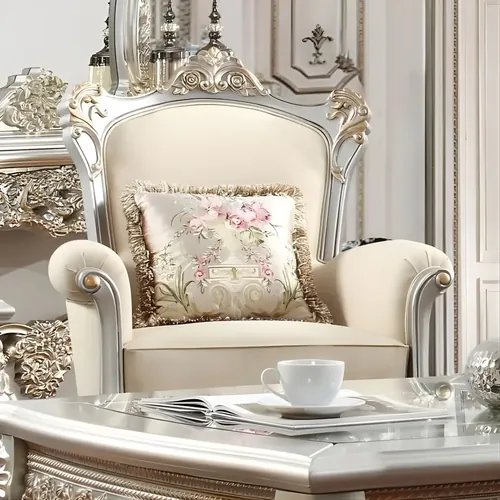
Whatever the room, keep one style in charge. Traditional, French, and Victorian-style pieces can share a wood tone and a palette, but a room usually looks calmer when one of them leads.
Frequently Asked Questions
Is there a custom furniture store near Ontario or Rancho Cucamonga?
Mobilia Cleopatra’s showroom is in Upland, which sits next to Ontario and Rancho Cucamonga in the Inland Empire. You can visit our Upland showroom at 280 N Benson Ave, Suite 6, Upland, CA 91786 to see finishes, fabrics, and carved frames, or call (909) 999-1442 before you go.
Is custom furniture only for furnishing a whole house?
No. A single sofa, dining table, or bed is a normal custom order. A full room is an option, and it is often easier to plan after the first anchor piece is decided.
Can I order custom furniture if I cannot visit the showroom?
Yes. You can submit a request online with a project description and up to five inspiration photos, then review drawings, samples, and a quotation before anything is confirmed. A visit is still helpful for carved frames, gilded finishes, and velvet, because photos flatten all three.
How do I know a store is actually making the piece to order?
Ask which steps happen after you approve the design: drawings, material selection, building, finishing, and upholstery. Ask what can change in size, wood, finish, and fabric. If the answer is only the pillows, it is a stock piece.
How long does custom furniture take?
It depends on the piece, the materials, and the finish. Ask for the current lead time for your specific design, what might extend it, and whether it starts at drawing approval or at the confirmed order. At Mobilia Cleopatra, lead times are included in your quotation where applicable.
What should a custom furniture quote include?
Exact dimensions, wood species, finish, fabric or leather, construction details, hardware, and lead time, plus any other arrangements that matter to you. If something important is not written down, ask before you approve.
What should I bring to a custom furniture consultation?
Room measurements, the dimensions of doors and hallways on the way in, daylight photos of the room, and any inspiration images or sketches. Knowing which style you prefer, and which existing pieces must match, also speeds things up.
How to Start Your Custom Order
The best custom furniture near you is the one built from clear answers: named woods, a measured drawing, real samples, and a written quote you approve before work begins. Start with the room, not the catalog. Measure the wall and the door, take daylight photos, and decide which style should lead the space. Then ask any maker the questions in this guide, and compare quotes line by line rather than by the final number alone.
If you are in the Inland Empire, come and see finishes, fabrics, and carved frames at our Upland showroom at 280 N Benson Ave, Suite 6, Upland, CA 91786, or call (909) 999-1442. If you are ready to share your ideas, start a request on our design page, and our team will contact you to confirm specifications and pricing. A careful start is what turns a custom order into a piece that fits your room for years.
