Free shipping · 0% for 6 months · White-glove available


How to Clean a Suede Couch: A Step-by-Step Care Guide

Reviewed by the Mobilia Cleopatra design team
Quick answer: To clean a suede couch, first check the manufacturer’s cleaning code and confirm whether the upholstery is genuine suede or microsuede. Vacuum with a soft brush attachment, lift the nap with a suede brush, and rub small marks away with a suede eraser. Blot fresh spills instead of rubbing, test any cleaner in a hidden spot, use only lightly dampened cloths (never soak the fabric), and let the sofa air dry before brushing the nap back into place. For large stains or valuable genuine suede, call a professional upholstery cleaner.
Few upholstery materials feel as inviting as suede. Its soft, velvety nap makes a sofa look rich and relaxed at once, which is why suede and suede-look fabrics appear on so many sectionals, loveseats, and accent chairs. The same nap that makes suede so appealing is also what makes people nervous about cleaning it. One wrong move with too much water, a harsh household chemical, or an overly enthusiastic scrub can leave a ring, a stiff patch, or a flattened shine that is hard to undo.
The good news is that a suede couch is far less fragile than its reputation suggests, as long as you work with the material instead of against it. Most of the work comes down to three habits: knowing exactly what kind of suede you own, keeping moisture to a minimum, and treating spills quickly and gently. This guide walks through each stage, from reading the cleaning tag and assembling a small care kit to a full step-by-step clean, stain-by-stain fixes, the different approach microsuede needs, and the point at which a professional is the smarter choice.
Genuine Suede vs. Microsuede: Know What You Are Cleaning
Before you touch a brush or a cloth, identify the upholstery. Genuine suede and microsuede look similar from across the room, but they respond very differently to moisture and cleaning products, and most cleaning mistakes start with treating one like the other.
Genuine Suede
Genuine suede is leather. It comes from the underside of an animal hide, which is sanded or buffed to raise a fine, soft nap rather than finished with the smooth, sealed surface you see on full-grain leather. Because that underside is open and porous, it absorbs liquids and oils quickly. Water can darken it, leave tide marks as it dries, or stiffen the fibers, and many household cleaners can strip color. If you are curious how it compares with smooth hides, our guide to Italian leather furniture explains how finished leathers behave and age.
Microsuede and Faux Suede
Microsuede, sometimes sold as microfiber or faux suede, is a woven or non-woven synthetic, usually polyester or a polyester blend, engineered to mimic the brushed surface of real suede. It is generally more resistant to stains and wear, which makes it popular for family rooms and households with pets. Many microsuede sofas tolerate a carefully applied water-based solution, while others need a solvent such as rubbing alcohol. The only reliable way to know is the cleaning code.
Read the Manufacturer’s Cleaning Code
Most upholstered furniture carries a care tag, usually under a seat cushion, on the deck beneath the cushions, or under the frame. Look for one of these standard codes:
- W: Water-based cleaners are acceptable, such as a mild detergent solution or an upholstery shampoo, applied sparingly.
- S: Solvent-based (water-free) cleaners only. Water can leave marks on these fabrics, so use a dry-cleaning solvent or, where the manufacturer allows it, rubbing alcohol, and work in a ventilated room.
- WS or S/W: Either a water-based or a solvent-based cleaner may be used, still with a spot test first.
- X: Vacuum and brush only. Any further cleaning should be done by a professional.
If the tag is missing or unreadable, treat the piece as the most delicate option: dry methods first, spot tests always, and professional help for anything more than a light mark.
What You Need to Clean a Suede Couch
A small, dedicated care kit makes cleaning faster and prevents the temptation to grab whatever is under the kitchen sink.
- Vacuum with a soft upholstery brush attachment for crumbs, dust, and pet hair, including the crevices around the cushions.
- Suede brush with soft bristles (nylon, brass-and-nylon, or crepe rubber) to lift and realign the nap.
- Suede eraser, or a clean white rubber eraser, to rub away dry marks and scuffs without moisture. Avoid colored erasers, which can transfer pigment.
- Several clean, white microfiber cloths for blotting; white cloths make it easy to see whether color is lifting.
- Cornstarch or baking soda to draw out fresh oil and grease.
- White vinegar for occasional spot treatment on genuine suede, and rubbing alcohol for S-coded microsuede, used only where the cleaning code and a spot test allow.
- A dedicated suede cleaner and suede protector spray formulated for upholstery, following the label exactly.
- A small spray bottle for misting solutions lightly rather than pouring them.
Keep the kit in a closet near your sofa so you can respond to a spill within seconds.
How to Clean a Suede Couch Step by Step
This routine works for a periodic refresh of either genuine suede or microsuede. Adjust the moisture steps to match your cleaning code, and always work one section at a time.
Step 1: Spot Test Everything
Choose a hidden area, such as the back of the sofa, the underside of a cushion, or the inside of the skirt. Apply a small amount of whatever cleaner you plan to use, let it dry completely, then brush it. If you see darkening, fading, stiffness, or a ring, stop and choose a gentler method or call a professional.
Step 2: Vacuum Thoroughly
Remove the cushions and vacuum the deck, arms, back, and every seam with the soft brush attachment. Loose grit acts like sandpaper on the nap, so removing it first prevents you from grinding dirt deeper when you brush or blot.
Step 3: Brush the Nap
Brush gently in one direction to loosen embedded dust and lift flattened areas, then use light back-and-forth strokes on stubborn matting. Avoid pressing hard or brushing the same spot for too long; over-brushing can thin the surface and leave it looking dull.
Step 4: Erase Dry Marks
Rub scuffs, shiny patches, and small dry stains with a suede eraser using short, light strokes, much like erasing pencil on paper. Brush away the crumbs and reassess before moving on to any liquid.
Step 5: Spot Clean Only Where Needed
For marks that remain, apply your chosen cleaner to a cloth, never directly to the couch, and blot from the outside of the stain toward the center so it does not spread. Use the least moisture that works. On microsuede, if a spot cleaning leaves a faint outline, lightly clean the entire cushion panel so it dries evenly.
Step 6: Dry and Restore
Let the area air dry at room temperature, away from radiators, direct sun, and hot hair dryers, which can shrink or harden suede. Once completely dry, brush the nap again so the texture and color look uniform.
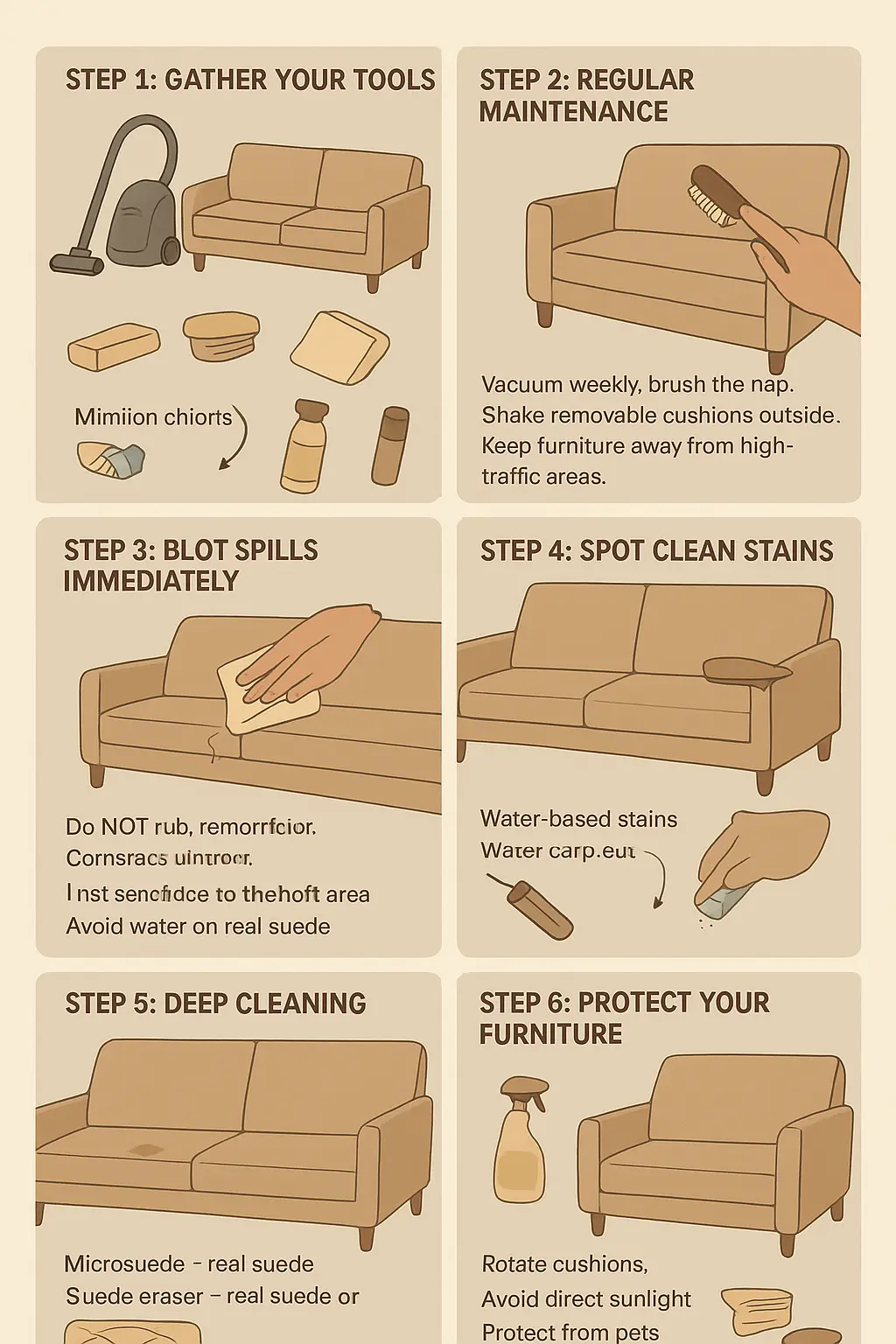
Steps to Clean Suede Living Room Furniture
How to Remove Common Stains From a Suede Couch
Every stain behaves a little differently. The rules that apply to all of them are simple: act fast, blot rather than rub, start with the gentlest method, and test before you treat.
Water Spills and Water Marks
Blot a fresh water spill immediately with a dry microfiber cloth, then let it dry naturally and brush the nap. If a dried water ring remains on genuine suede, a commonly recommended approach is to dampen the whole affected panel very lightly and evenly with a barely damp cloth or a fine mist, blending from the ring outward to the seams, then blot and let it air dry before brushing. Because this involves moisture on genuine leather, test it first and consider a professional for valuable pieces.
Oil and Grease
Blot away as much as you can, then cover the stain generously with cornstarch or baking soda and leave it for several hours or overnight so the powder can absorb the oil. Brush the powder off with a suede brush and repeat if needed. Avoid water on oil stains; it tends to spread them.
Food, Coffee, and Wine
Scrape away any solids with a dull edge, then blot. On genuine suede, a cloth lightly dampened with white vinegar is a widely used spot treatment because the vinegar evaporates without the tide marks plain water can leave. On W- or WS-coded microsuede, a few drops of mild detergent in water on a cloth usually works well. Blot, let dry, and brush.
Ink and Marker
Ink is one of the hardest stains to remove from suede. On S- or WS-coded microsuede, dab, rather than rub, the mark with a cloth or cotton swab lightly moistened with rubbing alcohol after a spot test. On genuine suede, try a suede eraser first; if the ink remains, leave it to a professional rather than risk spreading the dye.
Pet Accidents and Odors
Blot pet accidents thoroughly and treat according to the cleaning code, testing any enzyme cleaner first. For general mustiness, sprinkle baking soda lightly over the surface, let it sit for a few hours, then vacuum it away with the brush attachment. Persistent odors in genuine suede usually call for professional cleaning.
How to Clean Microsuede and Faux Suede Sofas
Microsuede is more forgiving than genuine suede, but it has its own quirk: some versions water-mark easily, while others clean up beautifully with a damp cloth. Follow the code on the tag.
For W and WS Codes
Mix a small amount of mild, clear dish soap into lukewarm water and whisk it to create suds. Apply only the foam to a clean cloth or soft sponge, work it gently into the soiled area, and wipe with a second cloth dampened with plain water to remove residue. Blot well, let dry, and brush the fibers to soften them.
For S Codes
Use a solvent-based upholstery cleaner or, where permitted, rubbing alcohol. Mist it lightly from a spray bottle and scrub gently with a clean white sponge, which helps you see dirt transfer. Alcohol evaporates quickly, so it is less likely to leave water rings, but it can affect some dyes, so the spot test is essential. Brush the fabric once dry.
Cushion Covers
Even if cushion covers unzip, do not machine wash them unless the manufacturer explicitly says you can. Washing can shrink covers, change their color, or break down the backing, leaving them mismatched with the rest of the sofa.
If you love the look of a soft pile fabric but want to compare options before choosing upholstery for a new piece, our velvet furniture guide covers another plush fabric with its own care needs.
Everyday Care That Keeps Suede Looking Luxurious
Most stains you never have to remove are the ones prevented by small daily habits.
- Vacuum and brush regularly. A quick pass every week or two prevents grit from wearing down the nap, especially on seats and arms.
- Apply a suede protector. After cleaning and drying, a protector spray made for suede helps liquids bead up instead of soaking in. Spot test it, apply it in light, even coats, and reapply as the product label directs.
- Manage sunlight. Direct sun can fade suede and microsuede. Position the sofa away from strong afternoon light or use sheer curtains and blinds.
- Rotate and fluff cushions. Turning cushions spreads wear and keeps the nap and color consistent across the seat.
- Keep heat and moisture away. Avoid placing suede directly beside radiators, fireplaces, or humidifiers.
- Protect high-use spots. A folded throw on a favorite seat or across the arms, along with side tables and trays for drinks, reduces the chance of spills and body-oil buildup.
- Be pet aware. Trim nails, brush pets regularly, and give them a washable blanket on the sofa to reduce scratches and shedding.
The same rhythm of light, regular care applies to every upholstered piece in the room. For a broader routine covering wood, leather, and fabric, see our article on how to maintain living room furniture sets, and remember that suede accent chairs and ottomans need the same gentle treatment as the sofa.
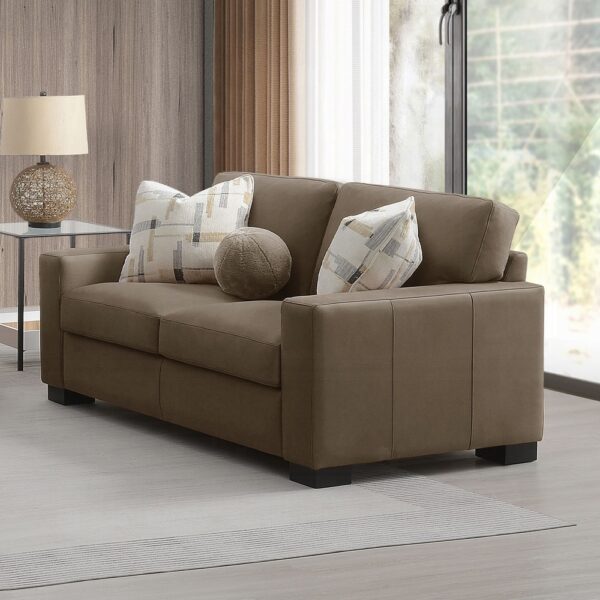
How to Clean Suede Living Room Furniture
When to Call a Professional Suede Cleaner
Home care handles most routine maintenance, but some situations are worth handing over to an experienced upholstery or leather specialist, especially when the piece is genuine suede or a significant investment.
- The code is X, or the tag is missing and the fabric reacts badly to a spot test.
- The stain is large, old, or set in, including red wine, ink, dye transfer from clothing, or a long-forgotten spill.
- The suede has been soaked by a flood, a pet accident, or a large drink, where moisture may have reached the padding.
- The nap is badly flattened, stiff, or shiny across a wide area and brushing no longer restores it.
- The piece is valuable, an heirloom, or a bespoke commission where the risk of a mistake outweighs the cost of expert care.
Many owners schedule a professional clean periodically as preventive care, with the frequency depending on how heavily the sofa is used. When you book, mention whether the piece is genuine suede or microsuede and share the cleaning code so the technician can choose the right method.
Investing in proper care is especially worthwhile for heirloom-quality upholstery. Pieces from our handmade Kleopatra Kingdom living room collection and other custom commissions are crafted to be enjoyed for many years, and if you are unsure how to care for a particular fabric, our team is happy to help through the contact page.
Frequently Asked Questions
Can you use water to clean a suede couch?
It depends on the material. Genuine suede reacts poorly to water, which can cause darkening, rings, or stiffness, so stick to dry methods and very light, even dampening only when necessary. Many microsuede couches with a W or WS code can be cleaned with a small amount of water and mild soap, while S-coded fabrics should not get wet at all.
How do you clean a suede couch with household products?
The most common household tools are a vacuum, a soft brush, a white eraser, cornstarch or baking soda for grease, white vinegar for spot treatment on genuine suede, and rubbing alcohol for S-coded microsuede. Apply liquids to a cloth rather than the sofa, test in a hidden spot first, and let everything dry naturally before brushing.
Is vinegar safe on suede?
White vinegar is widely recommended for spot cleaning genuine suede when applied sparingly with a cloth, because it evaporates with less risk of water marks. Never pour it on the fabric, always test a hidden area first, and brush the nap once the spot has dried.
How do you get stains out of a suede couch?
Blot fresh spills immediately, then choose a method that matches the stain: a suede eraser for dry marks, cornstarch or baking soda for oil, vinegar for food and drink on genuine suede, and rubbing alcohol for ink on S- or WS-coded microsuede. Work from the edges inward and use a professional for large or set-in stains.
How do you clean a faux suede couch?
Check the cleaning code first. For W or WS codes, use the foam from a mild soap solution on a cloth, then wipe and blot. For S codes, use a solvent-based cleaner or lightly misted rubbing alcohol with a white sponge. Brush the fibers once dry to restore their softness.
How often should you clean a suede couch?
Vacuum and brush regularly, ideally every week or two, and treat spills the moment they happen. A more thorough clean is typically needed a few times a year, with professional care as needed depending on wear, pets, and how often the couch is used.
Can you clean a suede couch by hand without special products?
Yes, much of the routine work is done by hand with simple tools. Vacuuming, brushing, erasing dry marks, and absorbing grease with cornstarch require no special cleaners. Dedicated suede cleaners and protector sprays are helpful for stubborn marks and prevention, but they are not essential for everyday upkeep.
Keeping Your Suede Couch Beautiful for Years
Cleaning a suede couch is less about strong products and more about restraint. Identify whether you own genuine suede or microsuede, read the cleaning code, and choose the gentlest method that works. Vacuum and brush regularly, keep a small care kit nearby, blot spills before they settle, and allow every treated area to dry naturally before restoring the nap. When a stain is large, the suede is soaked, or the piece is genuinely valuable, a professional cleaner is the safest investment.
With that approach, suede rewards you with the soft hand and depth of color that drew you to it in the first place, season after season.
If you are planning a refresh of your seating or furnishing a new space, take time to consider how each upholstery fabric fits your lifestyle. Our guide on choosing living room furniture walks through size, comfort, and materials, and you can browse coordinated pieces among our living room sets to find upholstery that suits both your style and the level of care you want to give it.
