Free shipping · 0% for 6 months · White-glove available


How to Choose Living Room Furniture: Pieces, Sets and Layout

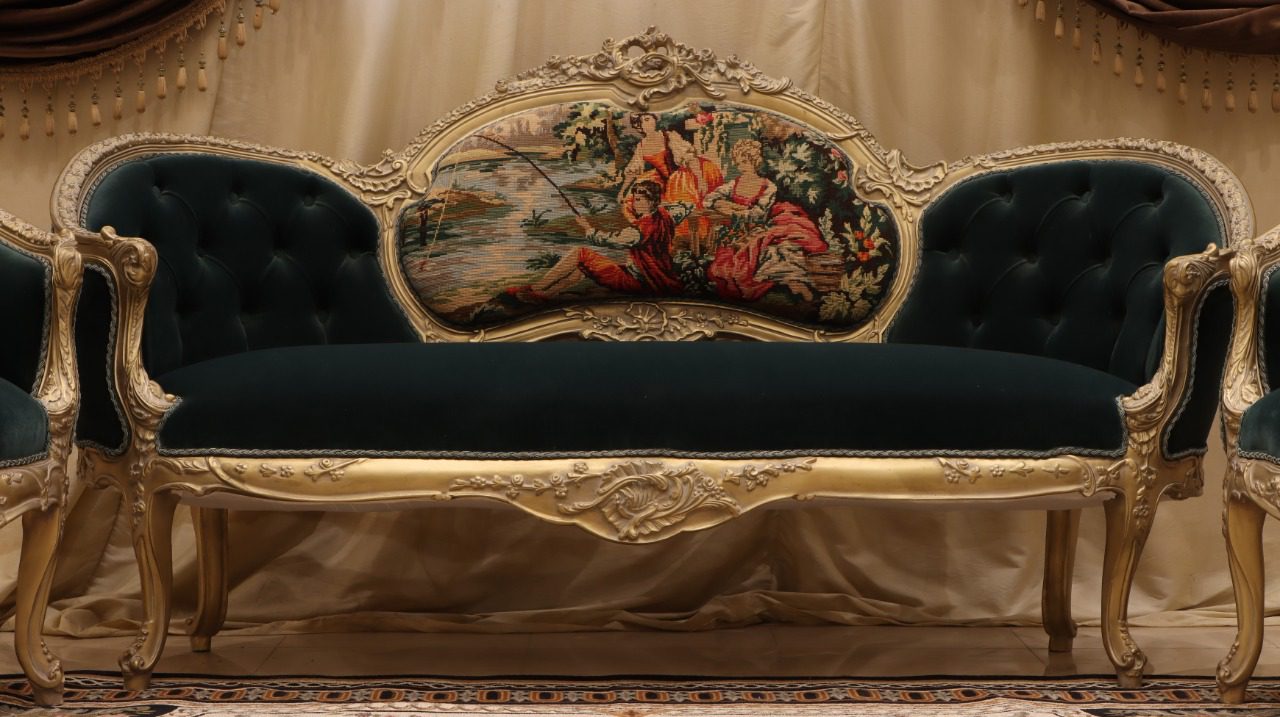
Reviewed by the Mobilia Cleopatra design team
Quick answer: To choose living room furniture, start with how you use the room and measure it, including doorways and walkways. Choose the sofa first as the anchor, then add a loveseat or chairs, a coffee table, and storage in a scale that fits. Settle on one leading style, a sturdy frame and upholstery that suit your household, and arrange everything around a clear focal point with comfortable paths to walk through.
The living room is where furniture decisions are most visible and most used. It is where you unwind after work, watch movies, host friends, and gather for the holidays, so the pieces you choose need to look beautiful on day one and still feel comfortable years later. With so many sofas, sets, styles, and fabrics to compare, it is surprisingly easy to fall in love with a piece in a showroom that simply does not work once it is in your home.
The good news is that a confident decision follows a clear order. Rather than shopping piece by piece and hoping it all comes together, you can work from the room outward: understand how the space is used, measure it, choose the anchor piece, build the supporting pieces around it, and only then fine-tune style, materials, color, and layout. Each step narrows your options, so by the time you are comparing two sofas, you already know the size, comfort level, and look you need.
This guide walks through that process step by step. Use it whether you are furnishing a new home from scratch, replacing a tired sofa, or refreshing a formal sitting room with more elegant, traditional pieces.
Start With How You Use the Room
Before you look at a single sofa, think about how the room actually works day to day. The right furniture for a quiet, formal parlor is very different from the right furniture for a busy family room where children play and the TV is on every evening. A few honest answers will save you from expensive mistakes:
- Who uses the room every day? A couple, a family with children, and a household that hosts guests every weekend all need different amounts of seating.
- Do you entertain often? Plan for flexible extra seating, such as accent chairs or an ottoman that can double as a seat when friends come over.
- Are there children or pets? Prioritize durable, easy-to-clean upholstery and avoid delicate finishes on low surfaces that take the most knocks.
- Do you prefer lounging or upright seating? Deep seats and soft cushions suit movie nights; firmer, more upright seating suits conversation, reading, and formal rooms.
- Is it a TV room, a conversation room, or both? The answer decides whether the seating faces a screen, a fireplace, or each other.
It also helps to think about the room’s role in the rest of the house. In an open-plan home, the living area is seen from the kitchen and dining space, so the furniture needs to coordinate with them. In a separate formal living room, you have more freedom to create a dramatic, decorative look with carved wood, rich fabrics, and statement pieces.
Write your answers down. They become your brief for every later decision, from the length of the sofa to the type of fabric, and they keep you focused when a beautiful but impractical piece catches your eye.
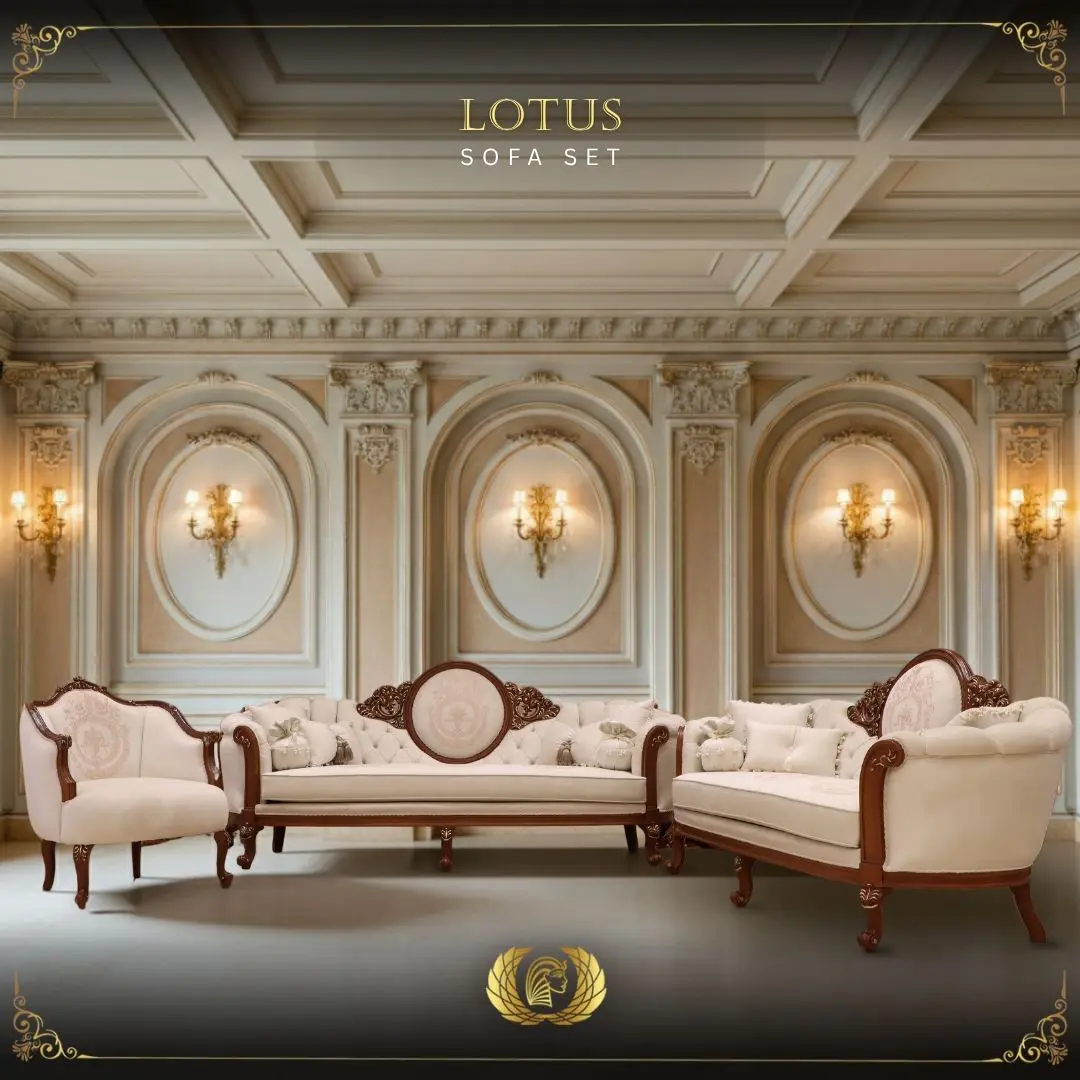
Handmade Lotus Brown Beige sofa set (Kleopatra Kingdom)
Measure Your Space and Plan for Scale
Even the most beautiful sofa is the wrong sofa if it blocks a walkway or cannot fit through the front door. Measure carefully before you shop, and bring the numbers with you.
- The room: length, width, and ceiling height, plus the position of windows, doors, vents, outlets, and the fireplace or TV wall.
- The delivery path: every doorway, hallway, stairwell, turn, and elevator that large pieces must pass through on the way in.
- Walkways: as a general guideline, leave around 30 to 36 inches for main paths through the room.
- Coffee table spacing: roughly 16 to 18 inches between the sofa and the coffee table keeps drinks within reach while leaving room for legs.
Scale matters as much as raw size. A sofa that fills about two-thirds of its wall usually looks balanced, while one that runs the full length of the wall can make the room feel cramped. In rooms with high ceilings, taller sofa backs, substantial arms, and larger case pieces keep the furniture from looking lost. In small rooms, raised legs, slimmer arms, and pieces with visible floor space underneath keep the room feeling open and airy.
Proportion between pieces counts too. An oversized coffee table can overwhelm a compact sofa, and a delicate side chair can look out of place next to a deep, rolled-arm sofa. Aim for pieces that feel related in visual weight, even if their styles differ.
A simple trick before you buy is to outline the footprint of each piece on the floor with painter’s tape, or sketch a floor plan on graph paper. You will see immediately how much space each piece really takes and how people will move around it, which is far easier than discovering the problem on delivery day.
Choose the Main Living Room Pieces
A well-furnished living room is built around a few essential pieces. Choose them in order, starting with the largest, so that every later choice is sized and styled to fit what is already in place. For a closer look at each piece and what it adds, see our overview of the top living room furniture pieces.
The sofa: your anchor piece
The sofa is usually the biggest investment and the visual center of the room, so choose it first. Consider seat depth, seat height, arm style, back height, and cushion firmness, and make sure its length suits the wall or seating area it will define. A deep seat invites lounging, while a shallower, firmer seat suits upright conversation and is easier for many people to get in and out of. Mobilia Cleopatra offers a wide range of sofas and couches, from classic and traditional silhouettes to contemporary designs, and for larger rooms and families a sectional sofa can seat more people in a single, continuous piece.
Loveseat or accent chairs
Next, add seating that faces or flanks the sofa. A loveseat adds two more seats in a matching design and works well in medium rooms; our guide to what a loveseat is covers its typical sizes and uses. One or two accent chairs bring flexibility instead, since they are easy to move and give you a chance to introduce a contrasting color, pattern, or shape.
Coffee table and end tables
A coffee table gives the seating group a center and a surface for drinks, books, and décor, while end tables hold lamps and keep essentials within reach of every seat. As a rule of thumb, a coffee table roughly two-thirds the length of the sofa looks well proportioned. Browse our coffee tables to find one that suits your seating group.
Storage, media, and flexible extras
A TV console, cabinet, or bookcase keeps the room organized and gives the media wall a finished look; choose one wide enough to visually support the screen above it. Finally, an ottoman or bench can serve as a footrest, a coffee table with a tray, or extra seating for guests, which makes it one of the most versatile pieces in any living room.
Living Room Sets or Mixed Pieces?
Once you know which pieces you need, decide whether to buy them as a coordinated set or assemble them individually. A living room set groups seating pieces in a matching design, which makes it easy to create a cohesive room in a single decision. The most common configurations are:
- Sofa and loveseat: the classic two-piece set, well suited to small and medium rooms.
- Sofa, loveseat, and chair: a three-piece set that seats a larger family and fills a medium to large room.
- Sofa and accent chair: a lighter combination for apartments and open-plan spaces.
- Sofa set with tables: seating plus a matching coffee table and end tables, common in traditional and formal designs.
- Sectional and ottoman: ideal for lounging and family movie nights.
A matching set guarantees that fabric, finish, and proportions work together, which is especially valuable for ornate traditional, French-style, and Victorian-style designs where carving and trim need to line up. Mixing individual pieces gives a more collected, personal look, but it takes more planning. If you mix, repeat at least one element, such as a wood tone, a metal finish, or a color, so the room still looks intentional.
Whichever route you take, check the configuration against your measurements rather than the photos. A three-piece set that looks generous in a catalog may crowd a small room, while a large open-plan space may need a sectional or a set with an extra chair to feel complete. Compare configurations in our living room sets to see which combination matches your room and household.
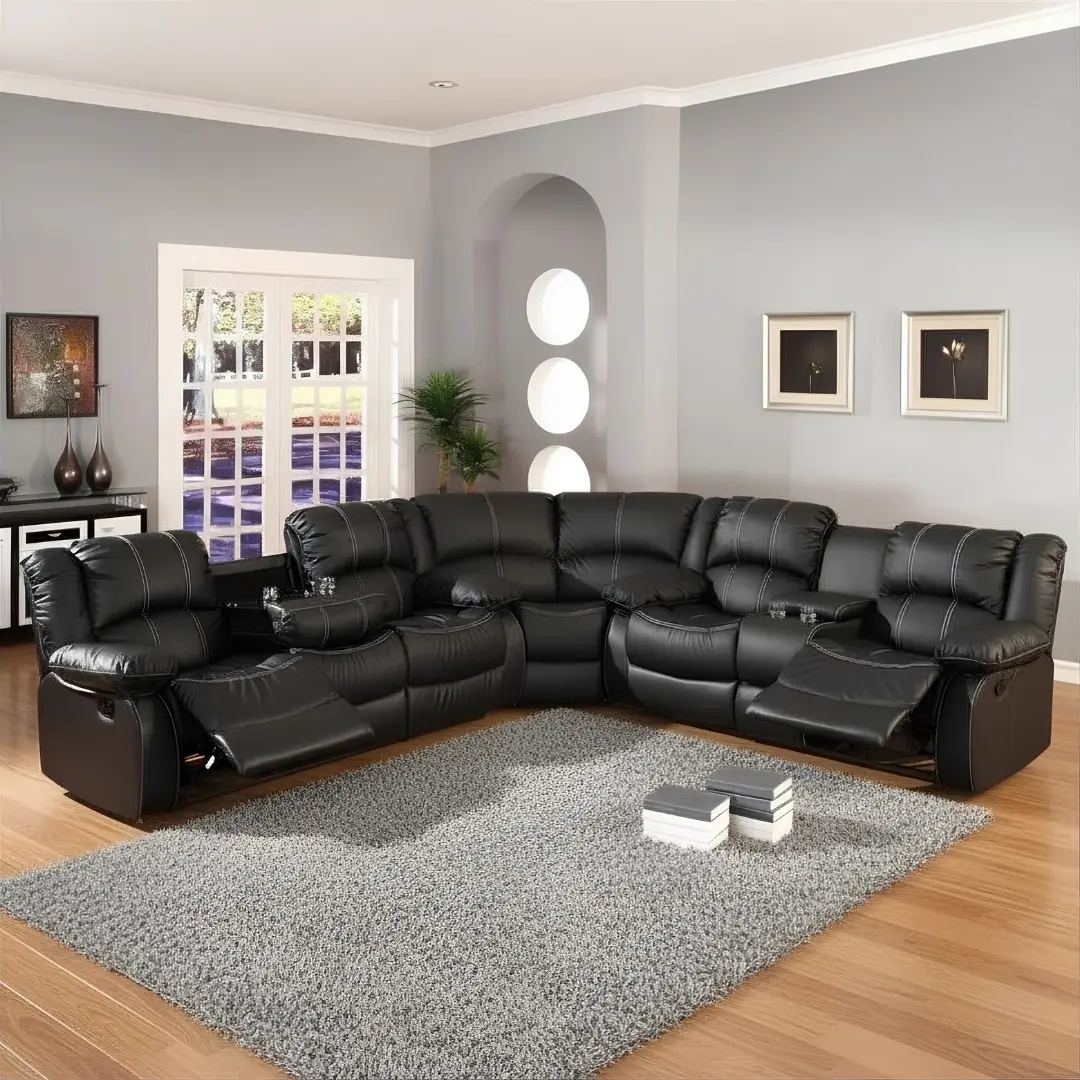
Black leather 3-piece sectional sofa by McFerran
Pick a Style That Fits Your Home
Your living room furniture should feel connected to the architecture and to the rest of your home. The easiest way to get there is to choose one leading style and let any others play a supporting role.
- Traditional: rolled arms, tufting, carved wood details, and rich fabrics create a warm, timeless room that suits classic homes.
- French style: curved frames, cabriole legs, and lighter, often painted or gilded finishes give a graceful, elegant feel.
- Victorian style: deep carving, button tufting, dark woods, and jewel-toned upholstery suit dramatic, formal living rooms.
- Modern and mid-century: clean lines, low profiles, and tapered legs keep the room calm and uncluttered.
- Transitional: classic shapes with simpler detailing bridge traditional and contemporary rooms.
Look at your home’s bones before you decide. Crown molding, wainscoting, and arched doorways pair naturally with traditional, French-style, or Victorian-style furniture, while large windows, flat ceilings, and minimal trim often suit modern or transitional pieces. Your existing flooring, fireplace, and any pieces you plan to keep should also inform the choice.
Mixing eras can work beautifully when it is deliberate, such as a carved traditional sofa paired with a sleek glass coffee table. Rather than repeat those techniques here, our guide on how to blend modern and vintage furniture explains how to combine styles without the room feeling disjointed.
Choose Materials, Comfort, and Color
Materials determine how your furniture looks, feels, and ages, and they matter most on the pieces you use every day.
Upholstery
- Leather: elegant and durable, develops character over time, and wipes clean easily.
- Velvet: rich and luxurious with deep color, a natural fit for formal and traditional rooms; it needs gentle care.
- Microfiber and performance fabrics: durable and stain-resistant, practical for families and pets.
- Linen and cotton blends: breathable and relaxed, but more prone to wrinkles and stains.
For woven fabrics, tight weaves and woven-in patterns generally wear better than loosely woven or printed ones. If a manufacturer lists an abrasion or rub rating, a higher number points to a more hard-wearing fabric for everyday seating.
Frame, cushions, and comfort
A solid hardwood frame lasts much longer than particle board or thin plywood. High-density foam cushions hold their shape, while down or down-blend cushions feel softer but need regular fluffing. Whenever possible, sit on the piece the way you would at home: check that your feet rest flat on the floor, that the back supports you, and that the arms sit at a comfortable height.
Color and pattern
Neutral sofas in beige, gray, ivory, or cream are timeless and let you change the look with pillows, throws, and rugs. Bold colors such as navy, emerald, or burgundy make a confident statement. Patterns add interest but are best used in moderation, especially in smaller rooms. Always look at fabric samples against your walls and floors in both daylight and evening light.
Spending wisely
Put the largest share of your budget into the sofa, since it takes the most daily use, and remember to factor in delivery, taxes, and any assembly when you set your budget.
How to Arrange Living Room Furniture for Flow
A good arrangement makes a room comfortable to use and easy to move through. Work through these steps in order:
- Find the focal point: a fireplace, a large window, or the TV wall.
- Place the sofa first: usually facing the focal point or defining the main seating area.
- Create a conversation area: arrange the loveseat and chairs close enough that people can talk without raising their voices.
- Keep walkways clear: route traffic around the seating group, not through the middle of it.
- Anchor the group with a rug: ideally large enough for at least the front legs of every seat to rest on it.
- Layer the lighting: combine overhead light with floor and table lamps near each seat.
Layouts also depend on the shape of the room. In a small or square room, a sofa with one or two chairs keeps the center open. A long, narrow room often works best split into two zones, such as a main seating group and a reading corner. In an open-plan space, the back of a sofa or sectional can quietly mark the edge of the living area, and a pair of sofas facing each other creates a more formal, sociable arrangement that suits rooms used for entertaining.
Avoid pushing every piece against the walls. Pulling seating in, even by a few inches, often makes the room feel more inviting and gives it a natural center.
Frequently Asked Questions
Does Mobilia Cleopatra sell sofas and couches?
Yes. Mobilia Cleopatra carries a wide selection of sofas and couches, including traditional, French-style, Victorian-style, and contemporary designs, along with sectionals, loveseats, and coordinated sofa sets. Its own Kleopatra Kingdom collection adds handmade sofas and sofa sets with carved frames and gilded accents that can be custom-made in your size, wood finish, and upholstery; you can browse it on the Kleopatra Kingdom handmade furniture page. For help choosing, call (909) 999-1442.
How do I choose living room furniture?
Start by deciding how you use the room and measuring it, including doorways and walkways. Choose the sofa first, then add a loveseat or chairs, a coffee table, and storage in a matching scale. Finally, pick one leading style, durable materials, and colors that suit your home, and arrange everything around a focal point.
What furniture should go in a living room?
Most living rooms need a sofa, additional seating such as a loveseat or accent chairs, a coffee table, end tables, and a storage or media piece. A rug, layered lighting, and an ottoman or bench complete the room. Smaller rooms can skip the loveseat and use one or two chairs instead.
How do I choose a living room furniture set?
Match the configuration to your room size and household: a sofa and loveseat for small and medium rooms, a three-piece set with a chair for larger families, or a sectional and ottoman for lounging. Then check the frame, cushions, and upholstery, and confirm that every piece fits your measurements and delivery path.
Should living room furniture match?
Living room furniture does not have to match exactly, but it should coordinate. A matching set guarantees a consistent look, while mixed pieces feel more personal. If you mix, repeat at least one element, such as wood tone, metal finish, or color, so the room looks planned.
What is the most important piece of living room furniture?
The sofa is usually the most important piece because it is the largest, the most used, and the focal point of the seating area. Choose it first and build the rest of the room around its size, style, and color.
How much space should be between the sofa and the coffee table?
About 16 to 18 inches is a common guideline. That distance keeps drinks and books within easy reach while leaving enough room for legs and for people to pass between the pieces.
What size sofa is right for my living room?
As a starting point, choose a sofa that fills about two-thirds of the wall it sits against and still leaves comfortable walkways around it. In small rooms, consider a compact sofa or loveseat with raised legs; in large rooms, a longer sofa or a sectional keeps the space from feeling empty.
Create a Living Room You Will Love
Choosing living room furniture is far easier when you take it one step at a time. Begin with how the room is really used and who uses it, then measure the space and the delivery path so that every piece fits. Choose the sofa first, because its size, comfort, and style set the tone for everything else, and build the supporting pieces around it: a loveseat or chairs, a well-proportioned coffee table, end tables, and storage. Decide whether a coordinated set or a mix of individual pieces suits you, settle on one leading style that respects your home’s architecture, and choose materials and colors that match the way your household lives.
Finally, arrange the room around a clear focal point with comfortable walkways and layered lighting. The result is a living room that looks beautiful, feels welcoming, and works for daily life as well as for the evenings you entertain.
When you are ready to compare options, explore our full range of living room furniture, from everyday sofas and sectionals to ornate sets and handmade statement pieces. If you would like help choosing pieces that fit your space and style, call our team at (909) 999-1442.
