Free shipping · 0% for 6 months · White-glove available


French Style Furniture Guide: Styles, Identifying Features and Buying Tips

Reviewed by the Mobilia Cleopatra design team
Quick answer: French style furniture is furniture designed in the spirit of 18th-century France. The three looks most buyers meet are Louis XV (Rococo: curved cabriole legs, shell and flower carving, gilding), Louis XVI (neoclassical: straight tapered or fluted legs, rosettes and laurel, calmer lines), and French Provincial or Country (the simpler, sturdier house version in oak, walnut, or fruitwood, often painted or distressed). To identify a piece, read the legs first, then the carving, then the finish. To buy well, ask what wood is under the paint and how the frame is joined.
In a U.S. home, “French style” rarely means a museum piece. It usually means a new sofa, dining set, or bed that borrows the curves, carving, and finishes of French court and country furniture. That is good news, because a well-made reproduction can be lived on every day. It also means the label covers a wide range of quality, from carefully built solid-wood frames to resin trim glued onto particleboard.
This guide explains the main French furniture styles, the features that help you identify them, how to choose pieces room by room, which materials and finishes hold up, the quality checks worth making before you pay, and what actually drives the price. Mobilia Cleopatra sells French-style furniture from several vendors and from its own Kleopatra Kingdom line, so use these checks on any piece from any store, including ours.
What Is French Style Furniture?
French style furniture is a family of designs, not a single look. It grew out of the furniture made for the French court and for wealthy Parisian homes during the reigns of Louis XIV, Louis XV, and Louis XVI, and out of the regional workshops that copied those fashions in simpler form. What ties the family together is attention to proportion, comfortable upholstered seating, and decoration that is meant to be seen up close: carved frames, shaped aprons, and carefully chosen finishes.
Two scales are worth separating from the start. Court furniture was made for formal rooms. It is more heavily carved, more often gilded, and sometimes fitted with gilt-bronze mounts or marquetry. Provincial furniture was made for houses. It keeps the same outlines, such as the cabriole leg or the tapered leg, but uses plainer carving, local woods, and paint or wax instead of gold leaf. When a seller describes one piece as both “Rococo” and “Provincial,” ask which scale they mean.
It also helps to know what French style is not. A deeply button-tufted settee with nailhead trim and heavy, dark carving usually sits closer to Victorian design, which revived French Rococo in the 19th century but made it bulkier. The sections below explain how to tell the French sub-styles apart.
The Main French Furniture Styles
Dealers and historians list more than half a dozen French periods, from Louis XIV through Directoire and Empire. For a buyer of new furniture, three matter most, because nearly every French-style sofa, bed, or dining set on the market follows one of them.
Louis XV and Rococo
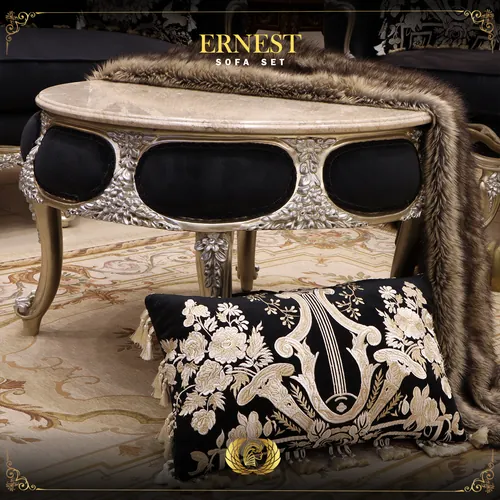
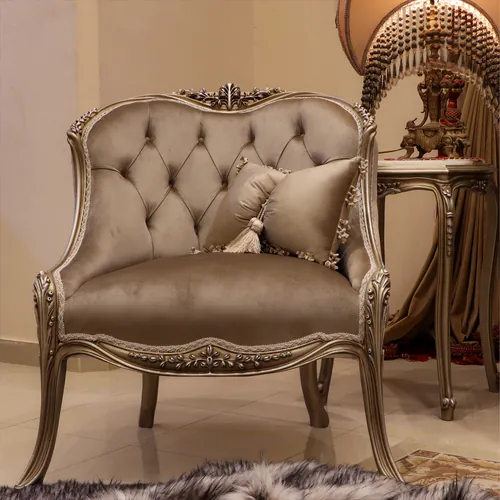
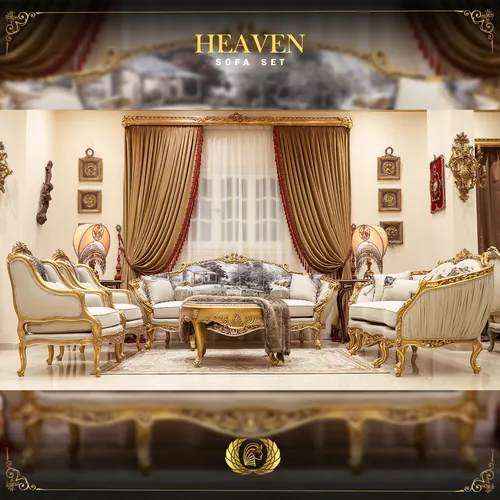
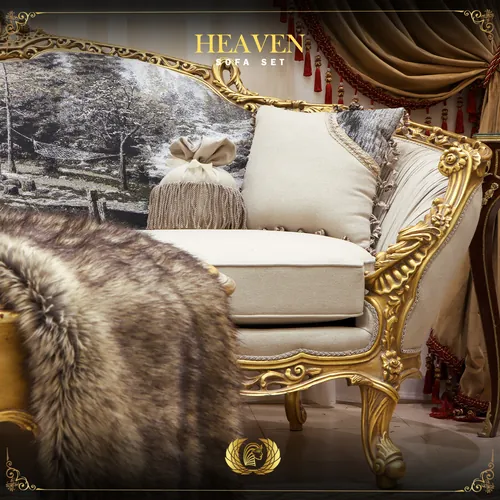
Louis XV furniture is the style most people picture when they hear “French furniture.” It replaced the boxy, formal lines of Louis XIV with curves, lightness, and comfort. Look for S-shaped cabriole legs, serpentine fronts and backs, and asymmetrical carving drawn from nature: shells, leaves, flowers, and scrolls. The rocaille, or Rococo, phase of the style is the most ornate. Gilded carving and gilt-bronze mounts are common on formal pieces. Familiar forms include the bergère, a deep upholstered armchair with closed sides, and the commode with a rounded, bombé front.
Louis XVI and Neoclassical
Louis XVI furniture was a reaction against Rococo exuberance. Shapes become rectangular, oval, or round, and the legs straighten into tapered, often fluted columns. Ornament is still present, but it is symmetrical and classical: rosettes, laurel, ribbons, beading, and small acanthus details. Chair backs are often oval medallions or squared frames. If Louis XV feels like movement, Louis XVI feels like order, which is why it pairs easily with transitional and contemporary rooms.
French Provincial and French Country
French Provincial furniture is the regional version of the court styles. Most of it follows Louis XV or Louis XVI outlines, but it is simpler in line, rarely veneered or inlaid, and sturdier in construction. Walnut, oak, and fruitwoods were the usual woods, and painted or distressed finishes are common. French Country, often associated with Provence, leans further toward rustic warmth: natural wood, linen, and relaxed farmhouse tables. For a full definition, read what French Provincial furniture is, and for a side-by-side comparison of the two most confused looks, see Rococo vs. French Provincial.
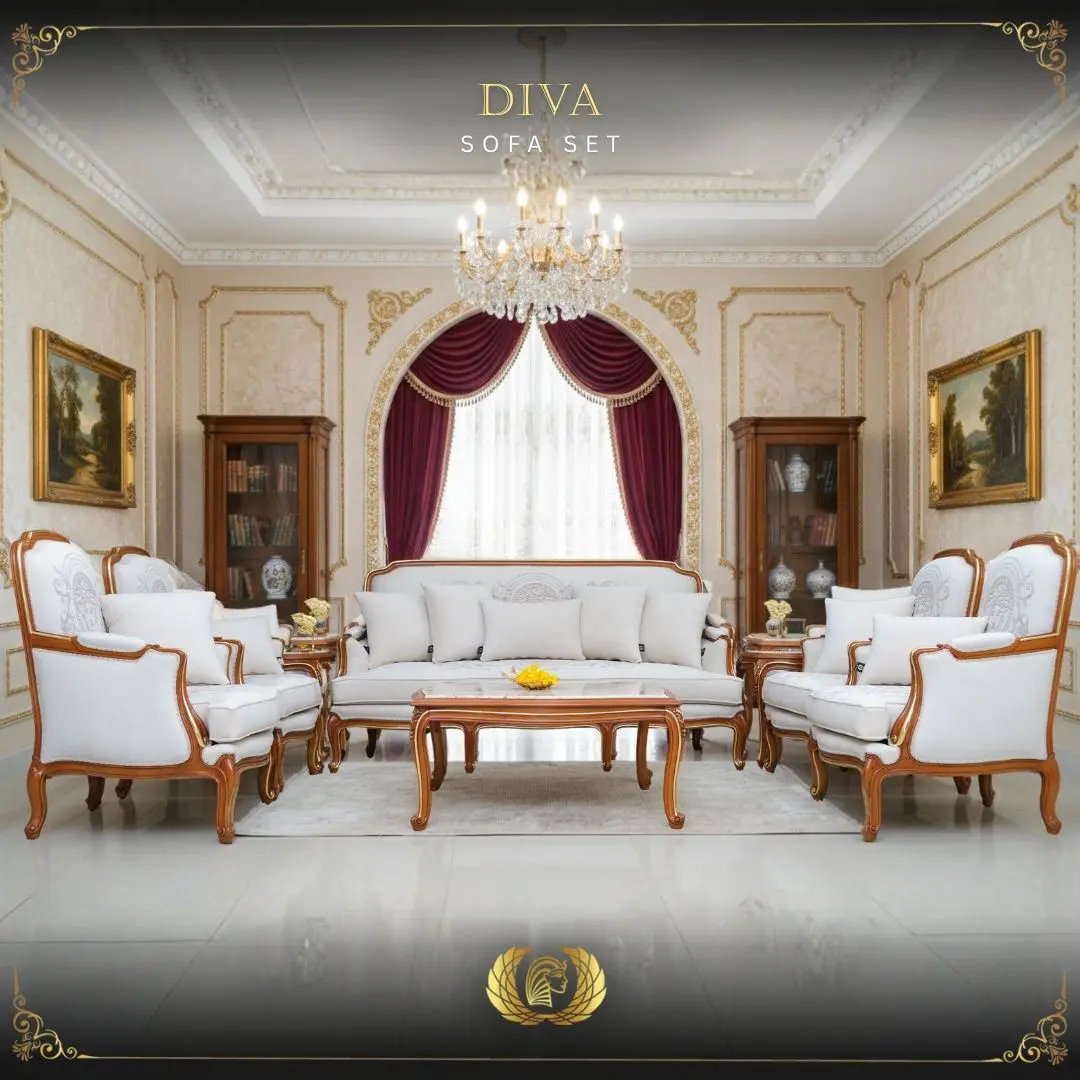
How to choose French style furniture for a timeless luxury home
How to Identify French Style Furniture
Identifying French furniture is mostly a matter of reading a few details in order. None of them proves age or origin on its own. For an antique, maker’s stamps, construction, and an expert appraisal are the only reliable answers. For new French-style furniture, these features tell you which style a piece follows and how faithfully it follows it.
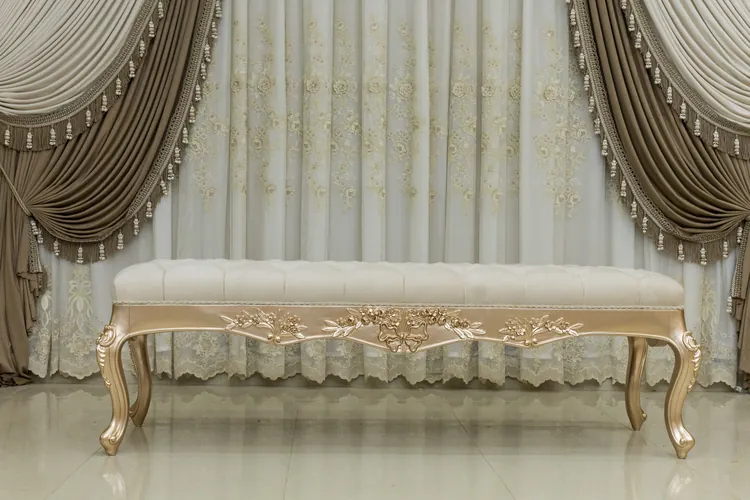
- Legs: A true cabriole leg curves out at the knee, in at the ankle, and ends in a scroll or small foot. It points to Louis XV or Provincial. A straight, tapered, often fluted leg points to Louis XVI. A curved cap stuck onto a straight post is neither.
- Outline: Louis XV pieces rarely have a straight line on the front or top rail. Louis XVI pieces are built from rectangles, ovals, and circles.
- Carving: Shells, flowers, and asymmetrical scrolls suggest Rococo. Rosettes, laurel, ribbons, and beading suggest neoclassical. Small, shallow carving on a shaped apron suggests Provincial.
- Finish: Gold leaf, gilt trim, and pale painted finishes in ivory, cream, or soft gray are typical. Provincial pieces often show waxed walnut, oak, or a gently distressed paint.
- Upholstery: Exposed carved wood frames around a fitted upholstered seat and back are a strong French signal. Heavy buttoned tufting all over a piece leans Victorian.
- Hardware and tops: Shaped brass pulls and marble tops on commodes, consoles, and nightstands are common in both court and Provincial designs.
| Style | Legs | Typical ornament | Common finishes |
|---|---|---|---|
| Louis XV / Rococo | Cabriole, S-curve | Shells, flowers, asymmetrical scrolls | Gilding, painted pastels, walnut |
| Louis XVI / Neoclassical | Straight, tapered, fluted | Rosettes, laurel, ribbons, beading | Painted, gilt accents, mahogany |
| French Provincial / Country | Cabriole or tapered, simpler | Light carving on aprons and rails | Waxed oak, walnut, fruitwood, distressed paint |
Materials and Finishes to Look For
The materials decide how a French piece ages. Historically, walnut and oak carried most Provincial furniture, beech was a favorite for carved and painted seat frames, and mahogany became more common in the neoclassical period. New French-style furniture uses a wider range, so the question is always what is structural and what is surface. We compare the species in detail in the best woods for French style furniture, so here is the short version: a carved frame should be solid hardwood, while veneer can be perfectly acceptable on large flat panels such as a dresser side or a tabletop.
Finishes carry much of the style. Gold and silver leaf, antiqued gilt, ivory and cream paint, and soft champagne or bronze tones are the classic French palette. A good painted or gilt finish is a layer on wood, sealed so it can be wiped clean. A metallic coating on molded resin can look similar in photos, but it cannot be repaired or refinished the way gilt wood can.
Upholstery should have a named fiber. Linen, cotton, small-scale damask, brocade, and velvet are all traditional choices. Linen and cotton feel lighter and suit Provincial rooms. Velvet and damask suit formal Louis XV seating. If the sofa will see daily use by children or pets, ask whether a performance version of the fabric is available, and ask for a swatch before you commit. Marble tops add weight and a cool contrast to consoles and dining tables, and brass hardware should feel solid rather than hollow.
Quality Checks Before You Buy
French styling is decoration over a structure, and the structure is what you live with. These checks work in a showroom, over the phone, or from product photos, and they apply to any brand. For a broader checklist, see how to identify high-quality furniture.
- Name the wood under the paint. Ask for the species of the frame and legs. A specific answer, such as beech, oak, or walnut, is a good sign. “Wood” or “wood products” is not an answer.
- Look at the joints. On seating, ask whether corners are reinforced with glued and screwed corner blocks. On case pieces, look for dovetailed drawer joints and drawers that run smoothly without wobbling.
- Check that the legs are solid. Cabriole legs carry the weight of a sofa or a dining table. They should be solid wood, firmly joined to the frame, with no movement when you rock the piece gently.
- Read the carving. Good carving has crisp edges and depth you can feel. Soft, blurry detail usually means a molded applique. Small variations from one side to the other can be normal in hand-carved work.
- Ask what the gilt is on. Gold finish should sit on carved wood, not on a molded resin applique. Ask directly, and look closely at worn edges in photos.
- Sit, open, and lift. Seats should feel supportive rather than hollow. Doors and drawers should close evenly. A solid-wood French dining table or dresser should feel heavy for its size.
- Get the details in writing. Ask for dimensions, materials, finish names, and the delivery and return terms before you pay.
How to Choose French Style Furniture by Room
The easiest way to keep French style elegant is to let one piece lead each room and measure before you fall in love with a silhouette. Curved legs and arms take up more floor space than their seat size suggests, so measure to the outermost point of the curve.
Living Room
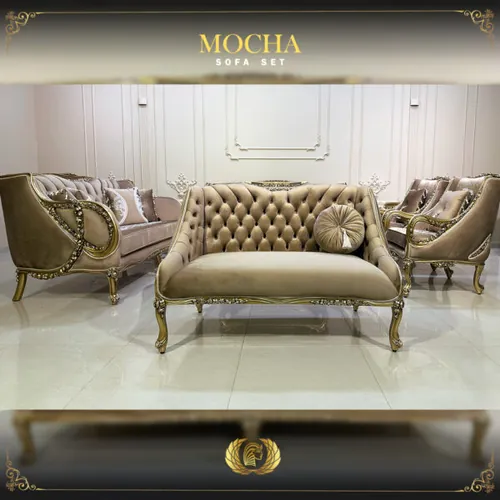
Start with the sofa or a pair of carved armchairs. A curved, exposed-wood sofa with a fitted seat looks lighter than a deep lounge sofa, and it suits the scale of most living rooms. Write down the wall length and the walkway before you browse French style sofa sets, and remember that a set may include a loveseat and chairs you need room for. A marble-top coffee table or a simple console can repeat the finish without repeating the carving.
Dining Room
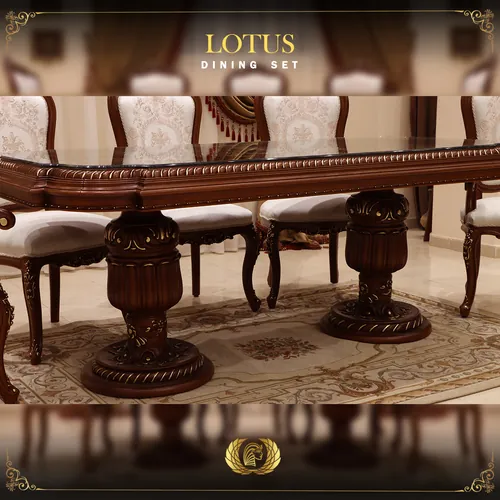
A widely used planning guide is about 24 inches of table edge per diner and about 36 inches of clearance behind each chair so it can be pulled out. Carved table legs and pedestal bases change where knees fit, so ask where the legs sit. Upholstered dining chairs with carved backs are the signature of a French dining room. Our French style dining sets include sets for six and eight, often with a matching buffet or china cabinet.
Bedroom
A carved or upholstered headboard is the natural anchor. Check its height against windows and its width against the door swing, and leave room to open dresser drawers fully. Matching every piece is optional. We cover bed, dresser, and nightstand choices in French style bedroom sets.
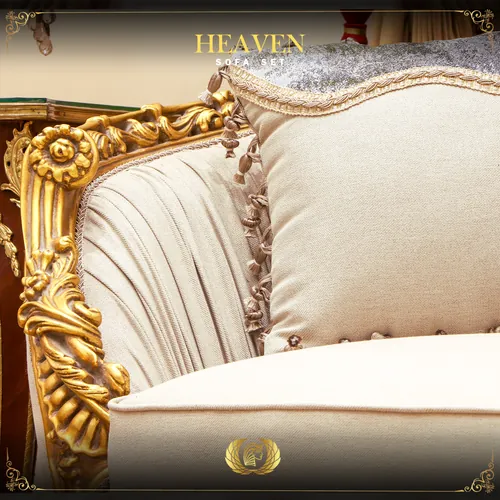
Across the house, repeat one metal or finish tone, such as gold, silver, or warm walnut, so rooms feel related. Let French lead in one room and use quieter traditional or transitional pieces in the next. Two fully carved styles competing in one room usually look accidental rather than collected.
Is French Style Furniture Expensive?
It can be, but the label alone does not set the price. Genuine 18th-century French antiques are scarce and priced by dealers and auction houses. New French-style furniture spans a wide range, and the cost follows a handful of factors you can check.
- Frame material: Solid hardwood frames and legs cost more than engineered wood, and they hold carving and joints better over time.
- Carving and hand work: Deep, hand-carved Rococo detail takes far more labor than a simple Provincial apron or a molded applique. The more ornate the style, the higher the price tends to be.
- Finish: Multi-step gilt, antiqued, and painted finishes add time and skill.
- Upholstery: Fabric grade, fitted seats, and tailored details all add cost.
- Marble and hardware: Stone tops and solid brass pulls are heavier and more expensive than laminate and plated hardware.
- Set size and custom work: A 9- or 11-piece dining set or a custom size costs more than a single statement piece.
For a real reference point, here is what we saw on our own site. As of October 2026, French-style sofa sets from our handmade Kleopatra Kingdom line were listed from roughly $5,000 to about $15,500, single French-style accent chairs from about $1,000 to about $2,700, bedroom sets from about $13,000 to about $18,000, and 7- to 11-piece dining sets from roughly $10,000 to about $19,000 before any sale pricing. Prices change, and some pieces are on sale, so check the product page for the current number.

French classic furniture collection designed for elegant luxury interiors
Kleopatra Kingdom is Mobilia Cleopatra’s own collection of nearly 700 pieces, including French-style furniture with Rococo and provincial detailing. According to the Kleopatra Kingdom brand page, nearly every piece is built from solid wood with carved frames and gilded accents, in finishes from gold and bronze to champagne, ivory, and brown, and every item can be custom-made to your size, wood finish, and upholstery. Our other French-style pieces come from established furniture vendors and are not described as handmade. If you want a size or fabric that stock pieces cannot match, start with design your own furniture.
To spend wisely, put the budget where wear happens: the sofa frame, the dining chairs, and the drawers you open every day. A simpler Provincial side table or a painted nightstand can carry the look at a lower cost than a fully gilded piece.
Frequently Asked Questions
What is the French style of furniture?
It is furniture based on 18th-century French court and country design. The main styles are Louis XV (Rococo curves and carving), Louis XVI (neoclassical straight lines), and French Provincial or Country (the simpler, sturdier house version). Curved or tapered legs, carved wood frames, and gilt or painted finishes are the common threads.
How do you identify French furniture?
Start with the legs: cabriole legs suggest Louis XV or Provincial, and straight, tapered, fluted legs suggest Louis XVI. Then read the carving (shells and flowers versus rosettes and laurel) and the finish (gilt, painted, or waxed wood). For an antique, look for maker’s stamps and ask a qualified appraiser, because style alone does not prove age or origin.
What are the main French furniture styles?
For buyers of new furniture, the key three are Louis XV/Rococo, Louis XVI/neoclassical, and French Provincial/Country. Historians also list Louis XIV, Régence, Directoire, and Empire, which appear less often in today’s French-style collections.
What makes a French Provincial dresser?
A French Provincial dresser usually has a shaped or bowed front, a scalloped apron, short cabriole or tapered legs, light carving, and shaped brass pulls, often in a painted cream or white finish or waxed wood. Check for dovetailed drawers and solid wood on the case and legs.
Is French style furniture expensive?
It depends on materials and labor. Solid hardwood frames, hand carving, gilt finishes, quality upholstery, and marble tops raise the price, and ornate Rococo pieces usually cost more than simpler Provincial ones. On our site, as of October 2026, handmade Kleopatra Kingdom French-style sofa sets were listed from roughly $5,000 to about $15,500.
What is the difference between Louis XV and Louis XVI furniture?
Louis XV furniture is curved and asymmetrical, with cabriole legs and nature-inspired carving. Louis XVI furniture is straighter and symmetrical, with tapered, fluted legs and classical motifs such as rosettes and laurel.
Can I mix French style furniture with modern or traditional pieces?
Yes. Let one French piece lead the room, repeat one finish tone, and keep the surrounding pieces simpler. A carved French chair or console often looks best against clean walls and modern lighting.
Does paint hide a weak frame?
It can. Ask for the wood species and a photo of the corner blocks or drawer joints before you pay. A painted beech or oak frame with solid joints is a sound build. A softwood or particleboard frame under thick paint is not.
Where to Start
French style furniture rewards a slow, specific approach. Decide which French you want first: the curves and gilt of Louis XV, the calm symmetry of Louis XVI, or the relaxed warmth of Provincial and Country. Then pick one room, write down the wall length and walkways, and choose one anchor piece in one finish tone. That single decision will guide every smaller piece that follows.
Before you buy, ask the questions that separate a beautiful frame from a beautiful photo: what wood is under the paint, how the corners and drawers are joined, whether the legs are solid, and what the upholstery is made of. Those answers matter more than any style label, and they are the best predictor of how the piece will look after years of daily use.
When you are ready, browse our French-style collection by room, or call us at (909) 999-1442 to ask about wood, finish, sizing, or custom options for any piece. You are also welcome to see pieces in person at our Upland showroom at 280 N Benson Ave, Suite 6, Upland, CA 91786.