Free shipping · 0% for 6 months · White-glove available


How to Choose a French Style Dining Set: Styles, Sizing and Finishes

Reviewed by the Mobilia Cleopatra design team
Quick answer: A French style dining set pairs a table with a shaped apron and curved or carved legs with upholstered chairs drawn from Louis XV (Rococo), Louis XVI (Neoclassical) or Provincial design. To choose one, measure first: allow about 24 inches of table edge per diner and about 36 inches behind each chair, then pick the style, the finish and the fabric. Ask what wood sits under the paint or gilt before you compare colors.
A carved table, upholstered chairs with curved legs and a soft gold or cream finish can make even a modest dining room feel formal. The same features make the look easy to get wrong: curved legs reach farther than straight ones, arm chairs take more room than side chairs, and a heavily carved set can overwhelm a small room.
This guide explains what makes a set French, how tables and chairs differ by style, where storage fits, which finishes suit daily use and how to size the set. Use the checks on any set, including ours.
What Makes a Dining Set French Style?
A dining set reads as French when the table and chairs share the vocabulary of 18th-century French furniture: curved or carefully shaped lines, a carved or molded apron under the tabletop, upholstered seats and backs framed in exposed wood, and finishes that range from gilt and painted cream to warm natural wood. Most new French style dining furniture draws on three traditions. Our French style furniture guide covers their history in more depth. Here is how each one shows up at the dining table.
Louis XV and Rococo
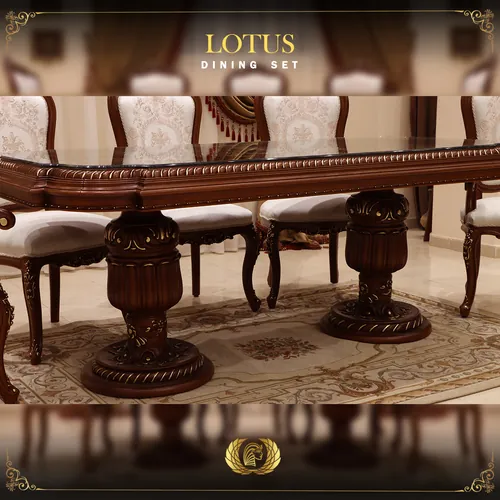
Louis XV furniture is the French expression of Rococo. Expect S-curved cabriole legs, chair backs with a rounded cartouche or oval outline, carved crest rails with flowers, shells or scrolls, and an overall sense of movement. A Louis XV style table often has a serpentine apron and carving at the knee of each leg. This is the most ornate of the three looks and the one most often finished in gold leaf.
Louis XVI and Neoclassical
Louis XVI design turned back toward classical order. Chair legs are straight and tapered, often fluted like small columns, and backs are oval, medallion-shaped or rectangular. Carving is lighter and more symmetrical, with motifs such as ribbons, beading and laurel. A Louis XVI style set suits rooms with clean architecture and works well when you want elegance without heavy ornament.
French Provincial
Provincial furniture is the country interpretation of court styles. It keeps the cabriole leg and the shaped apron but simplifies the carving and favors natural wood, a light painted finish or a gently worn look. A Provincial dining set feels relaxed and is the easiest of the three to live with every day. Many sets blend these traditions, so read the leg, the chair back and the carving together rather than relying on the label alone.
The Table: Shapes, Bases and Tops
The table sets the scale for the whole set, so choose it first and fit the chairs around it.
Shapes
Rectangular tables are the traditional choice for formal French dining rooms and seat the most people in a long room. Oval tables soften the corners, ease traffic around the ends and suit the curves of Louis XV design. Round tables work well for four to six people in a square room or breakfast area and keep conversation easy. A square table is less common in this style but can anchor a compact room. If you entertain only a few times a year, a table with extension leaves lets you keep a smaller footprint most of the time.
Bases
Four-leg tables with cabriole legs are the classic French look, but the legs sit at the corners and can limit where chairs go on a short table. Pedestal and double-pedestal bases free up legroom and make it easier to add a chair at the corners. Trestle bases appear on rustic Provincial tables. Whatever the base, check that the legs or pedestal feet do not land where a diner’s knees will be, and that the apron is not so deep that it presses on the thighs of a seated guest.
Tops
Most French style tables have a wood top that is lacquered, painted, gilded or left in a natural finish. Some designs add inlay or parquetry patterns. Marble tops appear on French style consoles, buffets and some tables, where the stone contrasts with carved wood and adds weight to the room. Marble is heavy and can stain or etch, so ask about the thickness, the type of stone and how the top is supported. A clear glass protector over a gilded or painted top is a practical option for families who use the dining table every day.
The Chairs: Legs, Backs, Arm and Side Chairs
Chairs carry much of the French character of a set, and they are what your guests notice when they sit down.
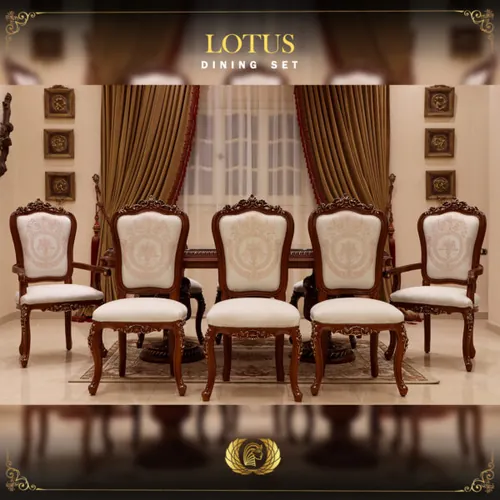
Legs. Cabriole legs curve outward at the knee and inward toward the foot, which gives Louis XV and Provincial chairs their graceful profile. Because the curve projects, measure chairs at their widest point, not across the seat. Straight, tapered legs on Louis XVI style chairs take slightly less room and look lighter in a row.
Backs. Upholstered backs in an oval, medallion or cartouche frame are typical. Some chairs use a carved wood splat or cane panel instead, which feels more casual. Check the back height against the room. Tall backs look grand in a large dining room but can block sightlines in a smaller one, and the crest should clear the tabletop when the chair is pushed in.
Arm and side chairs. Most sets place two arm chairs at the ends of the table and side chairs along the long sides. Arm chairs need more width, and their arms must slide under the apron or the chair will sit away from the table. If your table is tight, consider side chairs all around, or arm chairs only at the head and foot.
Comfort. Sit before you buy whenever you can. Look for a seat deep enough to sit back in, a supportive back and firm, well-attached upholstery.
China Cabinets, Buffets and Sideboards
A formal French dining room often includes at least one storage piece. A buffet or sideboard is a low cabinet that provides closed storage for linens and serveware plus a serving surface along the wall. A hutch adds a display section on top for china and glassware, and a china cabinet is a taller display piece with glass doors. In French design, these pieces often repeat the shaped apron, carved details and curved feet of the table, and buffets are sometimes topped with marble.
Choose storage based on what you actually need. If you serve buffet-style or need a place to set dishes during dinner, a sideboard earns its space. If you collect china or crystal, a display cabinet keeps it visible and protected. You can browse hutches, buffets and china cabinets to compare sizes and finishes.
Leave room in front of a buffet to open its doors while chairs are pulled out. The storage does not need to match the set exactly; a related finish or the same metal tone often looks more considered.
Finishes and Upholstery
The finish is where French style dining sets vary the most, and it shapes how formal the room feels.
Gold and bronze. Gilded finishes are the signature of Louis XV and palace-scale designs. Warm gold reads as formal and glamorous, while bronze and antique gold feel richer and more subdued. Gilding on carved edges and high points will show light wear over time, which is part of the character of the finish.
Cream, ivory and white. Painted or glazed cream finishes are common on Provincial and Louis XVI style pieces. They brighten a room and pair well with gold accents, though painted edges may show marks with heavy daily use.
Natural and stained wood. Walnut, oak and fruitwood tones suit Provincial sets and kitchens or breakfast rooms. The wood under any finish matters for long-term strength. Our guide to the best woods for French style furniture explains the traditional species and what to ask a seller.
Upholstery. French dining chairs are commonly covered in damask, brocade, linen, chenille or velvet. Patterned damask and brocade hide everyday wear and feel traditional. Velvet adds depth and color. Linen and light solids suit a softer Provincial look but show stains more easily. If the chairs will be used every night, ask whether a performance fabric is available. Whatever you choose, follow the care guidance for the fabric and finish; our article on caring for a dining room set covers the basics.
Sizing a French Dining Set for Your Room
The general sizing rules for any dining set apply here, and our guide on how to choose a dining room set explains them in detail. French designs add a few specific checks. Treat the numbers below as common rules of thumb, not fixed standards.
- Seats per side. Plan on roughly 24 inches of table edge per diner, and a little more for arm chairs or wide carved chairs. Count the chairs you will use weekly, not only for holidays.
- Clearance. Leave about 36 inches between the table edge and the wall or other furniture so a guest can push back a chair, and more where people need to walk behind seated guests.
- Measure the curve. Cabriole legs and carved backs project beyond the seat. Use the overall chair width and depth, and the table’s full footprint including carved corners, not just the tabletop.
- Height. Compare the table height with the chair seat height. Roughly 12 inches between the seat and the tabletop is a comfortable general guideline. Some carved tables are taller than the common 30 inches, so check both numbers and confirm arm chairs slide under the apron.
- Delivery path. A long carved table or a tall china cabinet must fit through doors, hallways and stair turns. Measure the path as well as the room.
A quick test: outline the table and the pulled-out chairs on the floor with painter’s tape and walk around it. If you have to turn sideways to pass, choose a smaller table or fewer chairs. For example, the 11-piece Bellona set in our collection lists a table about 100 inches long with ten chairs, which suits a long formal room, while a seven-piece set with a table for six works better in a typical dining room.
How to Choose a French Style Dining Set
Once you know your measurements, work through these decisions in order.
- Pick the look. Choose Louis XV/Rococo for drama and carving, Louis XVI for symmetry and restraint, or Provincial for a relaxed, everyday room. Match the level of ornament to your architecture: high ceilings and moldings can carry more carving than a simple modern room.
- Set the seat count. Decide how many people you seat most weeks and whether you need extension leaves or extra chairs stored elsewhere.
- Choose the table shape and base. Rectangle or oval for long rooms, round for square rooms and small groups, pedestal bases when you need corner seating.
- Check the construction. Ask what wood the frame is made of, how chair joints are reinforced and whether the legs are solid wood. A painted or gilded finish is only as good as the frame underneath it.
- Select finish and fabric together. View the frame finish and the upholstery side by side, ideally in your room’s light. Gold reads warmer under incandescent bulbs and cooler in daylight.
- Decide on storage. Add a buffet or china cabinet only if the room has the wall space and you have something to store or display.
- Confirm the details in writing. Get the overall dimensions of the table and each chair, the piece count, the finish name and the fabric before you order.
If no standard set fits your wall or your seat count, a custom size may solve it. You can start a request on our design your own furniture page.
Choosing From Our French Dining Collection
Our French style dining sets come from the Kleopatra Kingdom collection, Mobilia Cleopatra’s own handmade furniture line. The collection draws on French, Victorian, Egyptian and palace-style traditions, and nearly every piece is built from solid wood, with carved frames, gilded accents and finishes from warm gold and bronze to champagne, ivory and classic brown. Every item in the collection can be custom-made to your size, wood finish and upholstery.
The French dining sets are mostly Rococo in style and are sold as complete ensembles of 7, 9 or 11 pieces, typically a table with six, eight or ten chairs, including arm chairs for the ends. As of October 2026, complete sets range from roughly $9,700 to about $18,900, with some sets on sale. If you prefer to build your own combination, French style dining tables are also sold individually, from about $3,000 to $7,500 as of October 2026, with matching chairs available separately. Prices change, so check the product page for current pricing.
To see how dining pieces relate to French style sofas, beds and accents across the house, browse our full French style furniture collection. For questions about a specific set, call us at (909) 999-1442.
Styling a French Dining Room
A French style dining set is the centerpiece, but the room around it decides whether it feels elegant or overdone.
Lighting and walls. A crystal or candle-style chandelier centered over the table is the classic choice; hang it so it does not block views across the table. Soft neutrals, warm whites, muted blues and sage greens support gold and cream finishes, and full-length drapery softens a hard floor.
Rugs and mirrors. A rug should extend far enough that chairs stay on it when pulled out. Keep its pattern quieter if the chairs are patterned. A gilded mirror above the buffet reflects light and repeats the carving; keep one family of gold, brass or silver across frames, lighting and hardware.
Balance. If the set is heavily carved, keep accessories simple: flowers, a pair of candlesticks and good table linens. In an open-plan home, repeat one finish or fabric color in the living area so the dining zone feels connected.
Frequently Asked Questions
What are French style dining sets?
French style dining sets are matched tables and chairs designed after French furniture traditions, mainly Louis XV (Rococo), Louis XVI (Neoclassical) and French Provincial. They typically feature shaped or carved aprons, cabriole or tapered legs, upholstered chair seats and backs framed in wood, and finishes such as gold leaf, painted cream or natural wood.
What is the difference between French Provincial and Louis XV dining sets?
Louis XV dining sets reflect the court style: deeper carving, more ornament and gilded finishes. French Provincial sets are the country version, with the same cabriole legs and curved lines but simpler carving and painted or natural wood finishes. Provincial feels more casual; Louis XV feels formal.
How many chairs should a French dining set have?
Choose the number you use most weeks, then check that the table gives each diner about 24 inches of edge. Six chairs suit most dining rooms, eight suit larger rooms and long tables, and ten or more need a formal room with generous clearance. Extra chairs can live along a wall or in another room until guests arrive.
Do the table and chairs have to match?
No. A matched set is the traditional choice and is the easiest way to get a cohesive look, but a French table with upholstered chairs in a related finish, or contrasting host chairs at the ends, can look more personal. Keep the leg style and metal tone consistent so the pieces feel related.
Is a French dining set practical for everyday use?
Yes, if you choose with daily life in mind. Patterned or performance fabrics hide wear better than light solids, a glass protector can shield a gilded or painted tabletop, and a Provincial or Louis XVI style set is generally easier to live with than a heavily carved Rococo set.
Are French style dining tables available with marble tops?
Marble appears in French style furniture, most often on buffets, consoles and some tables. Many French style dining tables have carved wood tops with a painted or gilded finish instead. If you want marble, ask about the stone, its thickness and how the base supports the extra weight.
Can a French style dining set be made to a custom size?
Many makers offer custom sizes, finishes and fabrics. At Mobilia Cleopatra, every Kleopatra Kingdom item can be custom-made to your size, wood finish and upholstery. Bring your room measurements and seat count so the table length and chair count can be confirmed before production.
Bringing It All Together
The best French style dining set is the one that fits your room first and your taste second. Start with the measurements: table edge per diner, clearance behind each chair and the full footprint of curved legs and carved backs. Then choose the look that suits your home, whether that is the carved movement of Louis XV, the cleaner symmetry of Louis XVI or the relaxed charm of Provincial design.
From there, choose the table shape and base, check the frame construction and pick the finish and fabric together in your room’s light. Small details, such as arm chairs that slide under the apron, separate a set that looks good in a photo from one that works every night.
When you are ready to compare designs, explore our French dining collection, or contact our team at (909) 999-1442 with your measurements and seat count.