Free shipping · 0% for 6 months · White-glove available


Rococo vs French Provincial: How to Tell Them Apart

Reviewed by the Mobilia Cleopatra design team
Quick answer: Rococo is the ornate court style of Louis XV’s France, at its height from roughly the 1730s to the 1760s: deep, flowing, often asymmetrical carving, shell and scroll ornament, gilding, veneer, and showpiece scale. French Provincial is the regional version of those same curves, made by cabinetmakers outside Paris for ordinary houses: lighter carving that stops at the knee and apron, local solid woods, painted or waxed finishes, and a scale meant for daily use. Same cabriole leg, very different amount of ornament.
Rococo and French Provincial are easy to confuse because they grew from the same root. Both use the S-shaped cabriole leg, curved aprons, and serpentine fronts. Furniture listings often blur them, calling the same chair “Rococo,” “Louis XV,” and “French Provincial” in a single description. If you are about to order a sofa set, a dining set, or a bedroom suite, knowing which one you are actually looking at helps you match the piece to your ceiling height, your room size, and the way you live.
This guide compares the two side by side: where each style came from, a feature-by-feature table, how to identify each on sight, which rooms and homes suit which style, how to mix them without the room looking accidental, and what to check when you buy new pieces in either look. For the full background on the country style alone, read our guide to what French Provincial furniture is.
What Is Rococo Furniture?
Rococo is the decorative style that took hold in Paris during the reign of Louis XV, which is why the two names are often used together. It reached its peak in French furniture from about the 1730s to the 1760s. The J. Paul Getty Museum’s open-access catalogue French Rococo Ébénisterie focuses on Rococo case furniture from 1735 to 1760 and describes pieces made by Paris cabinetmakers for the royal family and the aristocracy, prized for lavish surfaces, refined gilt-bronze mounts, and elaborate design.
The name is usually traced to rocaille, the rock and shell work used in grottoes and gardens. That tells you a lot about the look. Rococo ornament is drawn from nature: shells, C-scrolls and S-scrolls, acanthus leaves, flowers, ribbons, and waves. Unlike the strict symmetry of the earlier Baroque, Rococo carving often flows off-center, so one side of a crest rail answers the other rather than mirroring it exactly.
Rococo was also a style for private rooms. Salons, boudoirs, and smaller apartments created demand for lighter chairs, small tables, and upholstered seating that people could actually sit in for conversation. Even so, a true Rococo piece was a luxury object. Paris workshops used exotic veneers, marquetry, gilt bronze, carved and gilded frames, silk or tapestry upholstery, and finishes polished to a high shine. The furniture was meant to be seen in a room with tall ceilings, boiserie paneling, and mirrors that multiplied the gold.
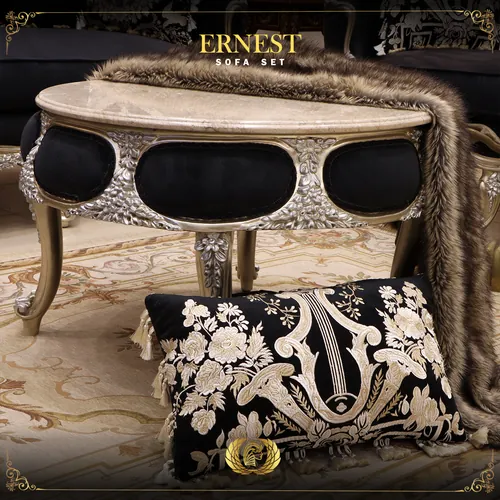
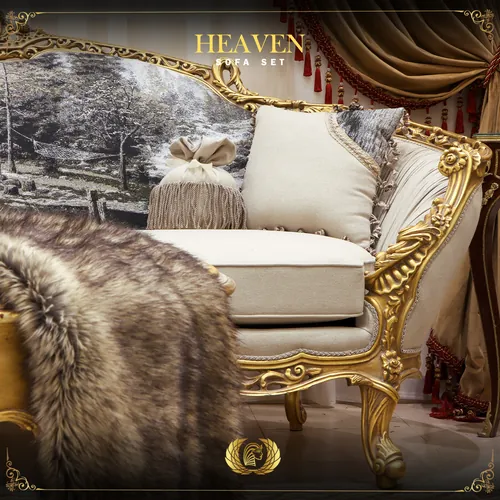
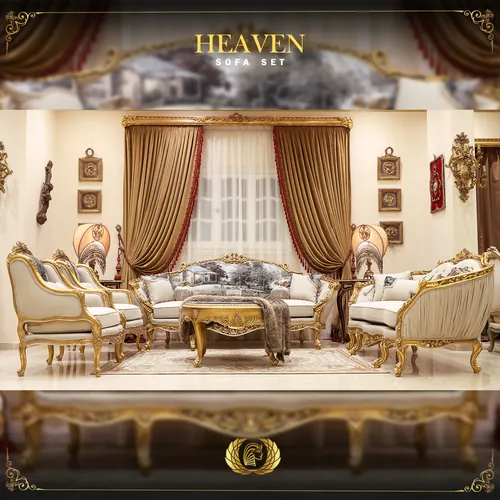
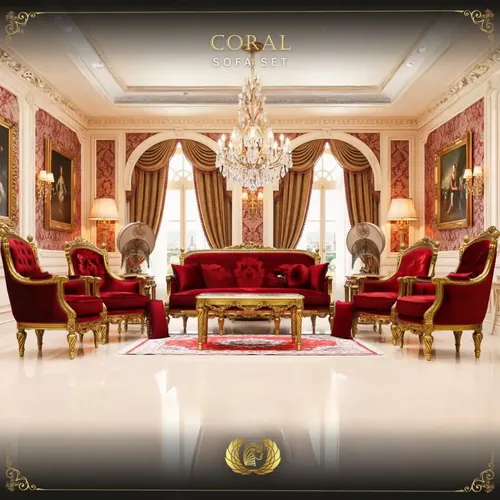
Today the word covers both period pieces and the many revival and new designs inspired by them. When a modern store tags a sofa “Rococo,” it usually means deep carving, a scrolled crest, gilded or metallic finishes, and a scale that makes the piece the focal point of the room. You can see that range in our Rococo style collection.
What Is French Provincial Furniture?
French Provincial is not a separate invention. It is what cabinetmakers in the French regions, far from the Paris guilds and the court, made when they adapted the fashionable Louis XV look for local households. “Provincial” simply means “from the provinces.” The curves stayed. The cost, the gilding, and much of the carving went away.
Provincial makers worked with the woods that grew nearby, such as oak, walnut, beech, and fruitwoods, and they built mostly in solid wood rather than veneer. Decoration came from restrained carving on the knee of the leg, the apron, and the crest, or from paint. Finishes were waxed, oiled, or painted in soft tones instead of the high-gloss polish of court furniture. Pieces were smaller and simpler, because they had to fit farmhouses and town houses and survive daily use.
That is the essential contrast in one sentence: Rococo was made to impress, French Provincial was made to live with. If you want the full history, the regional differences, and the typical pieces such as armoires, buffets, and bergères, our French style furniture guide places Provincial alongside Louis XV, Louis XVI, and French Country. Here we stay focused on telling it apart from Rococo.
Rococo vs French Provincial: Side-by-Side Comparison
The quickest way to separate the two is to compare the same features one at a time. Use this table as a checklist when you look at a product photo or a piece in person.
| Feature | Rococo (Louis XV court style) | French Provincial |
|---|---|---|
| Lines | Flowing S-curves everywhere: legs, aprons, crest rails, arms, serpentine fronts | Same cabriole leg and curved apron, but calmer, with straighter backs and tops |
| Ornament | Deep, sculptural carving; shells, scrolls, acanthus, flowers; often asymmetrical; covers much of the frame | Light carving on the knee, apron, and crest, then it stops; often symmetrical and simple |
| Finishes | Gilding, gilt-bronze mounts, metallic leaf, high-gloss polish | Waxed or oiled natural wood, or soft painted finishes in cream, gray, or muted colors |
| Woods | Exotic veneers and marquetry on case pieces; carved and gilded frames on seating | Local solid woods such as oak, walnut, beech, and fruitwoods |
| Upholstery | Silk, damask, velvet, tapestry; padded seats and backs | Cotton, linen, toile, simple prints; rush or loose cushions on some chairs |
| Scale | Statement scale meant for tall, formal rooms | House scale meant for standard rooms and daily use |
| Mood | Theatrical, glamorous, formal | Relaxed, warm, lived-in |
Notice what the two share: the cabriole leg, the scalloped apron, and the overall softness of line. That shared vocabulary is why the styles combine so well. What changes is intensity. Rococo turns every element up; Provincial turns it down.
How to Identify Each Style
When a listing calls a piece “Rococo” or “French Provincial,” you can check the label yourself. Look at the furniture in this order.
Start with the carving
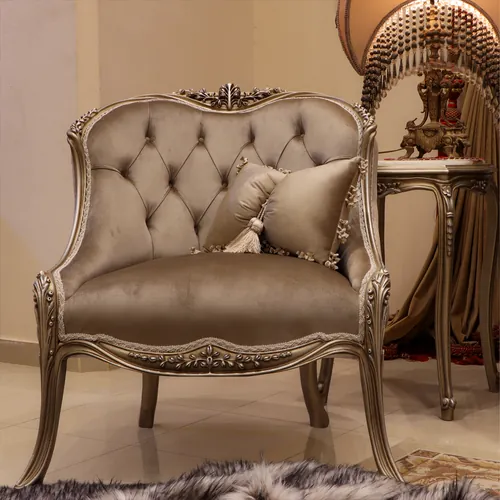
Rococo carving is deep enough to cast shadows, and it tends to travel. It climbs the crest rail, runs down the arms, wraps the apron, and often ends in a shell or scroll at the center. It may be deliberately off-balance. Provincial carving is shallow and local: a small shell or flower on the knee, a scalloped line on the apron, perhaps a carved motif at the top of the back. Then the frame goes plain.
Check the legs and feet
Both styles use the cabriole leg, so the leg alone does not settle the question. On Rococo pieces the leg is usually thicker at the knee, more strongly curved, carved, and finished with a scroll or leaf toe. On Provincial pieces the leg is slimmer, cleaner, and often ends in a simple scroll or pad foot. A curved cap fixed to a straight post is not a true cabriole leg in either style.
Read the finish
Heavy gold leaf, metallic bronze or champagne finishes, and gilt hardware point to Rococo. A painted finish with soft wear at the edges, a natural walnut or oak tone, or a waxed fruitwood look points to Provincial. Paint and gold can appear together, but in Provincial furniture gold is usually limited to thin accent lines, if it appears at all.
Look at the upholstery and the seat
Rococo seating often has a fully padded, tight back framed by carved wood, dressed in damask, velvet, or a jacquard with a metallic thread. Provincial seating favors simpler cottons and linens and a seat that looks comfortable rather than ceremonial. A heavily button-tufted settee with nailhead trim is neither; that is closer to Victorian. If you are torn between later historic styles, compare them in our guide to Victorian and Baroque furniture.
Which Style Suits Which Room and Home
Most American homes have standard ceilings and open-plan living areas, and that matters more than any label. Scale is the first decision.
Ceiling height and room size
A Rococo sofa with a tall carved crest needs vertical space. Under a low ceiling it can make the room feel smaller and the furniture feel crowded. Higher ceilings, formal living rooms, and dedicated dining rooms give Rococo the room it was designed for. French Provincial pieces sit comfortably in ordinary rooms, family spaces, and bedrooms, because their lower backs and lighter frames leave more visual air.
Living room
If the living room is used for receiving guests rather than daily lounging, a Rococo sofa set can anchor it beautifully, especially with a large rug and a mirror over a console. For a family room where people put their feet up, Provincial-style pieces in softer fabrics are easier to live with. A common middle path is a calmer sofa with one or two carved accent chairs.
Dining room
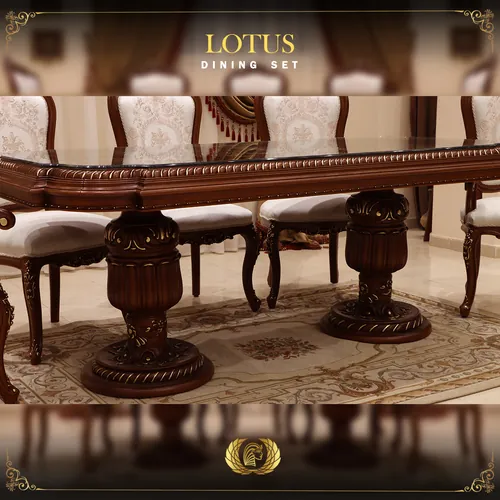
Rococo dining sets, with carved chair backs and gilded table bases, create the most formal room in the house. They need space so chairs can be pulled out and walked around without bumping the carving. A Provincial table with painted or natural chairs reads as relaxed and suits a kitchen-adjacent dining area or a breakfast room.
Bedroom
A Rococo bed with a sculpted headboard makes the bedroom feel like a suite, and in a large primary bedroom that drama works. In a smaller bedroom, a Provincial bed with a gently arched headboard and painted nightstands keeps the curves without overwhelming the floor space.
Mixing Rococo and French Provincial
Because they share the same curves, these two styles mix more easily than almost any other pair. The trick is to decide which one leads.
If Provincial leads, keep the main pieces calm, in painted or natural finishes, and add one Rococo element as the accent: a single carved, gilded armchair, a Rococo mirror over the sofa, or a carved console in the entry. One sculptural piece reads as a deliberate choice. Several competing ones next to pale Provincial furniture can look accidental.
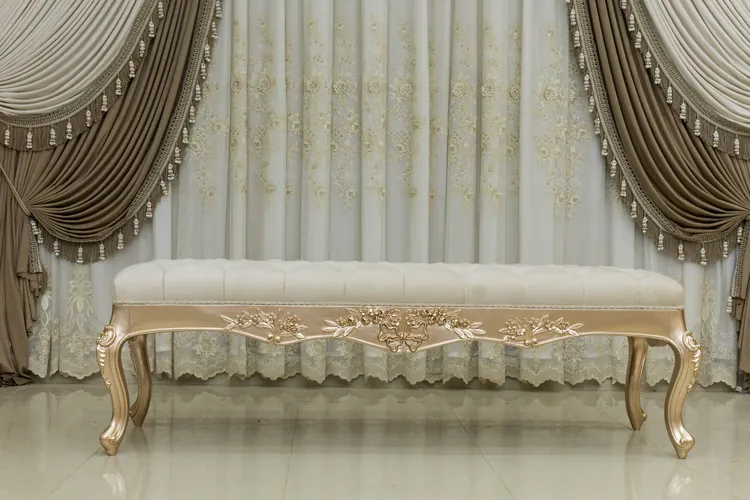
If Rococo leads, use Provincial pieces as the quiet supporting cast. Simple side tables, an unadorned bench at the foot of the bed, or Provincial dining chairs at the ends of a table soften a formal room and give the eye somewhere to rest.
Three rules keep the mix coherent. First, repeat a color: let a cream, ivory, or champagne tone appear in both the Rococo and the Provincial pieces. Second, keep the metal finish consistent; if the Rococo chair is gold, avoid adding silver hardware elsewhere. Third, watch the scale. A slim Provincial side table beside a massive Rococo sofa will look lost, so size supporting pieces to match the arm height of the sofa.
Accent chairs are the easiest way to experiment. Our French style living chairs include carved designs with gold, bronze, ivory, and walnut-toned frames, so you can test how much ornament your room can carry before committing to a full set.
Buying New Rococo or French Provincial-Style Furniture
Mobilia Cleopatra sells new furniture, not antiques. When you shop for either style today, you are buying a new design inspired by the period, so construction matters more than the label.
What to check in either style
Ask for the wood species. Beech, oak, walnut, and fruitwoods are real answers; “wood-look” is not. Ask whether the carving is cut into the frame or applied as molded resin; carving that is part of the wood ages better and can be refinished. Check the joints at the corners of seat frames, which should be reinforced, and check that gilding or paint sits on wood rather than on a plastic coating. More carving never means better quality on its own. A Rococo look on a weak frame is still a weak frame.
Rococo-style pieces at Mobilia Cleopatra
Many of our Rococo designs come from Kleopatra Kingdom, Mobilia Cleopatra’s own handmade furniture collection. According to the Kleopatra Kingdom collection page, it includes French-style furniture with Rococo and provincial detailing, nearly every piece is built from solid wood, frames are carved with gilded accents, and finishes range from gold and bronze to champagne, ivory, and classic brown. Every item in the collection can be custom-made to your size, wood finish, and upholstery.
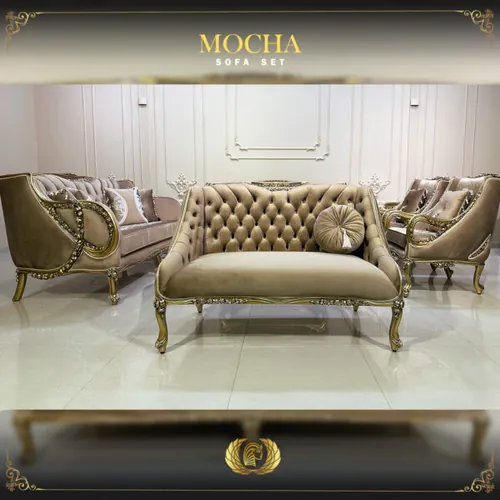
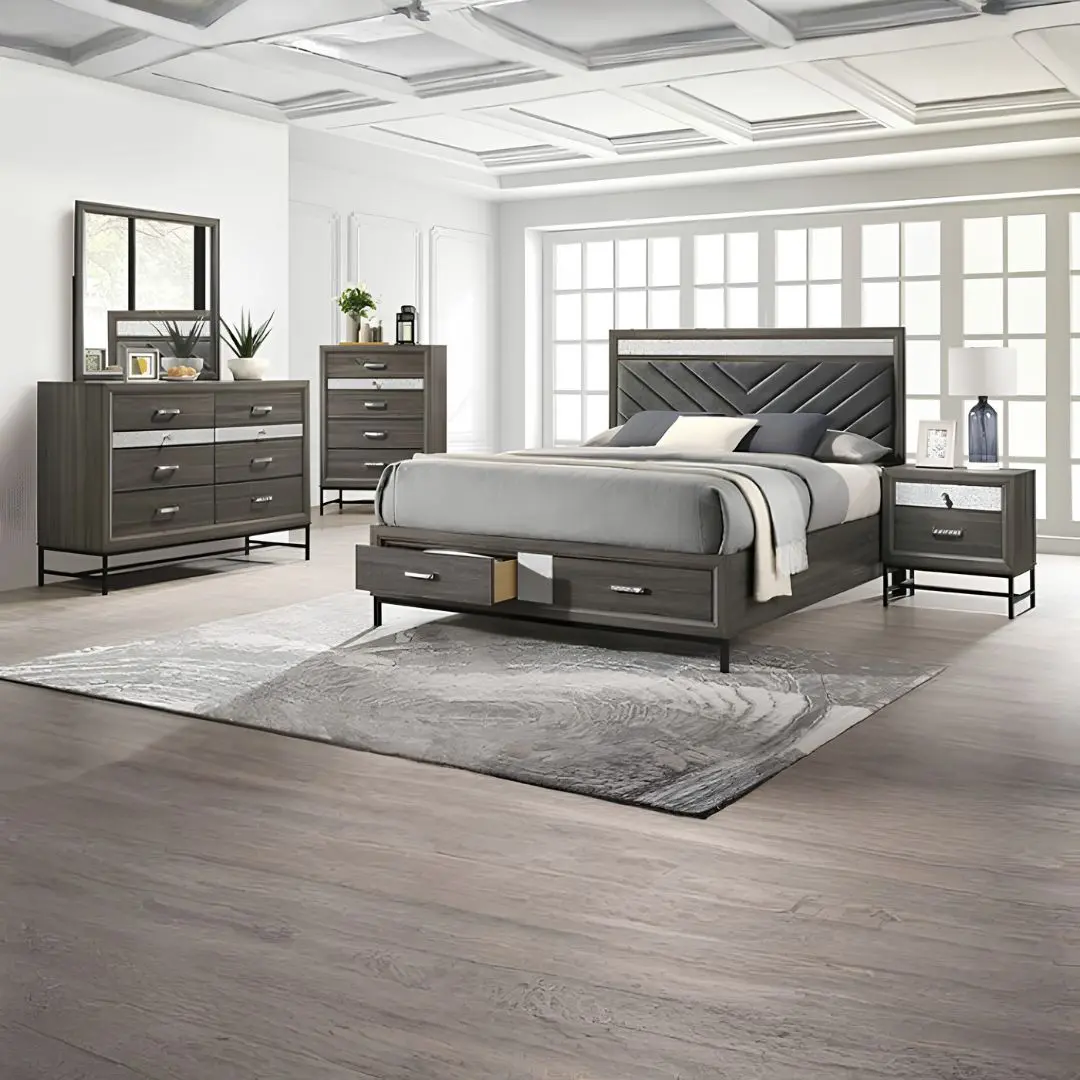
For the living room, browse our Rococo sofa sets. As of October 2026, the 5-piece Handmade Gold Ivory Paris Sofa Set was listed at about $9,750, and a single matching Gold Ivory Paris chair at about $1,450, a useful option if you want one Rococo accent beside calmer seating. For formal dining, our Rococo dining sets include the 9-piece Ivory Gold Paris Dining Set for 8, listed at about $12,950 as of October 2026. For the bedroom, the Rococo bedroom sets include the 5-piece Cream Gold Blue Cleopatra set at about $13,400 and the Cream Mint Green Pure Essence set at about $14,600, both as of October 2026. Prices change, so check the product page for the current figure.
The Rococo style filter also includes vendor collections, such as ACME’s Bernadette group, if you prefer a ready-made gold finish from a name brand.
Leaning toward Provincial
If you want curves with a lighter hand, choose pieces with cream, ivory, or pale mint upholstery, shallower carving, and a simpler crest, or ask for a custom finish that tones down the gold. Our French style furniture hub gathers sofas, dining, bedroom, and accent pieces in one place. For questions about a specific design, call (909) 999-1442.
Frequently Asked Questions
What is the difference between Baroque and Rococo furniture?
Baroque came first. It is heavier, more symmetrical, and more monumental, built for grand public rooms. Rococo grew out of it in the early eighteenth century and is lighter, more playful, and often asymmetrical, with shells, scrolls, and flowing curves suited to private salons. Both use gilding and rich materials, but Baroque feels solid and stately while Rococo feels lively and graceful. For how Baroque compares with later styles, see our article on Victorian vs Baroque furniture.
Is French Provincial the same as Rococo?
No. French Provincial is a regional adaptation of the Louis XV style, which is the French form of Rococo. It keeps the cabriole leg and curved lines but drops most of the gilding, veneer, and deep carving, and it uses local solid woods and simpler finishes.
Is Louis XV furniture Rococo?
Largely, yes. Louis XV is the name for French furniture made during that king’s reign, and its most characteristic pieces are Rococo in style. Toward the end of the reign, taste began shifting toward the straighter, classical lines that became Louis XVI, or Neoclassical, furniture.
Can I mix Rococo and French Provincial furniture in one room?
Yes. Let one style lead. Pair calm Provincial pieces with a single Rococo accent, or support a Rococo sofa set with simple Provincial side tables. Repeat one color and keep metal finishes consistent so the mix looks intentional.
Which style is more practical for everyday living?
French Provincial. Its scale fits standard ceilings, its lighter carving is easier to dust, and its simpler upholstery suits daily use. Rococo works best as a statement in a formal living room, a dining room, or a large bedroom.
Is all gold carved furniture Rococo?
Not necessarily. Baroque, Neoclassical, and Egyptian-inspired designs also use gilding. Rococo is defined by flowing S-curves, asymmetrical shell and scroll ornament, and cabriole legs. Straight, fluted legs and symmetrical laurel wreaths suggest Neoclassical instead.
Does more carving mean higher quality?
No. Carving can be molded resin glued to a frame. Quality comes from the wood species, the joinery, and whether the ornament is carved into the frame itself. Ask about all three before you buy.
Court Style or Country Style: Making the Choice
Rococo and French Provincial speak the same language at different volumes. Rococo is the court version: deep carving, gilding, rich fabrics, and a scale meant to fill a tall, formal room. French Provincial is the house version: the same cabriole leg and gentle curves, with lighter carving, solid local woods, softer finishes, and a size that fits everyday life.
To choose, start with the room rather than the label. Measure the ceiling, think about how often the space is used, and decide whether you want the furniture to be the focal point or the backdrop. If the room is formal and generous, a Rococo sofa set, dining set, or bedroom suite can carry it. If the room works hard every day, lean Provincial and let one carved Rococo chair or mirror bring the drama.
Whichever direction you take, judge construction before ornament: ask for the wood, check how the carving is made, and look at the joints. When you are ready, browse the Rococo collections above, compare them with our wider French style range, and ask our team about custom sizes, finishes, and upholstery for Kleopatra Kingdom pieces.