Free shipping · 0% for 6 months · White-glove available


Best Woods for French Style Furniture

Reviewed by the Mobilia Cleopatra design team
Quick answer: Historically, French furniture makers relied on walnut, oak, beech, and fruitwoods such as cherry and pear, while mahogany only became fashionable in France late in the eighteenth century. Walnut and oak suit solid, carved case pieces; beech is the classic choice for chair frames that will be painted or gilded; fruitwoods give provincial pieces their warm, honeyed tone. For a new French-style piece you plan to keep for decades, the construction (solid wood or well-made veneer over a stable core, tight joinery, sound drawers) matters as much as the species itself.
The word “French” covers a lot of ground in furniture. It can mean a gilded Louis XV armchair made for a Paris salon, a carved walnut armoire from the countryside, or a crisp mahogany commode from the years just before the Revolution. Each of those pieces started with a different piece of wood, and the wood shaped how it was built, decorated, and finished.
Knowing the woods behind the tradition helps in two practical ways. It tells you what an authentic look is based on, so you can judge whether a modern finish feels right, and it gives you a short list of questions to ask before you buy a bedroom set, dining table, or chest of drawers meant to last. This guide covers both: the woods French makers actually used, how court and country furniture differed, and how to choose durable French-style furniture for a modern American home.
Why Wood Choice Matters in French Style Furniture
French furniture is defined by curves, carving, and surface decoration, and each of those features puts different demands on the timber. A cabriole leg needs a wood that holds a crisp profile without splitting. A deep, sculpted crest rail on a headboard needs a wood that carves cleanly. A painted or gilded chair frame needs a fine, even surface that takes gesso and paint well. A large armoire or buffet needs a stable wood that will not twist as humidity changes from season to season.
That is why French makers did not reach for a single “best” wood. They matched the species to the job. Dense, strong woods went into structural frames and carcasses. Woods with handsome figure were shown off in solid panels or cut into veneers. Plainer woods with a smooth texture were chosen when the surface would be painted or gilded anyway.
The same logic still applies when you shop for French-style furniture today. A dining table that sees daily meals asks for a different material than an accent chair finished in gold leaf, and a chest of drawers that will be opened thousands of times needs sound construction more than a rare species. Keeping the function in mind first makes the wood question much simpler.
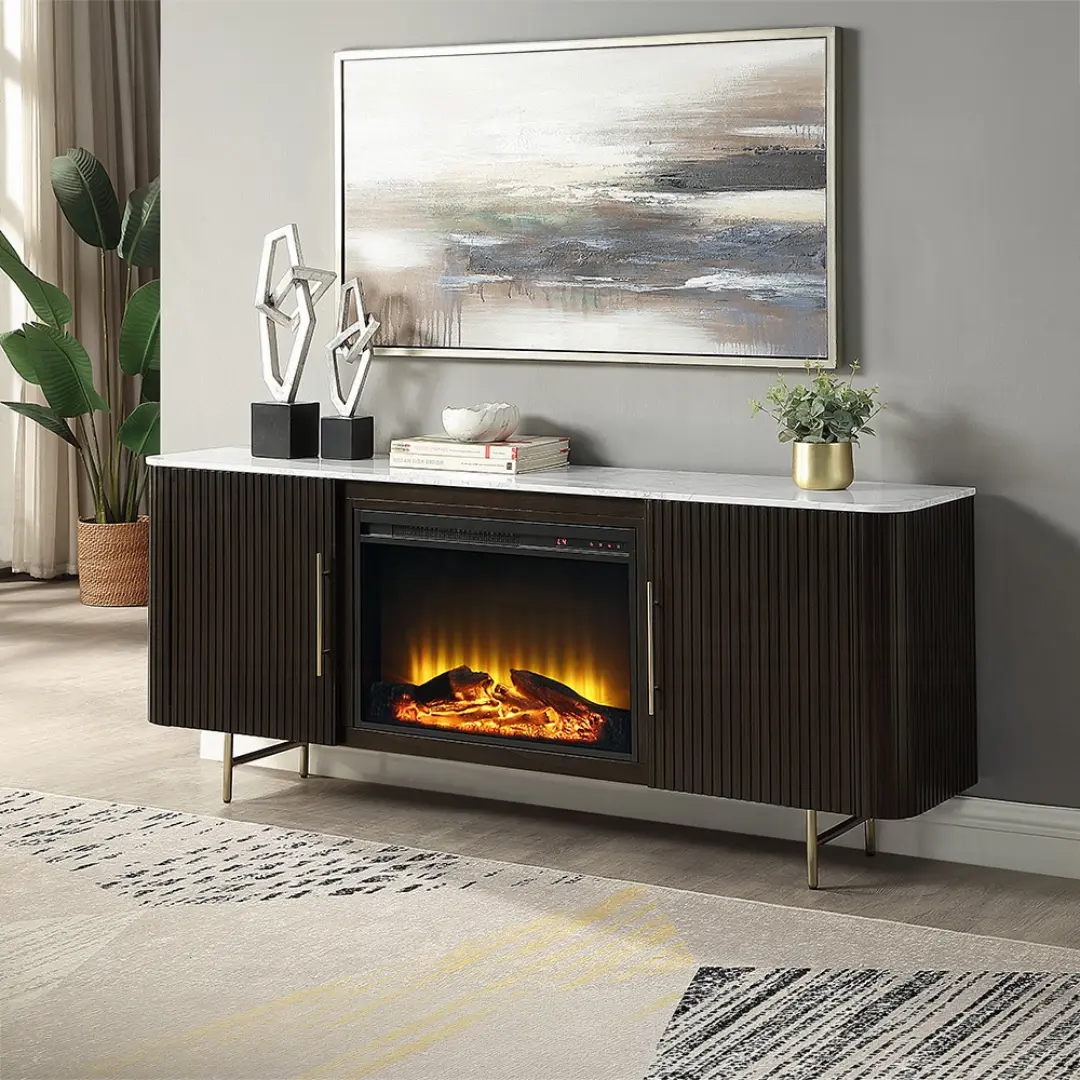
Luxury French provincial furniture showcasing the best wood choices
The Woods French Furniture Makers Traditionally Used
Museum collections give a reliable picture of the woods behind historic French furniture. The species below appear again and again in catalog records, each with its own typical role.
Walnut
Walnut is the wood most closely tied to French furniture before the eighteenth century. Large carved cupboards were made fashionable in France in the sixteenth century, and they were usually built from native hardwoods, especially walnut, with carved decoration. Walnut carves cleanly, takes a soft polish, and shows a warm brown color with attractive figure, which is why it stayed popular for chairs, armoires, and regional furniture long after Paris workshops moved toward veneers. Today, walnut tones and walnut finishes remain a natural fit for formal French bedrooms and dining rooms.
Oak
Oak is the workhorse of French furniture. Many carved armoires were built from solid oak, and in fine Parisian cabinetmaking oak was often hidden inside the piece: museum records for veneered commodes and secretaries repeatedly describe an oak carcass covered in thin sheets of more decorative woods. Oak is strong, stable when properly dried, and shows a pronounced grain, so it works both as a visible, rustic surface and as a dependable structure behind marquetry.
Beech
Beech is the classic French chair wood. Chairmakers in eighteenth-century France worked mostly in walnut or beech, and many surviving armchairs have beech frames that were carved and then painted or gilded. Beech has a fine, even texture with little visible figure, which makes it a poor showpiece but an excellent base for gesso, paint, and gold leaf. When you see a gilded Louis XV-style bergère, the wood under the finish is traditionally beech.
Fruitwoods: Cherry and Pear
Fruitwoods such as cherry (merisier in French) and pear, both listed in the J. Paul Getty Museum’s glossary of woods used in French furniture, appear both as solid wood in regional pieces and as material for inlay and small decorative work. Cherry is valued for its smooth grain and the way its color deepens with exposure to light, which gives older pieces a warm, honeyed glow. In country furniture, fruitwoods sit alongside walnut and oak as everyday local timbers.
Mahogany
Mahogany arrived late in the French story. It was fashionable in Britain well before France, and the Victoria and Albert Museum notes that it only became popular in France in the 1780s, alongside a fashion for all things English. Late Louis XVI, Directoire, and Empire pieces often use mahogany or mahogany veneer with brass or gilt-bronze accents. That makes mahogany a good match for neoclassical and Empire-inspired looks, but not the historic wood of Rococo or provincial furniture.
| Wood | Typical historic role | Look | Good fit today |
|---|---|---|---|
| Walnut | Carved cupboards, chairs, regional pieces | Warm brown, lively figure | Formal bedrooms, dining rooms |
| Oak | Solid armoires; carcasses under veneer | Strong, open grain | Farmhouse tables, buffets, case pieces |
| Beech | Painted or gilded chair frames | Fine, plain, even texture | Gilded or painted seating |
| Cherry and pear | Country furniture, inlay | Warm tone that deepens with light | Provincial bedrooms, side pieces |
| Mahogany | Late eighteenth-century and Empire pieces | Rich reddish brown, fine grain | Neoclassical and Empire looks |
Court vs. Country: How Wood Choice Differed
The biggest split in French furniture is between the fashionable pieces made in Paris for the court and wealthy households, and the furniture made in the provinces for farmhouses and town homes. Wood was one of the clearest differences between them.
Paris workshops: veneer, marquetry, and gilding
By the end of the seventeenth century, fashionable Parisian furniture was increasingly covered in multi-colored veneers of fine woods, some grown in France and others imported through expanding trade routes. Cabinetmakers built a carcass, often of oak and sometimes of pine, then laid exotic veneers, marquetry, and gilt-bronze mounts over it. Seat furniture followed a different path: chairmakers carved frames in beech or walnut, and most were then painted or gilded by specialist craftsmen. In court furniture, in other words, the visible surface was often not the structural wood at all.
Provincial workshops: solid local woods
Country makers generally worked in the solid woods that grew around them, with walnut, oak, and fruitwoods the most commonly cited. Provincial furniture was rarely veneered and did not depend on marquetry; character came from the grain itself, from carved panels and moldings, and from simple waxed or painted finishes. Forms such as armoires, buffets, and rush-seated chairs borrowed Louis XV curves but simplified the ornament. If you want a deeper look at the style itself, our guide to what defines French Provincial furniture covers its history and hallmarks, and our comparison of Rococo and Provincial design explains where the two styles part ways.
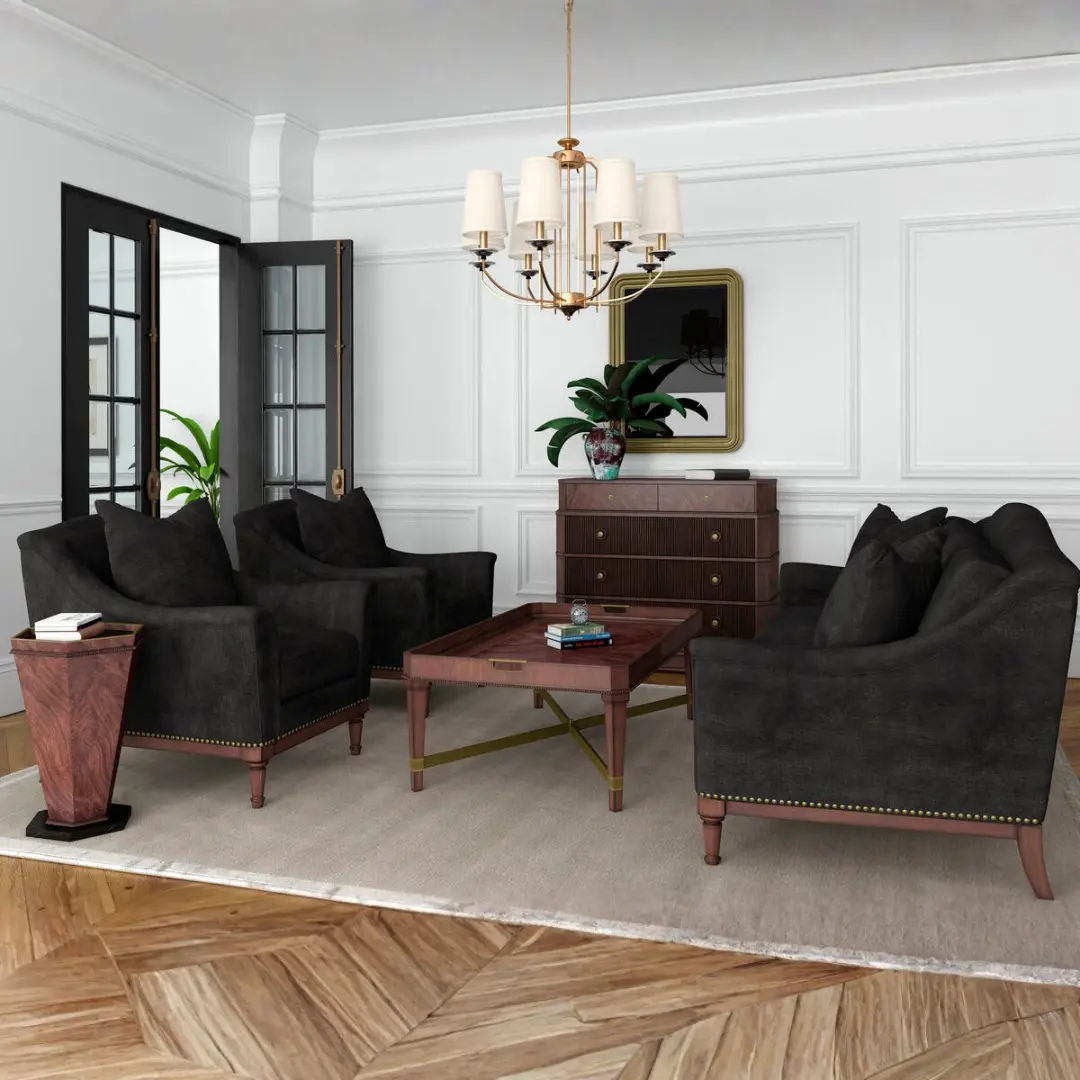
Antique inspired French style furniture
Painted, Gilded, or Natural: How Finish Relates to Wood
Because so much French furniture was painted or gilded, the finish you choose tells you a lot about which wood matters. Under a gold-leaf or painted surface, figure is invisible, so a smooth, stable wood such as beech is the traditional choice. The quality you are paying for is in the carving and the finishing work, not in a dramatic grain.
A natural or stained finish is the opposite case. Here the wood is on display, and species makes a visible difference. Walnut gives depth and movement, oak shows a bold, textured grain that suits rustic provincial rooms, and cherry has a fine, satiny look that mellows over time. Distressed and antiqued finishes, popular in French country decorating, usually look most convincing on woods with real grain rather than on flat, printed surfaces.
Many modern French-style pieces combine the two approaches: a carved frame finished in gold, silver, ivory, or champagne paired with upholstery, marble, or glass. In those designs, ask about the frame material and the finishing process rather than the species name alone. For a fuller picture of the style’s colors and silhouettes, our French style furniture design guide walks through the main looks.
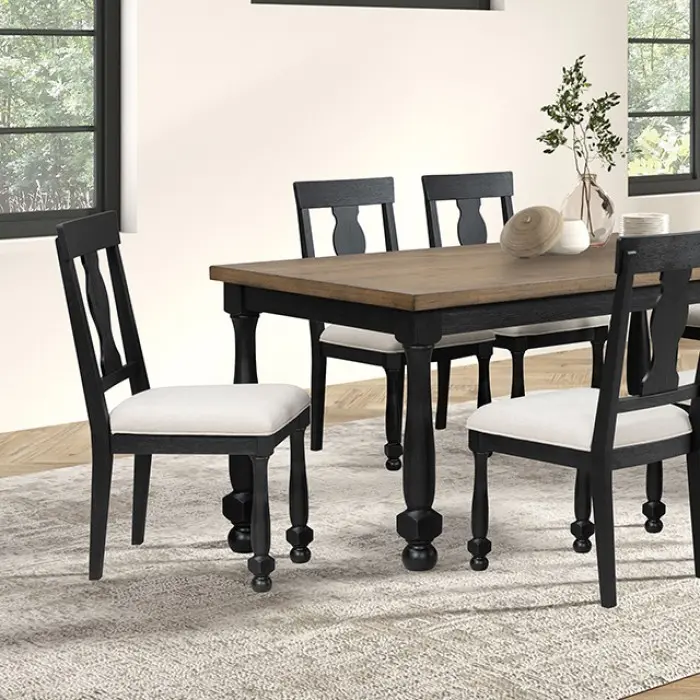
Choosing Woods and Finishes for Each Room
History is a useful guide, but a modern home also has to handle family meals, air conditioning, and California sunshine. A few practical pairings help.
Bedroom
Beds, nightstands, dressers, and armoires are used gently but opened and closed every day. Solid hardwood or well-built veneered case pieces in walnut, cherry, or oak tones give a classic look, while painted and gilded finishes suit a more formal, palace-inspired bedroom. If you are furnishing the whole room, coordinated French-style bedroom sets make it easier to keep wood tones and carving consistent from bed to dresser.
Dining room
Dining tables see heat, spills, and constant use, so durability comes first. A strong, stable top and a well-built base matter more than the species name, and a protective finish matters more still. Oak and walnut tones work naturally in provincial dining rooms; carved, gilded chairs pair best with a table finish that resists marks. Browse French style dining sets to compare finishes and table shapes side by side.
Living room
Sofas, loveseats, and accent chairs are where carved and gilded frames shine. Because the frame carries weight and stress, ask whether it is solid wood and how the joints are reinforced. For coffee and side tables, choose surfaces that tolerate cups and everyday wear, or plan to use coasters.
How to Choose a Durable Chest of Drawers That Lasts for Years
A chest of drawers is one of the hardest-working pieces in a French-style bedroom, so it is worth checking construction carefully. Whether you are shopping in the U.S. or abroad, the same signs of quality apply.
- Look at the drawer corners. Pull a drawer out completely. Dovetail joints, where interlocking “tails” and “pins” join the front and sides, are a long-standing sign of careful construction. Stapled or simply glued butt joints are more likely to loosen over time.
- Check the drawer bottoms. A solid wood or sturdy plywood bottom set into grooves holds up better than thin hardboard that can sag.
- Test the runners. Drawers should slide smoothly and sit level when closed, whether they run on well-fitted wood runners or quality metal glides. Wobble or sticking in the showroom only gets worse at home.
- Look inside the case. Dust panels between drawers, corner blocks, and drawer stops add strength and keep the piece square.
- Ask about the materials. Solid hardwood or a quality veneer over a stable core can both last for decades; what matters is that the case does not flex when you push on its sides.
- Check the finish and back panel. A smooth, even finish that resists water rings protects the wood, and a back panel that is secured rather than loosely tacked keeps the case rigid.
- Plan for safety. Anchor tall chests and dressers to the wall with an anti-tip kit, especially in homes with children.
You can compare styles and finishes in our collection of bedroom chests, and bring these questions with you when you shop.
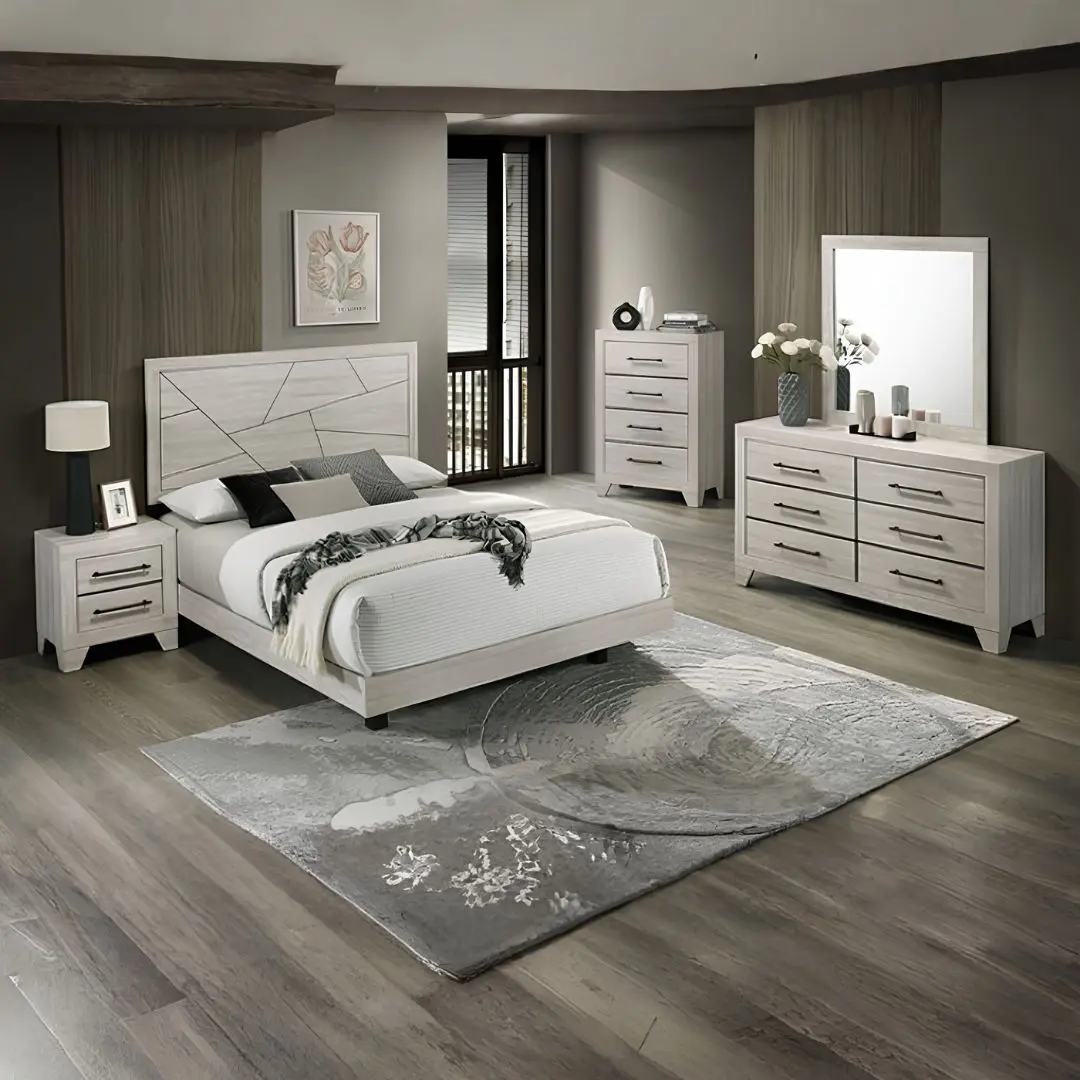
High end French style bedroom furniture
Solid Wood, Veneer, and Engineered Wood: What to Ask
“Solid wood” is not the only route to quality, and “veneer” is not automatically a shortcut. Some of the most celebrated French furniture ever made is veneered over an oak or pine carcass, because veneer allowed cabinetmakers to use rare, beautifully figured woods and create marquetry that would be impossible in solid timber. The difference between fine veneering and cost-cutting lies in the core material, the thickness and quality of the veneer, and how carefully the piece is assembled.
When you compare French-style pieces, ask a few direct questions. What is the frame or carcass made of? Are the visible surfaces solid wood, wood veneer, or a printed laminate? How are the joints made, and are high-stress areas such as chair legs and table aprons reinforced? A knowledgeable salesperson should be able to answer clearly. For a broader look at how solid hardwood compares with engineered materials, see our guide to solid wood luxury furniture.
If you own an antique and want to know what it is made of or how to care for it, consult a professional furniture conservator before cleaning, refinishing, or repairing it.
Frequently Asked Questions
How do I choose a durable chest of drawers that will last many years?
Check the drawer joinery first: dovetail joints are a strong sign of quality. Then look for solid drawer bottoms set into grooves, drawers that glide smoothly and close level, dust panels or corner blocks inside the case, and a case that does not flex when you push on it. Solid hardwood or quality veneer over a stable core can both last for decades. Anchor tall chests to the wall for safety.
What is French provincial furniture usually made of?
Traditional French provincial furniture was usually made from solid local woods, most often walnut, oak, and fruitwoods such as cherry. It was rarely veneered; its character came from the natural grain, carved panels, and simple waxed or painted finishes rather than marquetry.
What is the best wood for French style furniture?
It depends on the piece and the finish. Walnut and oak suit carved case pieces with a natural finish, beech is the traditional base for painted or gilded chairs, cherry gives provincial pieces a warm tone, and mahogany fits neoclassical and Empire looks. For daily use, sound construction matters as much as species.
What wood was used for Louis XV chairs?
Eighteenth-century French chairmakers worked mostly in walnut or beech. Many frames were carved and then painted or gilded, and beech was especially common under gilded finishes because of its fine, even texture.
When did mahogany become popular in French furniture?
Mahogany became fashionable in France later than in Britain, toward the end of the eighteenth century. It is closely associated with late Louis XVI, Directoire, and Empire furniture rather than with Rococo or provincial pieces.
Is veneered furniture lower quality than solid wood?
Not necessarily. Many of the finest historic French pieces are veneered over oak or pine carcasses. Quality depends on the core material, the veneer, and the construction. Cheap printed laminates over particleboard are a different product from real wood veneer over a stable core.
How can I identify the wood in a piece of furniture?
Look at unfinished areas such as drawer sides, the underside, or the back, where the grain and color are easier to see. Oak shows a coarse, open grain, walnut a warm brown with varied figure, and beech a fine, plain texture. For new furniture, ask the seller for the material specification; for antiques, a professional conservator or appraiser can give a reliable identification.
Final Thoughts on Woods for French Style Furniture
The woods behind French furniture tell a clear story. Walnut and oak gave regional pieces their warmth and strength, beech supported the carved, gilded chairs of the court, fruitwoods added a gentle glow to country interiors, and mahogany arrived late as the taste for plainer, English-influenced design took hold. Understanding those roles helps you pick finishes that feel authentic and ask the right questions about construction.
For a new French-style piece, focus on the combination of material, joinery, and finish rather than the species name alone. A well-built chest, bed, or dining table in a finish that suits your room will serve you far longer than a rare wood in a weak frame.
When you are ready to compare styles, start with our curated French style furniture collection. If you want carved, ornate pieces, our own Kleopatra Kingdom handmade collection includes French-style designs with Rococo and provincial detailing, nearly all built from solid wood, and its pieces can be custom-made to your size, wood finish, and upholstery. For help choosing, call us at (909) 999-1442 or visit our Upland showroom at 280 N Benson Ave, Suite 6, Upland, CA 91786.
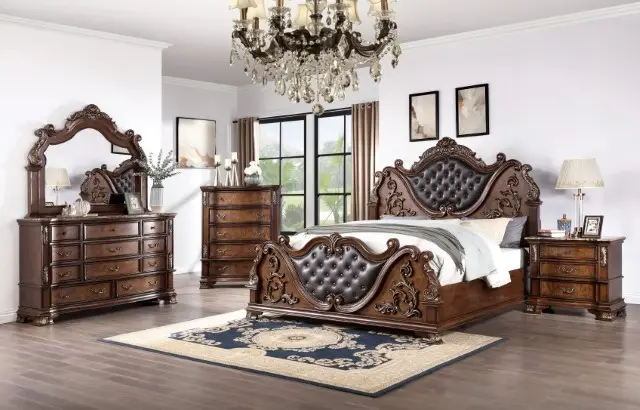
Elegant French style furniture crafted from the best hardwood materials