Free shipping · 0% for 6 months · White-glove available


What Is French Provincial Furniture? Definition, History and Features

Reviewed by the Mobilia Cleopatra design team
Quick answer: French Provincial furniture is the regional furniture made in the French provinces, outside Paris, mainly in the 17th and 18th centuries. Local cabinetmakers adapted the fashionable court styles, above all Louis XV, into simpler, sturdier pieces for country houses. You can recognize it by cabriole legs, gently curved lines, shaped and lightly carved aprons, local woods such as walnut, oak, and fruitwood, and finishes that range from waxed natural wood to soft paint.
The term gets used loosely, from carved walnut armoires to cream-painted bedroom suites. This guide sorts that out. It covers the definition, where the style came from, the features that identify it, the pieces that define it, how it differs from French Country and Louis XV, and how to bring the look into an American home with new furniture.
What Is French Provincial Furniture? A Clear Definition
“Provincial” in French usage simply means “from the provinces,” the regions of France beyond Paris and the royal court. French Provincial furniture is therefore defined by where it was made and for whom, not by a single king or decade. It was built by local joiners and cabinetmakers for farmhouses, manor houses, and town homes, and it borrowed its shapes from the fashions of Paris while dropping the most expensive parts of them.
That is the core of the French Provincial definition: court curves, country construction. A Paris workshop might cover a commode in exotic veneers, marquetry, and gilt-bronze mounts. A provincial workshop would build a similar silhouette in solid walnut or oak, decorate it with shallow carving, and finish it with wax or paint. The result kept the elegance of the cabriole leg and the serpentine front but was built to be used every day and to last for generations.
Three ideas help keep the definition straight:
- It is a regional tradition, not a palace style. Pieces were scaled for lower ceilings and everyday rooms.
- It follows the court, often at a distance. Provincial makers picked up Parisian forms years or even decades after they appeared in the capital, then kept making them long after Paris had moved on.
- It is also a modern design term. Today, “French Provincial furnishings” often describes new furniture made in that spirit, especially curved, carved, painted, or wood-toned pieces for bedrooms, dining rooms, and living rooms.
For a broader map of French design, including Louis XVI and Neoclassical pieces, see our guide to French style furniture. This article stays focused on the provincial branch.
A Short History of French Provincial Furniture
French Provincial furniture history is closely tied to the rise of the French court as Europe’s taste-maker. Under Louis XIV in the late 17th century, Paris and Versailles set the standard for luxury furniture. In the early 18th century, the heavier, symmetrical court style softened into the lighter Régence and then the Rococo style associated with Louis XV, with its curves, shell motifs, and asymmetry.
In Paris, furniture making was organized into guilds. Joiners, or menuisiers, made carved solid-wood pieces such as chairs and beds, while cabinetmakers, or ébénistes, specialized in veneered case furniture. Carvers, gilders, and bronze founders added finishing layers. That division of labor produced spectacular furniture, but it also made court pieces very expensive.
Outside the capital, in regions such as Normandy, Provence, Bordeaux, and the Loire Valley, the story was different. Local craftsmen worked with the timber that grew nearby and served clients who needed storage, seating, and tables for working households. They saw the new Parisian shapes through travelers, engravings, and wealthier neighbors, then translated them into forms their customers could afford and use. A provincial chair kept the curved leg but often had a rush seat. A provincial armoire kept the carved cornice and shaped panels but was built in solid oak or walnut rather than veneer.
The Art Institute of Chicago’s miniature French Provincial bedroom of the Louis XV period captures this idea well: it depicts a Normandy country house and was intended to show how a growing middle class outside Paris adapted the comfort and style of Louis XV’s reign to relatively modest homes, with a richly carved armoire as a focal point.
Because regional workshops kept building familiar forms for a long time, many pieces called “Louis XV provincial” were actually made well after Louis XV’s reign. In the 20th century, the style was revived again, and American manufacturers produced large numbers of French Provincial bedroom and dining suites. That later revival is a big reason many U.S. buyers associate the term with painted, curved bedroom furniture today.
Key Features of French Provincial Furniture
No single detail proves a piece is French Provincial, but certain features appear again and again. Look at them together rather than one at a time.
Cabriole legs and curved lines
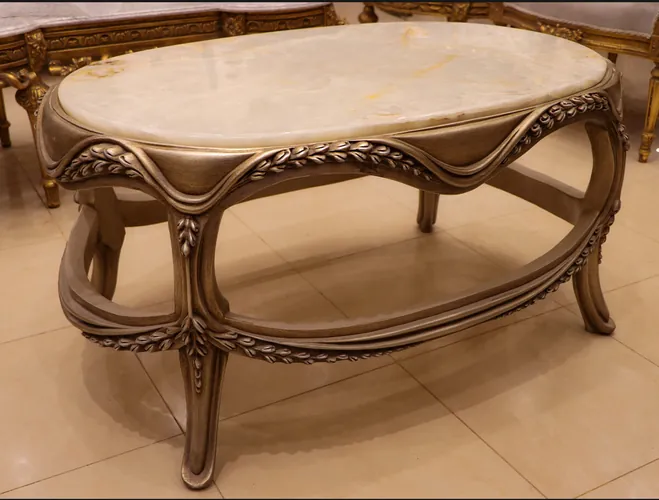
The cabriole leg is the signature. It swells outward at the knee, curves back in, and ends in a small scroll or simple pad foot. Tops, aprons, and drawer fronts often follow gentle serpentine curves. Compared with court Rococo, the curves are calmer and the asymmetry is restrained.
Shaped, lightly carved aprons
The apron, the rail beneath a tabletop, seat, or case, is usually scalloped or shaped rather than straight. Carving tends to be shallow and confined to a few areas: a shell or flower at the center of the apron, leaves at the knee of a leg, or molded panels on doors. Rustic motifs such as wheat sheaves, baskets, and vines are common in regional work.
Natural, local woods
Provincial makers used solid local timber: walnut and oak most often, along with beech, chestnut, elm, and fruitwoods such as cherry and pear. Exotic veneers and marquetry were rare. If you want to compare these species in detail, our article on the best woods for French style furniture covers each one.
Painted, waxed, and distressed finishes
Finishes were practical. Many pieces were simply waxed so the grain could show and develop a deep patina. Others were painted in soft tones such as cream, gray, sage, or pale blue, sometimes with a contrasting line picked out on moldings. In modern interpretations, lightly distressed paint suggests age, while antique white, ivory, and muted gold accents nod to the style’s court origins.
Modest hardware and comfortable scale
Hardware is typically iron or brass, with long decorative escutcheons on armoires and small shaped pulls on drawers. Proportions are human-scaled: pieces are sized for real rooms, so even large storage pieces feel grounded rather than monumental.
Typical French Provincial Pieces
The style is easiest to understand through the pieces that defined provincial homes. Most were built for storage, dining, and comfortable seating.
- Armoire: A tall, two-door cupboard used for linens and clothing, often the most important piece in a provincial household. Look for a shaped or carved cornice, molded door panels, and long decorative hinges or escutcheons.
- Buffet: A low cupboard used in the dining room or kitchen for dishes and table linens, usually with two doors and sometimes drawers above. A buffet à deux corps adds a stepped-back upper cabinet.
- Vaisselier: A buffet with open shelves above for displaying plates and pottery, a familiar sight in country kitchens.
- Commode: A chest of drawers, often with a serpentine or bowed front, shaped apron, and cabriole feet. Provincial versions are usually solid wood rather than veneered.
- Bergère: An upholstered armchair with closed, padded sides and a loose seat cushion, built for deep, comfortable sitting. Its cousin, the fauteuil, has open arms.
- Dining chairs: Simple ladder-back or carved-back chairs, frequently with woven rush seats.
- Farmhouse table: A long, sturdy dining or work table, sometimes with turned or cabriole legs and drawers in the apron.
- Panetière and petrin: Regional specialties, especially in Provence. The panetière is a small, open-work bread cupboard hung on the wall; the petrin is a dough-kneading trough on legs.
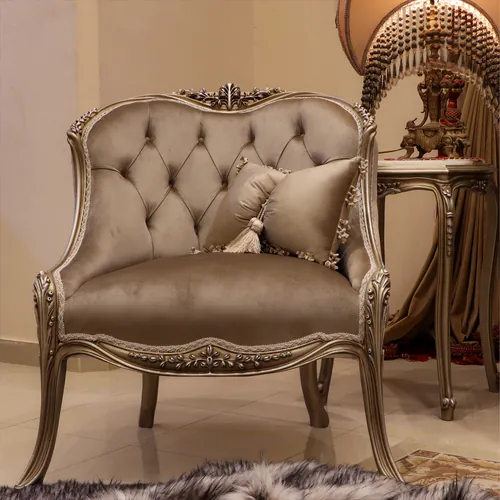
In a modern home, these translate easily. A dresser with a curved front plays the role of a commode, a carved headboard and nightstands carry the same lines into the bedroom, and an upholstered armchair with a carved wood frame gives you the bergère’s comfort. Browse French style living chairs to see how today’s carved armchairs echo that classic shape.
French Provincial vs. French Country vs. Louis XV
These three labels overlap, which is why so many shoppers search for the difference. In brief:
| Style | Where it comes from | Typical look |
|---|---|---|
| Louis XV (Rococo) | Paris and the royal court, roughly the mid-18th century | Flowing curves, asymmetry, shells and scrolls, gilding, veneer and marquetry, rich silks |
| French Provincial | Regional workshops across France, 17th to 18th centuries and later | Court shapes simplified: cabriole legs, shaped aprons, shallow carving, solid local woods, wax or soft paint |
| French Country | A modern decorating style inspired by rural French homes | Relaxed rooms: rustic and provincial furniture, toile and checks, linen, stone, wrought iron, faded color |
Put simply, Louis XV is the court original, French Provincial is the regional furniture that adapted it, and French Country is the overall interior look that mixes provincial furniture with rustic textiles and accessories. Many people use “French Provincial” and “French Country” interchangeably; the distinction is that Provincial usually refers to the furniture itself, often a little more refined, while French Country describes the whole room and leans more rustic.
We cover the more ornate side of the comparison, including how much carving each look can carry, in Rococo vs. French Provincial. If a piece is heavier, darker, and more tufted than it is curved, it may belong to another tradition entirely; our comparison of Victorian and Baroque furniture can help you place it.
How to Identify French Provincial Furniture
Whether you are looking at an heirloom, a flea-market find, or a new piece online, a short checklist helps:
- Start with the legs. Look for a true cabriole shape that curves out at the knee and back at the ankle. Straight, tapered, fluted legs point toward Louis XVI or Neoclassical design instead.
- Check the apron and silhouette. A scalloped or serpentine apron and a softly curved outline are typical. Hard, boxy lines are not.
- Read the carving. Expect restrained, shallow carving in a few focal areas. Dense, deeply pierced carving and heavy gilding suggest a court-inspired Rococo piece.
- Identify the wood. Solid walnut, oak, beech, and fruitwoods fit the tradition. Under paint, check an unfinished area such as the back, the inside of a drawer, or the underside to see what the frame is made of.
- Look at the construction. On older pieces, hand-cut dovetails, pegged mortise-and-tenon joints, and slight irregularities from hand tools are common. On new pieces, look for solid joinery and corner blocks rather than staples and thin panels.
- Consider the finish. Wax, soft paint, and gentle wear are typical. High-gloss lacquer is not part of the provincial vocabulary.
Be careful with age claims. Provincial forms were made for centuries, and the 20th-century revival produced many convincing reproductions. Labels, saw marks, hardware, and secondary woods can all offer clues, but if a piece may be a valuable antique, have it examined by a qualified appraiser or furniture conservator before you refinish, repaint, or repair it. Paint stripping and aggressive cleaning can permanently reduce the value of an old piece.
Decorating With French Provincial Furniture
French Provincial furniture works best when it feels lived-in rather than staged. A few principles keep the look elegant in an American home:
- Let one or two pieces lead. A carved armoire, a curved sofa, or a dining table with cabriole legs can set the tone. You do not need every piece to match.
- Keep the palette soft. Warm whites, cream, stone, sage, dusty blue, and muted gold complement both painted and natural wood finishes.
- Layer natural textiles. Linen, cotton, and light velvet suit the style. Toile de Jouy, the printed pastoral cotton that became popular in France in the late 18th century, is a classic choice for curtains or a single chair, though too much of it can feel like a theme room.
- Mind the scale. Leave room to walk around curved pieces. In a dining room, plan for enough space to pull chairs out comfortably behind the table; in a bedroom, make sure a tall headboard or armoire clears windows and doors.
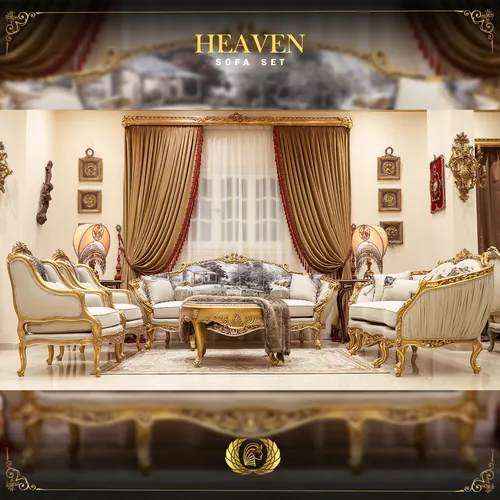
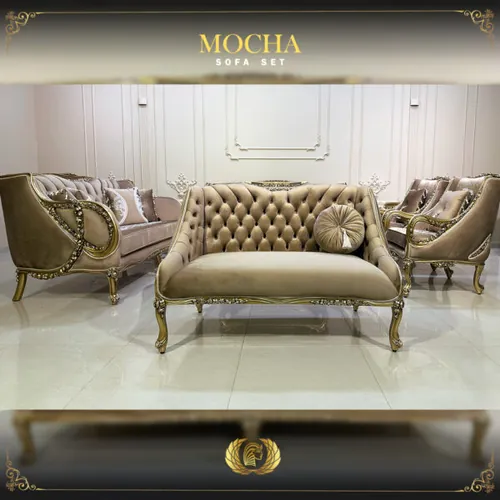
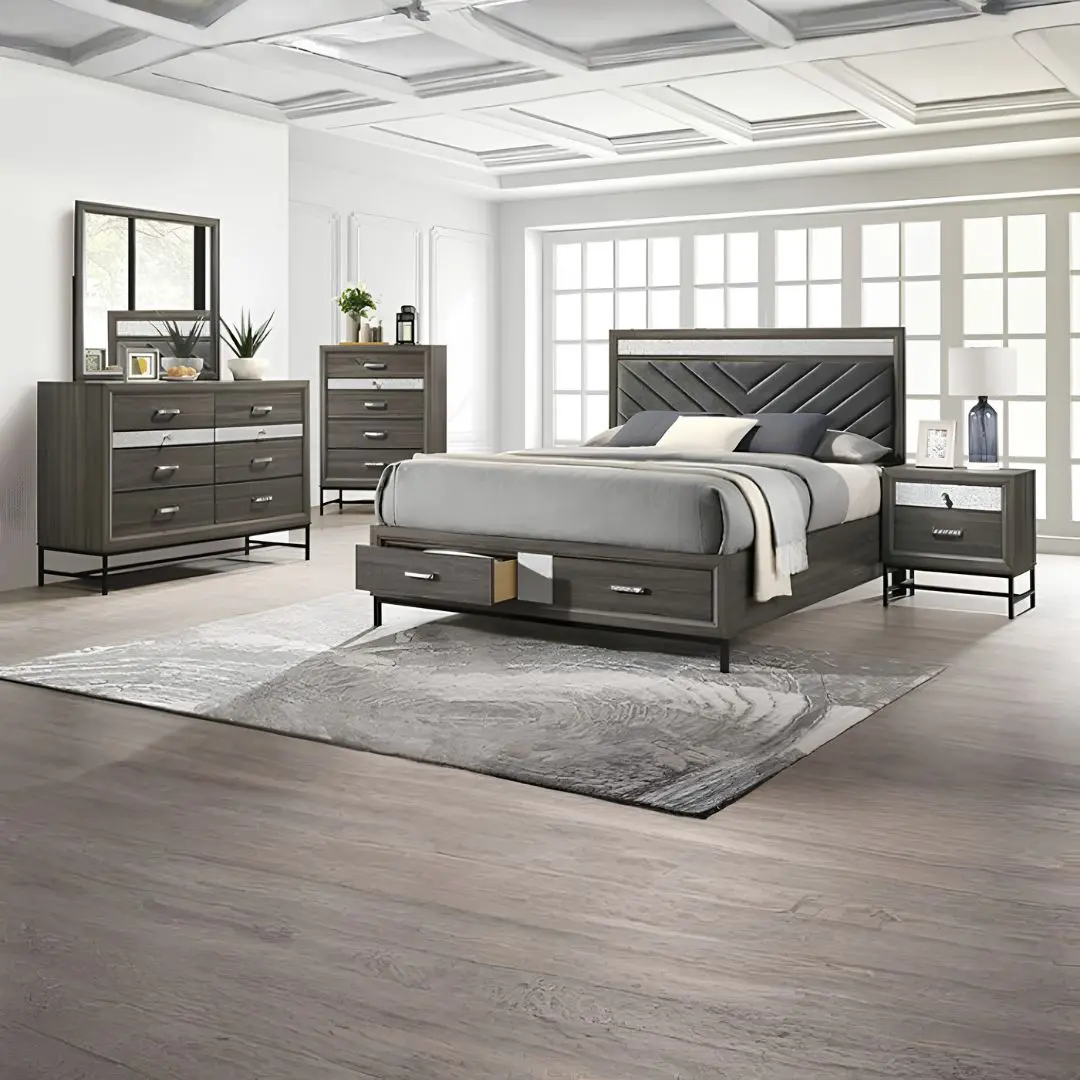
Room by room, the style adapts easily. In the bedroom, a matched suite with a carved headboard, curved dresser, and nightstands creates an instant provincial feel; explore our French style bedroom furniture for examples. In the dining room, a table with shaped aprons and upholstered chairs carries the look; see our French style dining sets. In the living room, one carved sofa or a pair of armchairs paired with simpler side tables keeps things relaxed.
Buying New French Provincial-Style Furniture
Most homeowners today are not hunting for 18th-century antiques. They want new furniture with the same curves, carving, and warmth, built to suit modern rooms, mattress sizes, and daily use. When you shop, judge a French Provincial-style piece the same way you would judge any quality furniture:
- Ask what the frame is made of. Paint and gilt can cover anything. A named solid wood frame is a better sign than an unspecified “wood” description.
- Check that carving is part of the structure. A cabriole leg should be shaped from solid wood, not a decorative cap over a straight post.
- Look at joinery and upholstery. Corner blocks, dovetailed drawers, and firm seat construction matter more than the amount of ornament.
- Confirm dimensions. Measure your walls, doorways, and stairways before ordering larger pieces such as beds, armoires, and buffets.
Our general checklist for how to choose luxury furniture goes deeper on these quality tests.
At Mobilia Cleopatra, our French style furniture collection comes from our exclusive Kleopatra Kingdom line, which is hand-carved from solid wood and made in-house rather than sourced from outside manufacturers. The collection draws on Rococo, Baroque, and Neoclassical detailing and includes sofas, loveseats, armchairs, coffee and end tables, dining sets, and complete bedroom suites. As an example of pricing, the Handmade Golden Rose Sand King Bed was listed at about $4,100 as of October 2026; check the product page for current prices and availability.
Because these pieces are handmade, they can also be adjusted. If you want a different size, wood tone, finish, or upholstery fabric than what is shown, you can design your own furniture and our team will confirm specifications and pricing with you. For questions about a specific piece, call us at (909) 999-1442.
Frequently Asked Questions
What is the definition of French Provincial?
French Provincial describes furniture, architecture, and decor that originated in the French provinces, outside Paris, mainly in the 17th and 18th centuries. In furniture, it means regional pieces that adapted court styles such as Louis XV into simpler, sturdier forms made from local woods. Today it also refers to new furniture designed in that spirit.
What are French Provincial furnishings?
French Provincial furnishings are the furniture and decor associated with the style: armoires, buffets, commodes, bergère armchairs, ladder-back dining chairs, and farmhouse tables, usually with cabriole legs, shaped aprons, and wax or soft painted finishes. In a modern home, the term often covers coordinated bedroom, dining, and living room furniture with those features.
What is the history of French Provincial furniture?
It developed as regional craftsmen across France copied and simplified the fashionable furniture of Paris and Versailles, especially during the Louis XV period. They built in solid local woods for practical households, kept making those forms long after Paris moved on, and the style was later revived in the 20th century, including by American furniture makers.
What is the difference between French Provincial and French Country?
French Provincial usually refers to the furniture itself, which is a refined but simplified version of court styles. French Country is a broader decorating style for the whole room, combining provincial and rustic furniture with toile, checks, linen, stone, and wrought iron. The terms overlap, and many people use them interchangeably.
What wood is French Provincial furniture made of?
Traditionally, solid local woods: walnut and oak most often, plus beech, chestnut, elm, and fruitwoods such as cherry and pear. Painted pieces may use a less expensive wood underneath, so it is worth asking what the frame is made of.
Is French Provincial furniture the same as Louis XV?
Not quite. Louis XV furniture is the Parisian court style, with elaborate carving, gilding, and veneer. French Provincial furniture borrowed Louis XV shapes, especially the cabriole leg and curved lines, but simplified the decoration and used solid local woods.
Is French Provincial furniture still in style?
Yes. Its curves, soft colors, and natural materials fit traditional, transitional, and even modern rooms when used with restraint. Many homeowners combine one or two French Provincial-style pieces with simpler furniture for a warm, collected look.
Bringing French Provincial Style Home
French Provincial furniture is the countryside’s answer to Parisian luxury: the curves and carved detail of Louis XV, translated into solid, practical pieces for real homes. Once you know the signs, the style is easy to recognize. Look for the cabriole leg, a shaped apron, restrained carving, warm natural woods, and finishes that are waxed or softly painted rather than glossy or heavily gilded.
For your own home, start with one room and one anchor piece, such as a carved bed, a dining set, or a curved sofa, then build around it with a soft palette and natural textiles. When buying new, focus on the frame, the joinery, and the dimensions before the ornament.