Free shipping · 0% for 6 months · White-glove available


California King vs King: Which Bed Size Is Right for You?

Reviewed by the Mobilia Cleopatra design team
Quick answer: A standard king mattress is typically 76 inches wide by 80 inches long, while a California king is typically 72 inches wide by 84 inches long. So the king is wider and the California king is longer; their total sleeping surface is almost identical. Choose a king for width, shared beds and wider rooms, and a California king for tall sleepers and long, narrow rooms.
Few furniture decisions cause as much second-guessing as the size of the bed. The two largest standard sizes sound nearly identical, yet they behave very differently once they are in a room, under a set of sheets, and next to a pair of nightstands. This guide explains exactly how a California king compares with a king, shows how both sit in the full run of U.S. mattress sizes, briefly weighs queen against king, and gives you a practical way to decide before you shop for a frame.
Keep one idea in mind as you read: the mattress size is only the starting point. A bed frame, headboard, footboard and side clearance all add to the footprint, and the frame you choose has to match the mattress size exactly. We will come back to that, because it is where most buying mistakes happen.
California King vs King: The Short Answer
The names invite confusion. “California” suggests something extra large, and many shoppers assume it must be the bigger bed. In reality, the two are different shapes rather than different grades. Every figure below is a typical, widely published industry size, and individual mattresses can vary slightly by manufacturer.
- Standard king: about 76 inches wide by 80 inches long.
- California king: about 72 inches wide by 84 inches long.
- Width difference: the king is about 4 inches wider.
- Length difference: the California king is about 4 inches longer.
Work out the surface area and the gap nearly disappears: roughly 6,080 square inches for the king against roughly 6,048 for the California king. That is a difference of about 32 square inches, which no sleeper will feel. What you will feel is where the space is: side to side on a king, head to toe on a California king.
That is also the answer to the question people often type into search: which is bigger, king or California king? By total area, the king is a hair larger. By length, the California king wins. By width, the king wins. Neither is simply “bigger.”
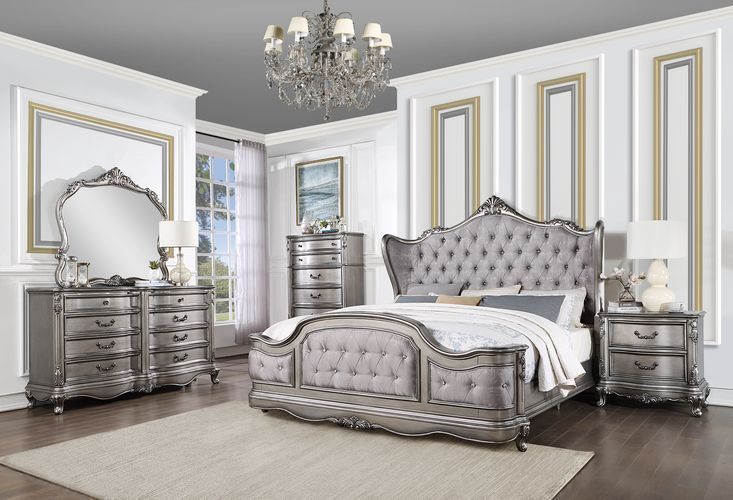
Ausonia velvet bed by ACME, listed in Queen, Eastern King and California King
Bed Size Chart: Twin to California King
Seeing every size in one place makes the choice clearer. The figures below are typical U.S. mattress dimensions, and the same numbers appear consistently across mattress and sleep guides we reviewed. Remember that dimensions refer to the mattress, not the frame.
| Mattress size | Width (inches) | Length (inches) | Typically suits |
|---|---|---|---|
| Twin | 38 | 75 | Children, teens, single sleepers under about 6 feet |
| Twin XL | 38 | 80 | Taller single sleepers, teens |
| Full | 54 | 75 | One adult who wants room to spread out |
| Queen | 60 | 80 | Most couples, guest rooms, primary bedrooms of moderate size |
| King | 76 | 80 | Couples who want space, or who share the bed with children or pets |
| California king | 72 | 84 | Tall sleepers, couples where both are tall, narrow rooms |
Two patterns stand out. First, the queen and the king share the same 80-inch length, so a king is simply a queen with 16 extra inches of width. Second, the California king is the only common size that is 84 inches long, which is why it is the usual answer for the tallest sleepers.
If you are furnishing a child’s or guest room instead, our collection of beds covers a range of styles, and each product page lists the exact mattress size it takes.
Key Differences Between a King and a California King
Width and legroom
On a standard king, two adults each get roughly 38 inches of width, the same as a twin mattress apiece. On a California king, each person gets about 36 inches. For couples who move around, share with a restless partner, or like to sleep with arms stretched out, those few inches matter more than they sound.
Length and tall sleepers
An 80-inch mattress leaves limited margin for anyone approaching 6 feet 2 inches once you add a pillow and a footboard. The extra 4 inches on a California king is the main reason it exists, and guides consistently point to taller people, as well as back and stomach sleepers who stretch out, as the group that benefits most.
Room shape
Because the California king is narrower, it fits long, narrow bedrooms better, leaving more space to walk along each side. A standard king suits a shorter, wider room where the extra width does not crowd the walls. Think about which wall dimension is the tighter one, and let that decide.
Frames, sheets and accessories
The two sizes are not interchangeable. A California king mattress needs a California king frame, and a king mattress needs a king frame. Retailers and sleep guides also agree that king bedding and frames are more widely available, and often less expensive, than California king equivalents, which can be harder to find. If you love a particular sheet set or comforter, check that it comes in your size first.
Which Size Fits Your Bedroom?
A bed that technically fits can still make a room feel cramped, so measure before you commit. A widely repeated guideline is to leave about 24 inches of clear space on each side of the bed, with 36 inches or more feeling more generous. You also want a comfortable path to the closet, dresser and bedroom door.
Here is a simple method:
- Measure the wall the headboard will sit against and the distance from that wall to the door.
- Subtract the mattress width plus 48 inches (24 on each side) from the wall width. If the result is negative, the bed is too wide for the room.
- Subtract the mattress length from the room depth, then allow at least 24 inches at the foot for passage, more if you plan a bench or chest there.
- Add the frame. Headboards, footboards and side rails often add several inches beyond the mattress, so check the dimensions on the product page.
Room-size suggestions vary between sources, with some recommending about 12 by 12 feet for a king and a little more depth for a California king. Treat those as rough planning figures rather than rules. Your door swings, radiators, windows and closet doors matter as much as raw square footage.
Do not forget the pieces that live beside the bed. A wide bed leaves less wall for furniture, so plan the footprint of your nightstands early. If space is limited, slimmer nightstands or wall-mounted lighting can keep a king or California king from swallowing the room.
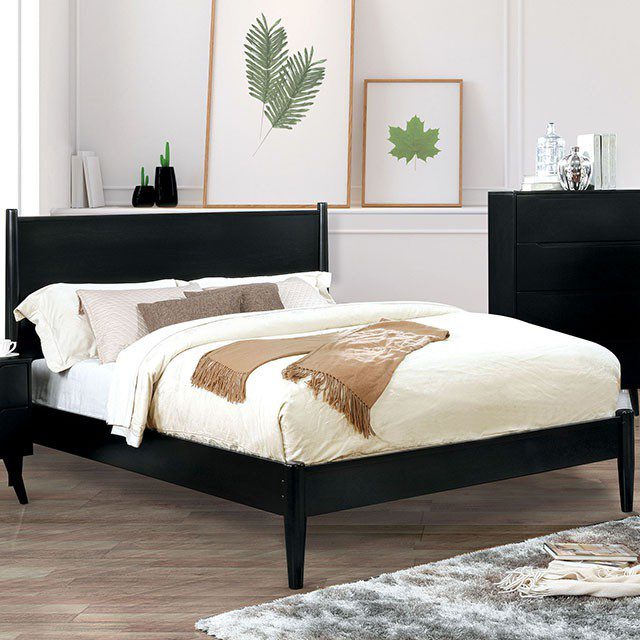
Lennart bed by Furniture of America
Who Should Choose a King or a California King
Who should choose a king bed
A standard king is usually the better choice when width is the priority. It tends to suit:
- Couples who want personal space, especially if one partner is a light sleeper or moves a lot.
- Households that share the bed with young children or pets on weekend mornings.
- Wider, squarer bedrooms, where the extra side-to-side measurement has room to breathe.
- Shoppers who care about accessory choice and cost, since king frames, sheets and bedding are widely stocked.
The trade-off is length. If you or your partner are very tall, the 80-inch king can feel short at the foot. It is also worth noting that a king is a large piece to move, so think about stairways, hallways and tight corners before delivery day.
Many people picture a king with a tall, upholstered headboard as the anchor of a primary suite. If that is your vision, browse our upholstered beds or more decorative tufted styles, and check each product page to confirm the mattress size and overall dimensions.
Who should choose a California king bed
A California king is the right call when length or room shape drives the decision. It tends to suit:
- Tall sleepers, particularly anyone over about 6 feet, or couples where both partners are tall.
- Long, narrow bedrooms, where four fewer inches of width leave a more comfortable walkway on each side.
- People who sleep with a pet at the foot of the bed, since the extra length gives them somewhere to settle without crowding your feet.
- Back and stomach sleepers who stretch out, and anyone who finds standard mattresses leave their feet hanging.
The trade-offs are practical rather than comfort-related. Fewer frames, sheets and toppers are made in this size, and some of them cost more. The narrower width also means each partner has a little less side-to-side room than on a king, which is worth testing in person if you share the bed with a restless sleeper.
If you decide on this size, you can narrow your search with our California king bedroom furniture sets, which pair a bed with matching case goods so the whole room is consistent. Always confirm the size listed on each product page before you order.
Queen vs King Bed: A Quick Comparison
Many shoppers arrive at this question from the other direction: is a queen enough, or is it worth stepping up to a king? The two share the same 80-inch length, so the real difference is width. A queen is typically 60 inches wide and a king 76 inches, a gap of 16 inches. The king offers around 21 percent more sleeping surface, roughly 6,080 square inches against about 4,800.
| Factor | Queen (60 x 80) | King (76 x 80) |
|---|---|---|
| Width per person (two sleepers) | About 30 inches | About 38 inches |
| Best room fit | Smaller to medium rooms | Large primary bedrooms |
| Best for | Single sleepers, most couples, guest rooms | Couples wanting space, shared beds with kids or pets |
| Cost and accessories | Usually lower; very easy to find | Usually higher; widely available |
| Moving the bed | Easier | Harder around stairs and corners |
A queen remains the most practical choice for many rooms. It is easier to furnish around, less expensive to dress, and comfortable for most couples. A king earns its footprint in a larger bedroom, or when two adults regularly share the bed with a child or a pet. If you are leaning toward a queen, our queen bedroom sets are a good place to compare complete room layouts.
Choosing a Frame, Headboard and Storage
Once the size is settled, the frame defines how the bed looks and works. A few points are worth thinking through for either large size.
Match the frame to the mattress exactly
Because a king and a California king are cut differently, a frame built for one will not hold the other properly. Check the listing for the mattress size the frame accepts, and compare the overall width and length against your room measurements.
Consider storage
Large beds sit in large rooms, but that does not mean there is spare storage. If you are short on closet or dresser space, a platform bed with drawers or lift-up storage can reclaim a lot of room. Browse our storage beds to see how different designs handle it, and check the product page for the drawer or lift mechanism and exact dimensions.
Think about headboard height and style
A tall headboard visually balances a wide bed, while a low profile suits rooms with sloped ceilings or windows behind the bed. Upholstered, tufted and carved styles all read differently at king scale, so look at them in the context of your wall, light and existing furniture. For help pulling the room together, our guide to choosing bedroom furniture walks through the whole space, and our overview of bedroom furniture materials explains how woods and finishes hold up over time.
When a custom size makes sense
If your room or your height rules out standard dimensions, it may be worth a conversation about a bespoke piece. Our Kleopatra Kingdom line is handmade, and you can read more about designing your own furniture to see how a made-to-your-measurements request works.
How to Decide in Five Minutes
If you are still undecided, run through these questions in order. Most people have their answer by the third.
- Is anyone sleeping in the bed taller than about 6 feet 2 inches? If yes, lean toward a California king.
- Do you share the bed with children or pets who sleep across the width? If yes, lean toward a king.
- Is the bedroom narrower than it is deep? A narrow room favors the California king; a wide one favors the king.
- Do you already own bedding you love? Check which size it comes in, as king bedding is easier to replace.
- Will the bed need to go up stairs or around tight corners? Measure the path before you commit to either size.
If your answers split evenly, visit a showroom and lie down. Our Upland showroom at 280 N Benson Ave, Suite 6, Upland, CA 91786 is a convenient place to see bed styles in person, and you can call (909) 999-1442 with questions about a specific listing.
To compare pieces side by side before you visit, you can also browse our full range of bedroom sets, and check each product page for exact dimensions.
Frequently Asked Questions
Which is bigger, a king or a California king?
Neither is bigger overall. A king is typically 76 by 80 inches and a California king 72 by 84 inches. The king is 4 inches wider, the California king is 4 inches longer, and the total sleeping areas differ by only about 32 square inches.
Is a California king bed better than a king?
It depends on who is sleeping in it and the shape of the room. A California king is better for tall sleepers and narrow rooms. A standard king is better for couples wanting width, shared beds with children or pets, and shoppers who want a wider choice of frames and bedding.
Can I put a king mattress on a California king frame?
No. The sizes are not interchangeable. A king mattress is wider and shorter than a California king frame is built for, so it will not sit properly. Always buy the frame in the same size as the mattress.
Do king sheets fit a California king mattress?
Generally not well. The two mattresses differ in both width and length, so fitted sheets made for one will be too loose or too tight on the other. Buy bedding labeled for the exact size you own.
What size room do I need for a king or California king bed?
Guides vary, with some suggesting about 12 by 12 feet for a king and slightly more depth for a California king. A more reliable test is to leave about 24 inches of clear space on each side and at the foot, and 36 inches or more if you want a spacious feel.
Is a king bed worth it over a queen?
If you have the room, a king gives each of two sleepers about 8 inches more width than a queen, which many couples and families appreciate. In a smaller bedroom, a queen is often the better use of space and budget.
Which is better for tall people, king or California king?
The California king, because its 84-inch length gives about 4 more inches than a standard king. Taller sleepers, particularly those over about 6 feet, tend to find it more comfortable for stretching out.
Are California king beds harder to find?
Often, yes. Frames, sheets and toppers are made for the California king in smaller selections than for the standard king, and some cost more. It is wise to check availability of bedding before you choose the size.
Final Thoughts on King vs California King
The choice comes down to how you sleep and the room you have, not to which name sounds grander. Choose a king for width, shared beds and wider rooms. Choose a California king for height, long rooms and a little extra stretch at the foot. Measure the room, allow clearance on each side, and confirm that the frame, headboard and bedding all match the mattress size.
When you are ready to see options, start with our mattress and foundation selection and our range of beds, and verify the listed size on each product page. A well-chosen bed makes the rest of the bedroom easier to furnish.
