Free shipping · 0% for 6 months · White-glove available


Bedroom Furniture List: Types of Bedroom Furniture and How to Choose

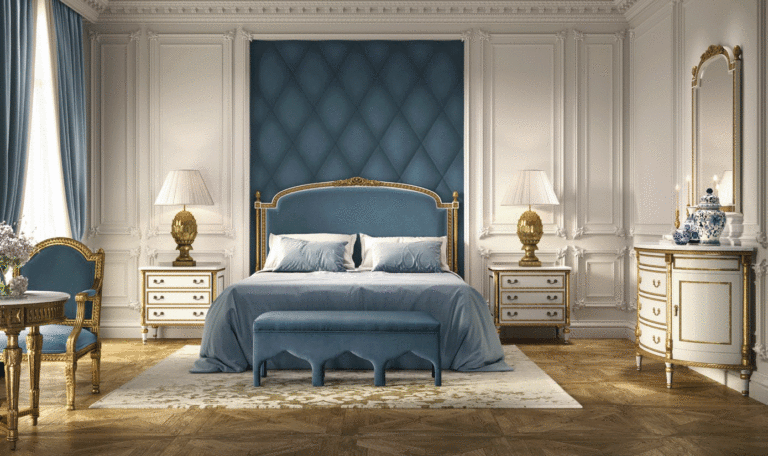
Reviewed by the Mobilia Cleopatra design team
Quick answer: A complete bedroom furniture list starts with the bed, one or two nightstands and a dresser, the core pieces most bedrooms need. From there you add storage (a chest of drawers, an armoire or wardrobe), a mirror, and comfort or grooming pieces such as a bench, an accent chair or chaise, and a vanity. Choose the bed first, measure clearances around it, then build the rest of the room around that footprint.
Most people know they need a bed, but the full list of furniture in a bedroom is longer than it looks, and the names can be confusing. Is a chest the same as a dresser? What is the difference between an armoire and a wardrobe? Does a vanity belong in the bedroom or the bathroom? And which pieces actually come in a bedroom set?
This guide answers those questions in one place. Below you will find a quick-reference list of the main types of bedroom furniture, followed by a closer look at each piece: what it is for, where it usually goes, and what to check before you buy. We also cover the sizing and clearance basics that keep a room comfortable to move through, and a simple method for choosing a coordinated set rather than a collection of pieces that never quite agree with each other.
Whether you are furnishing a first primary suite, refreshing a guest room, or planning a traditional or French-style bedroom with carved wood and rich finishes, the same logic applies. Start with how you use the room, give each piece a clear job, and let the bed set the scale for everything else.
Bedroom Furniture List at a Glance
Here is the complete list of bedroom furniture types covered in this guide, grouped by what each piece does. Not every bedroom needs every item; the first three rows are the essentials, and the rest depend on your space, storage needs and routine.
| Furniture piece | Main purpose | Typical placement |
|---|---|---|
| Bed (frame, headboard, footboard) | Sleep; the visual anchor of the room | Centered on the main wall |
| Nightstands | Lamp, phone, book and small-item storage | One on each side of the bed |
| Dresser | Folded clothing storage plus a display surface | Facing or beside the bed |
| Chest of drawers | Vertical clothing storage on a small footprint | Corner or narrow wall |
| Dresser mirror or floor mirror | Dressing, grooming and reflecting light | Above the dresser or on a free wall |
| Armoire or wardrobe | Hanging clothes when closet space is short | Against a long wall |
| Media chest | TV and electronics storage with drawers | Opposite the bed |
| Vanity and stool | Makeup, hair and jewelry routine | Near a window or good lighting |
| Bedroom bench or blanket chest | Seating and extra storage | Foot of the bed |
| Accent chair or chaise lounge | Reading and relaxing | A corner or bay window |
Lighting, rugs, curtains and wall art finish the room, but they are décor rather than furniture. The sections below walk through each furniture type in the order most people buy them.
The Bed: Frames, Headboards and Mattress Sizes
The bed is the largest piece in the room and the one everything else is measured against, so choose it first. When you browse beds for every room size, think about three things: the frame style, the headboard height, and the mattress size the frame is built for.
Common bed frame styles
- Panel bed: A headboard and footboard made of flat or raised panels, usually used with a box spring or foundation. Clean and versatile.
- Sleigh bed: Curved, scrolled headboard and footboard that recall a classic sleigh. A strong choice for traditional and Victorian-style rooms, but it takes extra length.
- Poster and canopy beds: Tall corner posts, sometimes joined by a canopy frame. They add drama and work best with high ceilings.
- Upholstered bed: A padded headboard, often in velvet, linen or leather, that is comfortable for sitting up to read.
- Platform bed: A low frame with a built-in support deck, so no box spring is needed.
- Storage bed: Drawers or a lift-up base built into the frame, useful when closet space is tight.
Standard U.S. mattress sizes
Mattress dimensions in the United States follow common industry sizes rather than a legal standard, so always confirm the exact measurements of the frame and mattress you choose. Typical sizes are:
| Size | Approximate width × length | Best for |
|---|---|---|
| Twin | 38 × 75 in | Children’s rooms, bunk beds, daybeds |
| Twin XL | 38 × 80 in | Taller teens and single adults |
| Full | About 54 × 75 in | Single adults, smaller guest rooms |
| Queen | 60 × 80 in | Couples; the most versatile size |
| King | 76 × 80 in | Couples who want more personal space |
| California king | 72 × 84 in | Taller sleepers; longer, narrower rooms |
Remember that the frame is always larger than the mattress. A carved headboard, a footboard or sleigh scrolls can add several inches in each direction, so measure the frame itself, not just the mattress size, before you plan the rest of the room.
Nightstands: The Essential Bedside Piece
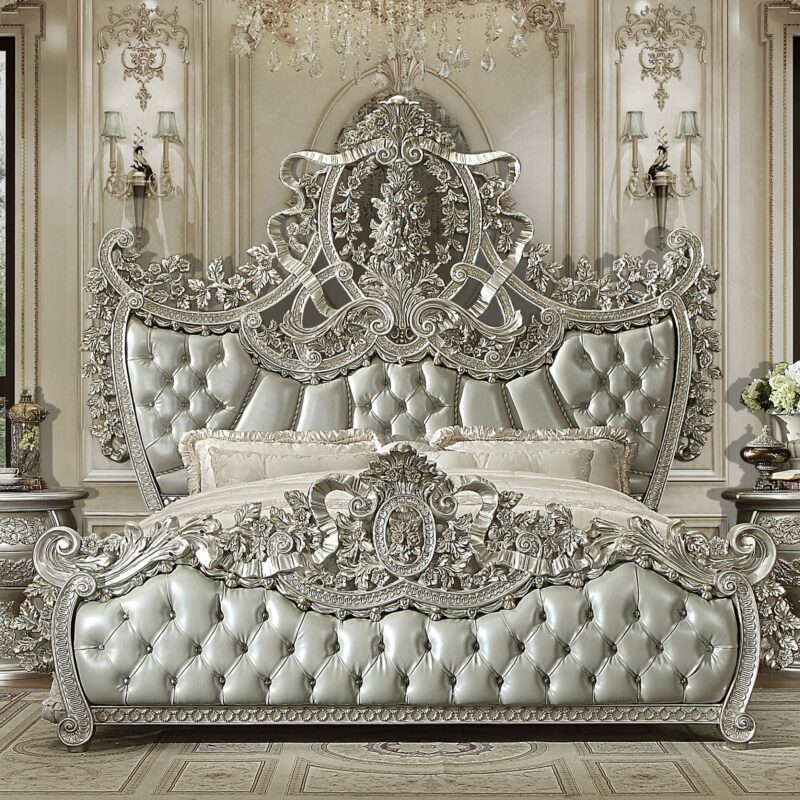
A nightstand, also called a bedside table, holds the things you reach for at night and first thing in the morning: a lamp, your phone, a book, glasses, a glass of water. It is usually the second piece people buy after the bed, and most bedrooms look most balanced with a matching pair.
When choosing a nightstand, focus on three details:
- Height: The top should sit close to the height of your mattress so you can reach it easily from bed. A nightstand that towers over the mattress or sits far below it feels awkward every night.
- Storage: Drawers keep clutter out of sight, while an open shelf is handy for books and baskets. Two- and three-drawer designs offer the most concealed storage.
- Scale: A grand king bed with a tall carved headboard needs substantial nightstands; slim pieces beside it can look lost. In a smaller room, a narrower nightstand protects the walkway.
Nightstands do not have to be identical to the bed, but they should share something with it, such as the wood tone, hardware finish or decorative detail, so the bedside wall reads as one composition.
Storage Furniture: Dressers, Chests and Armoires
Clothing storage is where most bedroom furniture lists get confusing, because several pieces overlap. Here is how they differ.
Dresser
A dresser is a low, wide piece with drawers arranged side by side, usually in two or three columns. Its broad top doubles as a display surface for lamps, a jewelry box or framed photos, and it is the piece most often paired with a mirror. You can compare styles and sizes in our dressers and dresser mirrors collection. Because a dresser needs a long stretch of wall, it usually goes opposite or beside the bed.
Chest of drawers
A chest of drawers, sometimes called a tall chest or highboy, stacks its drawers in a single vertical column. It holds a lot on a small footprint, which makes it ideal for corners, narrow walls and smaller rooms, or as a second storage piece alongside a dresser. Browse bedroom chests if floor space is limited but you still need drawer storage.
Media chest
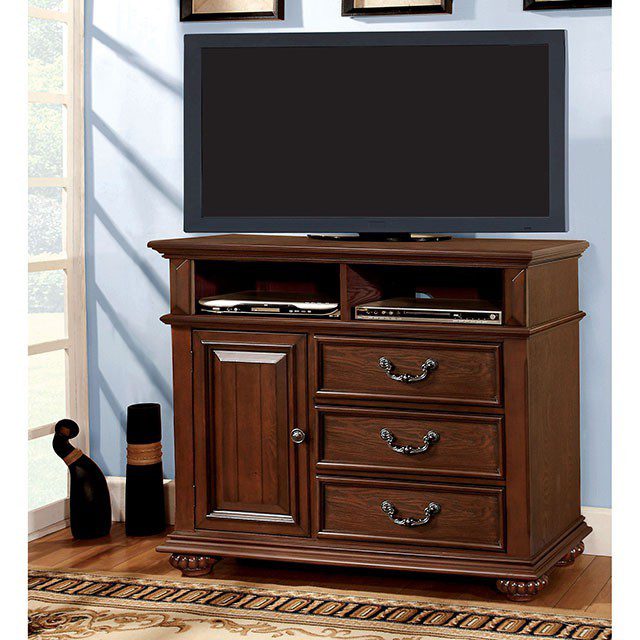
A media chest combines drawers with an open or enclosed section for a TV, streaming box or other electronics. It suits bedrooms where you like to watch something before sleep, without bringing in a full entertainment center.
Armoire and wardrobe
An armoire or wardrobe is a tall, freestanding cabinet with doors, built mainly for hanging clothes, often with shelves or drawers below. The two terms are used almost interchangeably in the U.S.; “armoire” tends to describe a more decorative, often French-inspired piece. If your closet is small or your home is older and lacks built-in storage, an armoire can do the work of a closet while adding real character to the room.
A simple rule: choose a dresser for folded clothes and display space, a chest when floor space is tight, and an armoire when you need hanging space.
Mirrors and Vanities: Getting Ready in Style
Mirrors and vanities support your daily routine, and both can change how light moves through the room.
Mirrors
The most common bedroom mirror is the dresser mirror, which mounts on or above the dresser and is often sold with it. A full-length floor mirror or a cheval mirror lets you check an entire outfit, and a large decorative wall mirror can make a modest room feel brighter and more open. Our bedroom mirrors range from simple frames to ornate, gilded designs that suit traditional interiors. Place a mirror where it reflects a window or lamp rather than facing the bed directly if you prefer a calmer view at night.
Vanity
A vanity, sometimes called a dressing table, is a table with a mirror, drawers for cosmetics and jewelry, and usually a matching stool or chair. It gives makeup and hair routines a dedicated spot, which frees the dresser top and the bathroom counter. Natural light is ideal, so a spot near a window works well; otherwise plan for good lamp or sconce lighting on both sides of the mirror. A well-chosen bedroom vanity can also become a decorative focal point, especially in a French- or Victorian-style suite with curved legs and carved details.
Seating and Accent Pieces: Benches, Chairs and Chaises
Seating turns a bedroom from a place you only sleep into a place you can actually spend time. These pieces are optional, but they are often what makes a room feel finished.
- Bedroom bench: The classic piece at the foot of the bed. It gives you a spot to sit while putting on shoes, a landing place for decorative pillows at night, and in many designs hidden storage under a lift-up seat. Look for a bedroom bench slightly narrower than the bed so the frame still shows on both sides.
- Blanket chest or trunk: An alternative to the bench at the foot of the bed, with deeper storage for quilts and seasonal bedding.
- Accent chair: A single upholstered chair in a corner creates a reading nook. Pair it with a small side table and a floor lamp.
- Chaise lounge: A long, reclined seat for stretching out. It needs more room than a chair, so it suits larger primary suites or a bay window.
- Ottoman: A small upholstered seat or footrest that can tuck under a vanity or sit beside a chair.
Desks, bookcases and shelving units also appear on many bedroom furniture lists. They are practical additions if the bedroom doubles as a home office or library, but treat them as extras: the bedroom should still read first as a place to rest.
Sizing and Clearance Basics
A beautiful set can still feel wrong if the room is too tight to move through. Before you buy, sketch the room on paper or with painter’s tape on the floor and check these basics.
- Walkways around the bed: A widely used layout reference recommends at least about 30 inches of clear space on the sides and foot of a bed you walk around, with around 36 inches feeling comfortable. In a small room, you can push one side of a twin or full bed against the wall, but couples need access on both sides.
- Room for drawers and doors: Leave enough space in front of a dresser or chest to pull drawers all the way out and still stand in front of them. Hinged armoire doors need their full swing clear as well.
- Doorways and windows: Keep furniture from blocking the door swing, closet doors or easy access to windows.
- Vertical scale: Tall headboards, poster beds and armoires suit high ceilings. In a room with standard ceilings, a lower profile keeps the space from feeling crowded.
- Delivery path: Measure hallways, stairways and door openings, especially for a king bed, an armoire or a large dresser.
As a rough guide to scale, a queen bed fits most average bedrooms comfortably, a king or California king belongs in a larger primary suite, and a full or twin suits guest rooms, children’s rooms and compact spaces. In a small bedroom, prioritize the bed, nightstands and one storage piece, and choose a chest over a wide dresser. In a large room, add a seating area, a bench and an armoire so the space feels intentional rather than empty.
How to Choose a Bedroom Set
Buying furniture as a set is the simplest way to get pieces that match in finish, proportion and detail. Most sets are built around the bed and add pieces from there. A common configuration includes the bed, one or two nightstands, a dresser and a dresser mirror, sometimes with a chest as an extra. Exact pieces vary by collection, so check the product listing for what is included.
Follow these steps to choose well:
- Start with the bed size and room size. Confirm that the frame, both nightstands and the walkways all fit on the main wall.
- List your storage needs. Count how much you hang versus fold. That tells you whether you need a dresser, a chest, an armoire, or a combination.
- Pick a style direction. Traditional, French-style and Victorian-style sets favor carved wood, curved silhouettes and rich finishes; transitional and contemporary sets keep lines simpler. Choose one direction and let the set carry it.
- Decide between matched and coordinated. A fully matched set creates a formal, unified look. A coordinated approach, such as a matching bed and nightstands with a dresser in a complementary finish, feels more collected. Both work if the wood tone or metal finish repeats at least once.
- Check construction and materials. Drawer joinery, smooth glides, solid backs and durable finishes matter more than surface decoration. Our guide to the best bedroom furniture materials covers woods, veneers and upholstery in detail.
- Plan the budget. You do not need to buy every piece at once. Many people start with the bed and nightstands and add the dresser or armoire later. If you prefer to spread the cost, see how buy now, pay later bedroom sets work before you commit.
Ready to compare complete collections? Browse our bedroom sets to see beds, nightstands, dressers and mirrors designed to work together. For a truly one-of-a-kind suite, our exclusive Kleopatra Kingdom® line is handmade, and custom commissions are available on request.
Frequently Asked Questions
What furniture goes in a bedroom?
The essential furniture in a bedroom is a bed, one or two nightstands and a dresser. Depending on space and needs, you can add a chest of drawers, a mirror, an armoire or wardrobe, a vanity, a bench at the foot of the bed, and an accent chair or chaise for reading.
What are the different types of bedroom furniture?
Bedroom furniture types fall into four groups: sleeping (the bed, headboard and footboard), bedside (nightstands), storage (dressers, chests, media chests, armoires and wardrobes) and comfort or grooming pieces (mirrors, vanities, benches, accent chairs, chaise lounges and ottomans).
What pieces are included in a bedroom set?
A typical bedroom set includes the bed, one or two nightstands, a dresser and a dresser mirror. Some collections add a chest or offer it separately. Always check the listing for the exact pieces included before you order.
What is the difference between a dresser and a chest of drawers?
A dresser is low and wide, with drawers side by side and a broad top that often supports a mirror. A chest of drawers is tall and narrow, with drawers stacked in a single column, so it stores a lot on a smaller footprint.
Do I need both a dresser and an armoire?
Only if you need both folded and hanging storage beyond what your closet offers. A dresser handles folded clothing, while an armoire or wardrobe provides hanging space. If you have a good closet, a dresser and perhaps a chest are usually enough.
How much space should you leave around a bed?
A common guideline is at least about 30 inches of walkway on the sides and foot of the bed you use, with about 36 inches feeling more comfortable. Leave extra room in front of dressers and armoires so drawers and doors open fully.
Should nightstands match the bed?
They do not have to be identical, but they should relate to the bed through wood tone, finish, hardware or style. Matching pairs on both sides create the most balanced, classic look.
What is the furniture at the foot of the bed called?
It is usually a bedroom bench, also called an end-of-bed bench. A blanket chest, trunk or storage ottoman can fill the same spot and add space for extra bedding.
Final Thoughts on Building Your Bedroom Furniture List
A well-furnished bedroom is less about owning every piece on the list and more about choosing the right pieces for how you live. Start with the bed, because its size and style set the scale for the room. Add nightstands that sit at a comfortable height, then choose storage that matches your wardrobe: a dresser for folded clothes, a chest for tight spaces, an armoire when hanging space is short. Finish with the pieces that make the room yours, whether that is a vanity for your morning routine, a bench at the foot of the bed or a chaise by the window.
Measure before you buy, protect your walkways, and keep at least one finish or detail repeating across the room so everything feels connected. Whether you prefer the carved elegance of traditional and French-style designs or something more restrained, a clear plan makes the result feel calm and intentional.
If you would like help putting together a complete bedroom, call our team at (909) 999-1442. You can also see finishes and proportions in person at our Upland showroom at 280 N Benson Ave, Suite 6, Upland, CA 91786.
