Free shipping · 0% for 6 months · White-glove available


Best Traditional Furniture for Large Homes

Reviewed by the Mobilia Cleopatra design team
Quick answer: The best traditional furniture for large homes is furniture with real visual mass: deep, high-backed sofas and sectionals, long extension dining tables, tall headboards and canopy beds, substantial casegoods such as buffets, china cabinets, and armoires, and console tables sized for a grand foyer. For large-scale interior architecture (high ceilings, wide openings, heavy millwork), choose pieces that match the room’s proportions, group them into anchored zones, and repeat a consistent palette of wood tones, upholstery, and hardware from room to room.
Large homes are generous, but they are not forgiving. A great room with a two-story ceiling, a formal dining room with tall windows, or a primary suite with a sitting area can make ordinary furniture look undersized and scattered. The opposite mistake is just as common: oversized pieces bought without a plan that crowd walkways and swallow the architecture they were meant to complement.
Traditional furniture handles this challenge well because it was designed for rooms with presence. Carved frames, paneled casegoods, rolled arms, turned legs, and layered upholstery give each piece enough weight and detail to hold its own against crown molding, coffered ceilings, and wide staircases. Elegant traditional furniture also brings warmth, which is exactly what big rooms tend to lack.
This guide explains which furniture works best in spacious interiors, how to plan scale and layout, what to choose for the living room, dining room, primary suite, and entryway, and how to judge build quality before you buy. You can browse our full traditional furniture collection as you read, then come back to the planning steps when you are ready to shortlist pieces.

Best traditional interior furniture for large-scale homes
What Furniture Works Best for Large-Scale Interior Architecture?
Large-scale interior architecture means rooms where the structure itself is a design feature: tall ceilings, oversized windows, deep moldings, columns, arched openings, and long sight lines. Furniture in these rooms has to answer the architecture rather than compete with it or disappear beneath it. Three qualities matter most.
Visual mass
Visual mass is how heavy a piece looks, not how much it weighs. A high-backed sofa with a carved wood rail, a dining table on a pedestal base, or a bed with a tall upholstered headboard reads as substantial from across the room. Thin metal legs, low backs, and sparse frames tend to look lost under a high ceiling, even when the footprint is large.
Proportion to the room
Good proportion means the furniture relates to the size of the room, the height of the walls, and the scale of the openings. Tall rooms benefit from tall elements, such as a china cabinet, an armoire, a canopy bed, or a large mirror over a console, which carry the eye upward and fill vertical space that low furniture leaves empty.
Detail that rewards a closer look
In a large room, people see furniture from far away first and up close later. Traditional pieces work on both levels: the silhouette defines the space from a distance, while carving, tufting, inlay, and hardware reward a closer look. That layered detail is a big part of why traditional and formal style furniture suits estate-scale homes better than many minimal designs.
In practice, this points to a short list of pieces that do most of the work in a large home: a generous sofa or sectional with matching chairs, a long dining table with a full set of chairs, a buffet or china cabinet, a statement bed with a coordinated dresser and nightstands, and a console table with a mirror for the entry.
Planning Scale, Balance, and Flow in Spacious Rooms
Before choosing a style or finish, measure. Note the room’s length, width, and ceiling height, the location of windows, doors, fireplaces, and vents, and the main walking routes through the space. A simple floor plan on graph paper or in a free planning app will prevent most expensive mistakes.
Anchor each zone
Large rooms feel unfinished when furniture is pushed against the walls with an empty middle. Instead, float the main seating group toward the center and anchor it with one dominant piece: a sofa facing the fireplace, a sectional defining a corner, or a pair of sofas facing each other across a coffee table. A large area rug under the front legs of every seat ties the group together.
Use symmetry to create order
Symmetry is one of the defining tools of formal style furniture. Paired armchairs, matching end tables and lamps, and twin cabinets on either side of a doorway or fireplace create a calm, balanced composition. In a big room, that order keeps a generous amount of furniture from looking cluttered.
Plan for open floor plans and great rooms
In open-concept homes, furniture becomes the walls. Use the back of a sofa, a console table behind it, or a low cabinet to mark where the living area ends and the dining area begins. Keep circulation paths clear and generous so people can move between zones without squeezing past chairs. Repeat the same wood tone or a related upholstery color in each zone so the great room reads as one space with several purposes.
Do not oversize everything
Not every piece needs to be large. One or two dominant pieces per zone, supported by medium-scale chairs and tables, usually looks more refined than a room full of oversized furniture. If you are weighing several options, our guide on how to choose luxury furniture walks through budget, materials, and fit in more detail.

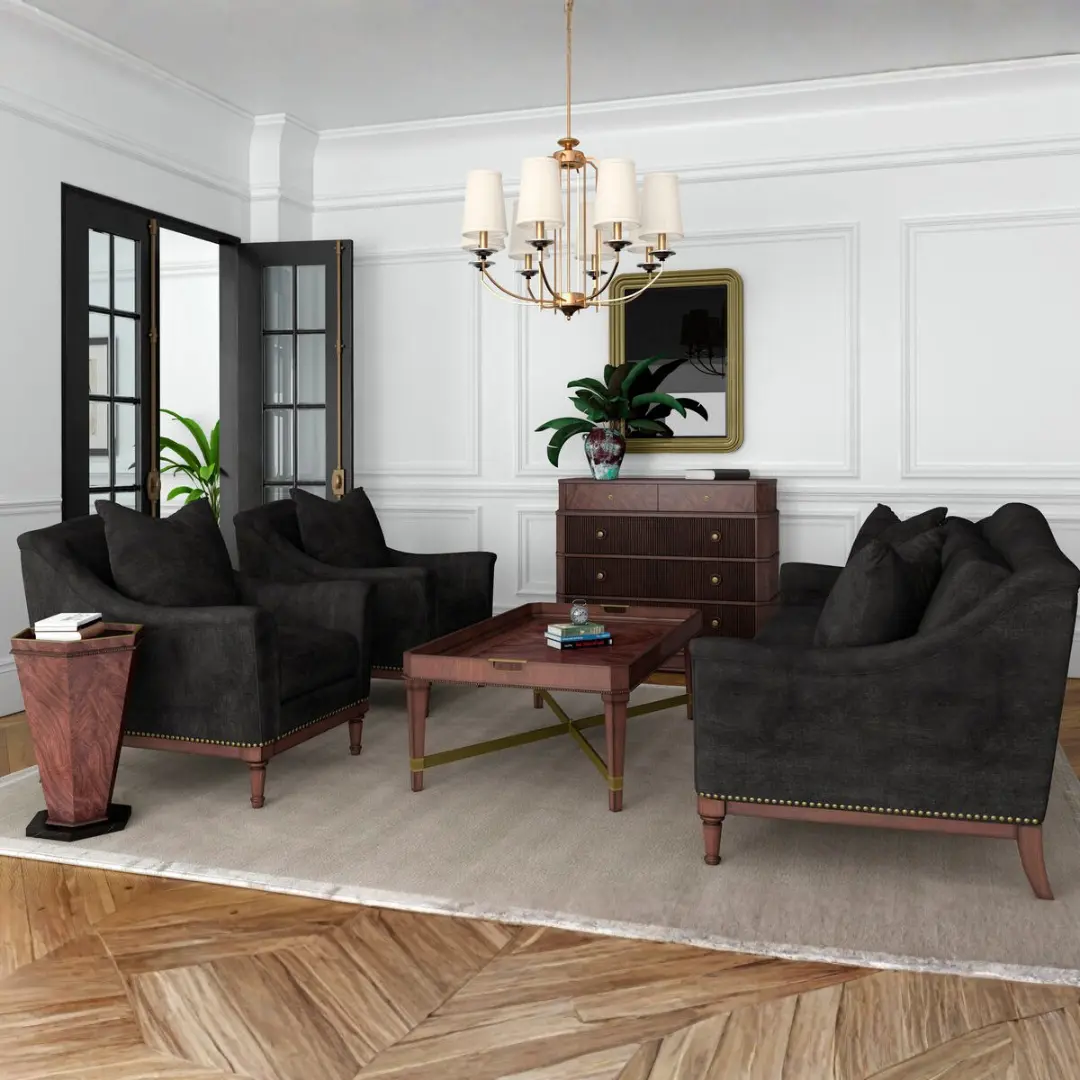
Luxury traditional furniture arrangement in a large home setting
Traditional Living Room and Great Room Furniture
The living room is usually the largest furnished space in the house and the one guests see first, so it sets the tone for everything else. In a spacious traditional living room, seating should define conversation areas, tables should match the scale of the seating, and storage or display pieces should add height.
Sofas, sectionals, and matching sets
A coordinated set is often the simplest way to furnish a large living room with confidence. Sofa, loveseat, and chair in the same frame and fabric give the room a cohesive base, and you can add accent chairs in a complementary color for variety. Our big living room sets are a good starting point for rooms that need more seating than a standard three-piece group. Look for high backs, rolled or scrolled arms, carved wood trim, and deep seats that stay comfortable through a long evening.
Tufted and formal seating
Button-tufted sofas, Chesterfield-inspired designs, wingback chairs, and camelback silhouettes are hallmarks of elegant traditional furniture. In a formal sitting room that is used mainly for entertaining, slightly firmer, more upright seating looks crisp and keeps posture comfortable for conversation. In a family great room, choose deeper cushions and durable performance fabrics so the room stays inviting every day.
Tables and display pieces
The coffee table should be roughly in proportion to the sofa, with enough surface to reach from every seat. Large rectangular or oval tables suit long sofas; round tables work well between facing seats. Add end tables at each sofa arm, then bring in a curio, bookcase, or cabinet to add vertical interest on a long wall.
Formal Dining Room Furniture for Entertaining
A formal dining room in a large home is built around one decision: the table. Everything else, from chair count to the size of the buffet, follows from it.
Choosing the table
Start with the number of people you want to seat on an ordinary day and on holidays. Extension leaves let one table do both jobs. Leave enough clearance around the table for chairs to slide back and for people to walk behind seated guests, and match the table’s shape to the room: rectangular and oval tables suit long rooms, while round or square tables suit square rooms. Our article on tips for large dining room sets covers sizing and clearance in more depth.
Chairs and seating
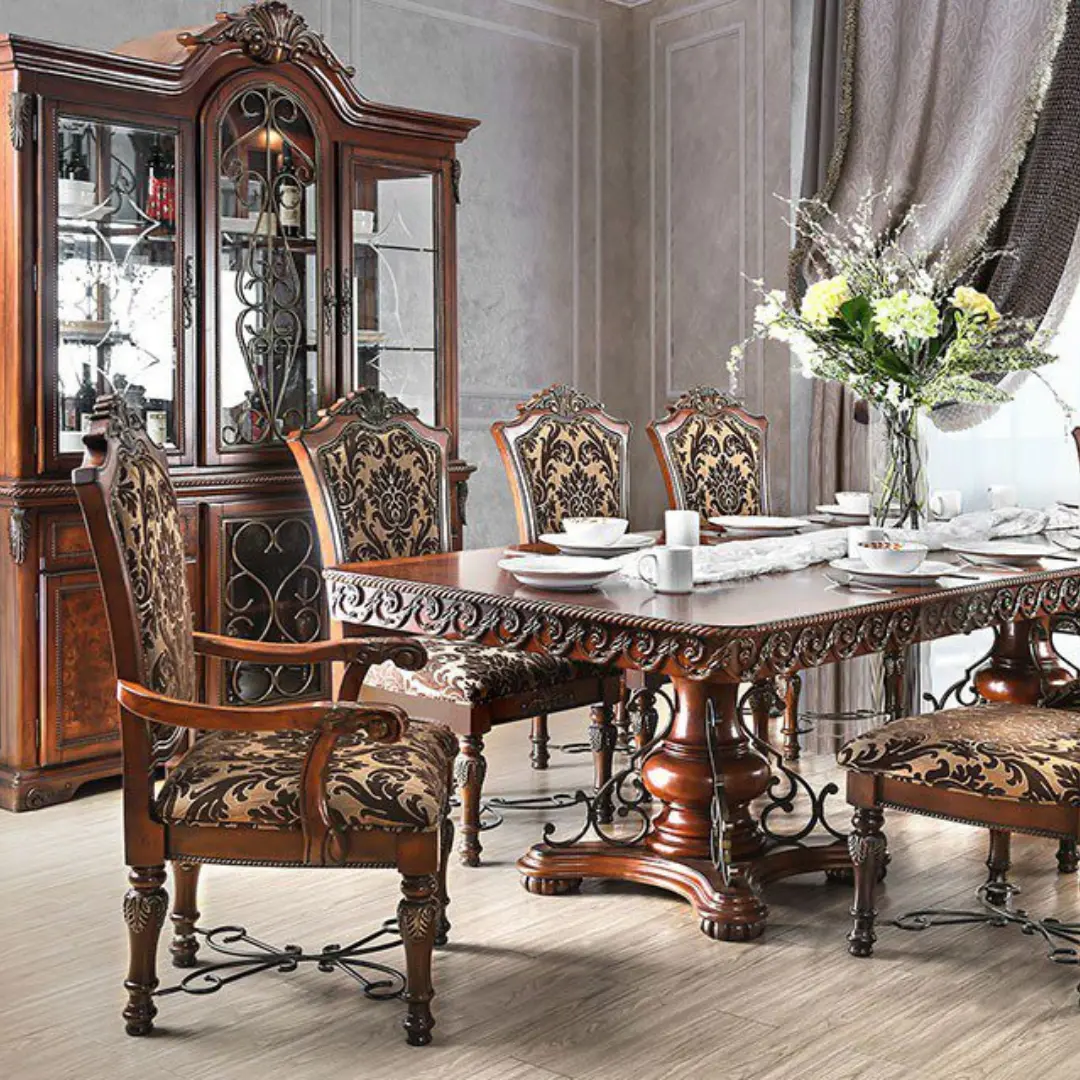
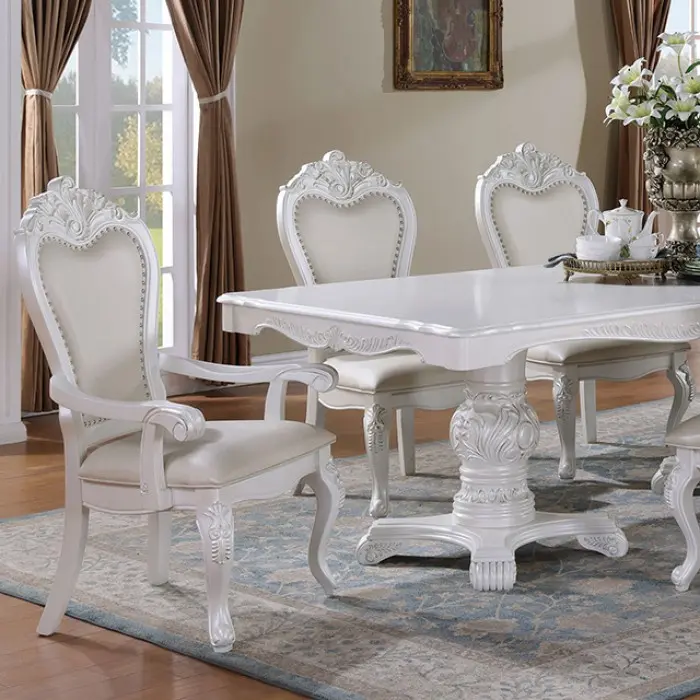
Traditional dining chairs usually feature carved or shaped backs, upholstered seats, and turned or cabriole legs. Armchairs at the ends of the table add formality and help define the head of the room. Upholstered seats make long dinners more comfortable and introduce fabric texture into a space that is otherwise dominated by wood.
Buffets, sideboards, and china cabinets
A buffet or sideboard gives you serving space and storage for linens and flatware, while a china cabinet adds height and a place to display glassware and serving pieces. In a large dining room, these casegoods are essential to keep the table from floating alone in an empty room. Browsing traditional dining room sets is the easiest way to find a table, chairs, and storage pieces that already share a finish and detailing.
Primary Suites and Grand Entryways
Bedrooms and entryways are often overlooked when people think about large-home furniture, yet both rooms have plenty of floor area and wall height to fill.
Statement beds and coordinated bedroom sets
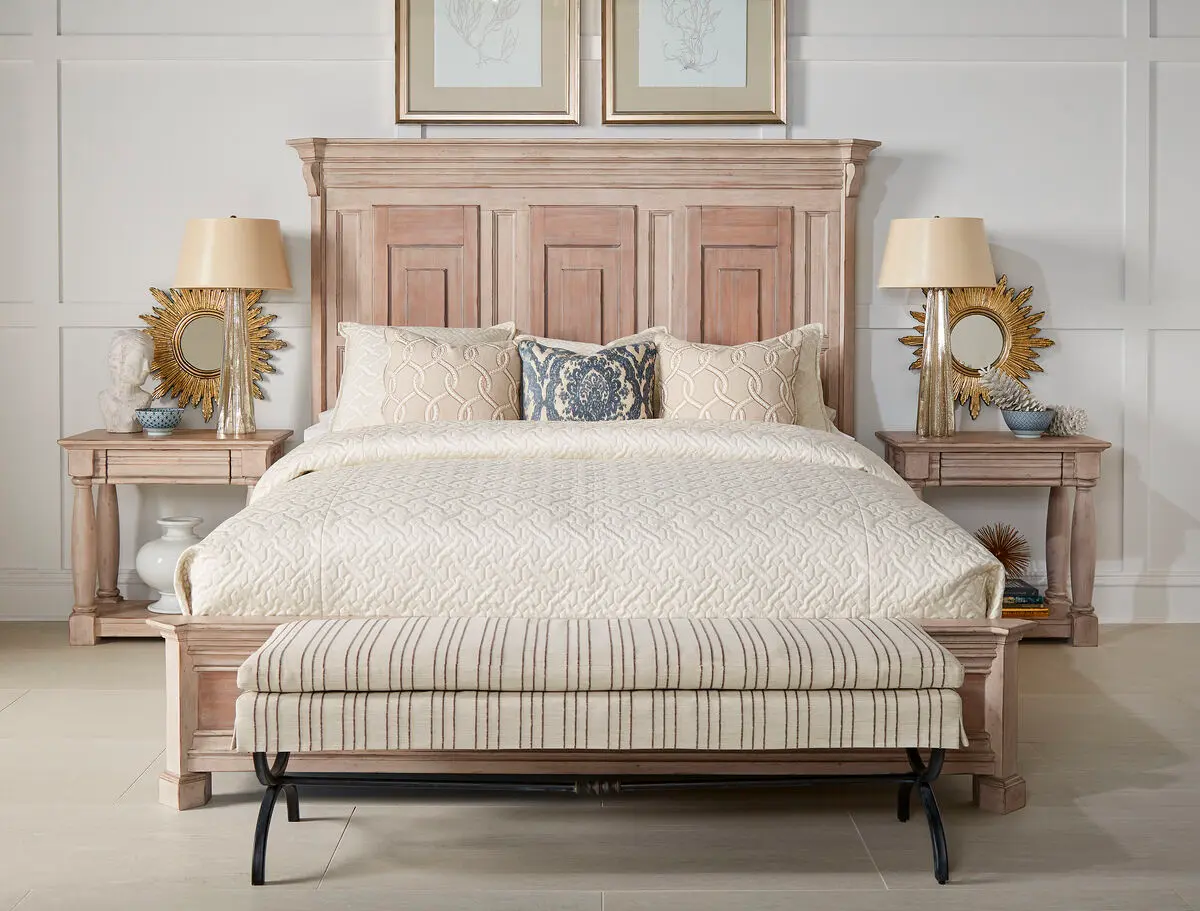
In a spacious primary suite, the bed is the anchor. Tall upholstered or carved headboards, panel beds, sleigh beds, and canopy beds all add height and presence. A matching dresser with mirror, chest, and nightstands creates a calm, finished look, and a bench at the foot of the bed or a pair of chairs near a window can turn leftover space into a sitting area. Our traditional bedroom sets bring these pieces together in coordinated finishes.
Storage that fits the room
Large bedrooms can handle tall storage that would overwhelm a smaller room. An armoire, a tall chest, or a pair of matching chests adds function and balances a big bed visually. Keep finishes consistent so the room reads as one composition rather than a collection of separate purchases.

Traditional furniture inspiration for large elegant homes
Entryway and foyer furniture
A grand entry sets expectations for the rest of the home. A substantial console table with a large mirror above it is the classic formula: the table offers a landing spot for keys and decor, and the mirror reflects light and makes the foyer feel even more open. In wide entries, paired chairs, benches, or matching lamps on either side of the console reinforce the symmetry of formal design. Browse console tables sized for entries and hallways, and choose a finish that previews the wood tones used in the rooms beyond.
Elegant Traditional Styles, Materials, and Build Quality
Traditional furniture is a broad family. Choosing one main direction and staying with it is the surest way to keep a large home cohesive.
Style directions
Classic American traditional favors balanced proportions, warm wood, and restrained detail. French-inspired designs bring graceful curves, cabriole legs, and carved motifs. Victorian-style pieces offer deeper carving, richer upholstery, and a more dramatic presence. Neoclassical design leans on symmetry and architectural references such as columns and fluting. Transitional traditional blends classic shapes with cleaner lines for homes that want elegance without heavy ornament. You can mix related styles, but repeat at least one element, such as wood tone, metal finish, or fabric color, in every room.
Materials to look for
Hardwoods such as mahogany, walnut, cherry, oak, and maple have long been favorites for traditional furniture because they carve well and take rich finishes. Always check the product description for the actual materials, since many pieces combine solid wood with veneers or engineered components. Marble and natural stone tops add weight and polish to dining tables, consoles, and accent tables. For upholstery, velvet gives depth and sheen, leather wears in gracefully, and linen and performance fabrics suit relaxed or high-traffic rooms. Metal hardware in brass, bronze, or gold tones completes the look.
Signs of good construction
Whatever the style, a few construction details are worth asking about: drawers that glide smoothly and use joinery such as dovetails, frames assembled with strong joints rather than staples alone, sturdy back panels, even finishes without drips or rough patches, and cushions that recover their shape. Our guide on how to identify high-quality furniture explains what to inspect in a showroom or in product photos and specifications.

Ready-Made, Handmade, or Custom: Choosing Pieces That Last
Most large homes are furnished with a mix of ready-made collections and a few special pieces. Understanding the difference helps you spend where it matters most.
Ready-made collections
Ready-made sets from established furniture makers are the fastest way to furnish several rooms at once. They come in coordinated finishes, and you can see exactly what you are getting before you buy. For secondary rooms, guest suites, and family spaces, ready-made traditional pieces usually make the most sense.
Handmade pieces
For a statement piece, the Kleopatra Kingdom® handmade collection is Mobilia Cleopatra’s own line. These pieces are made by hand in French, Victorian, and other traditional styles, with carved frames, gilded accents, and finishes that range from warm gold and bronze to ivory and classic brown, which suit formal living rooms, dining rooms, and bedrooms where the furniture is meant to be the focal point.
Custom orders
When standard sizes do not fit the architecture, such as an unusually long dining room, a wide bay window, or a ceiling that calls for a taller piece, a custom order can solve the problem. Through our custom furniture design service, you can choose the wood, finish, upholstery, and dimensions, and review drawings before the piece is built. Custom traditional furniture takes longer than buying from stock, so plan it early, ideally alongside the floor plan.
Building a cohesive collection over time
You do not need to furnish every room at once. Start with the anchor pieces in the rooms you use most, then add supporting furniture as your plan comes together. Keep a short list of your chosen wood tones, metal finish, and fabric colors, and check every new purchase against it. That simple habit is what keeps a large home feeling designed rather than accumulated.

Traditional furniture arranged in a spacious large home interior
Frequently Asked Questions
What is the best furniture for large-scale interior architecture?
The best furniture for large-scale interiors has visual mass and height: high-backed sofas and sectionals, long dining tables, tall headboards, china cabinets, armoires, and console tables with large mirrors. Traditional designs work especially well because their carving, paneling, and upholstery hold up against high ceilings and heavy moldings.
What makes traditional furniture look elegant?
Elegant traditional furniture combines balanced proportions, warm wood finishes, refined details such as carving or tufting, and quality upholstery. Arranging it symmetrically and keeping a consistent palette of wood tones, fabrics, and metal finishes makes the whole room look composed.
What is formal style furniture?
Formal style furniture is furniture designed for a polished, occasion-ready look, usually in traditional, French-inspired, or Victorian-style designs. It tends to feature curved lines, carved frames, upright seating, rich fabrics like velvet, and symmetrical arrangements in living and dining rooms.
How do you choose furniture scale for an oversized room?
Measure the room, ceiling height, and walkways first. Then pick one dominant piece per zone, such as a sofa, sectional, or dining table, sized to the room, and support it with medium-scale chairs and tables. Add tall pieces like cabinets or mirrors to fill vertical space.
How do you furnish an open floor plan in a traditional style?
Use furniture to define zones: the back of a sofa, a console table, or a low cabinet can separate living and dining areas. Anchor each zone with a rug, keep circulation paths clear, and repeat wood tones and fabric colors so the space feels connected.
Is custom traditional furniture worth it for a large home?
Custom furniture is worth considering when standard sizes do not suit the architecture, for example a very long dining room or a tall wall that needs a taller piece. For most other rooms, well-chosen ready-made collections are faster and simpler.
What should I look for in high-quality traditional furniture?
Check the listed materials, drawer construction, joint strength, finish quality, and cushion recovery. Ask what the frame is made of and how it is assembled, and look for clear product specifications from the seller.
Bringing Grand Rooms to Life
Furnishing a large home well comes down to a few steady principles: match furniture to the scale of the architecture, anchor every zone with one dominant piece, use symmetry to keep generous rooms orderly, and carry a consistent palette of wood, fabric, and metal from the entry to the primary suite. Traditional furniture makes those principles easier to follow because it was designed for rooms with height, detail, and presence.
Start with the rooms you use most, invest in the anchor pieces first, and fill in around them as your plan takes shape. When a space needs something truly specific, a handmade Kleopatra Kingdom® piece or a custom order can provide the right size and detail.
You can see pieces in person at our Upland showroom at 280 N Benson Ave, Suite 6, Upland, CA 91786. For help choosing traditional furniture for your home, call (909) 999-1442.