Free shipping · 0% for 6 months · White-glove available


What Is Traditional Furniture?

Reviewed by the Mobilia Cleopatra design team
Quick answer: Traditional furniture is furniture designed in, or modeled on, the classic European and American period styles of the 18th and 19th centuries, such as Queen Anne, Chippendale, Louis XV and Louis XVI, Hepplewhite, Sheraton, and Victorian. You can recognize it by symmetry, carved detail, curved or turned legs, warm wood tones, and formal upholstery in fabrics like velvet, damask, or brocade.
“Traditional” is one of the most common labels in furniture shopping, and one of the least explained. It sits on sofa sets, dining rooms, and bedroom collections, yet the word does not mean old, and it does not mean antique. It describes a design language: a set of shapes, proportions, materials, and ornament that grew out of specific historical periods and has been reproduced and reinterpreted ever since.
Understanding that language makes a real difference. It helps you tell a carved cabriole-leg side chair from a transitional chair that only borrows its outline, explains why a traditional room feels calm and formal, and makes it easier to mix pieces from different collections without the room looking accidental. It also helps you read product descriptions with a sharper eye, since style names are often used loosely.
This guide is the definition piece in our traditional furniture series. It covers what the term means, where the style came from, the features that define it, how it compares with transitional and modern furniture, how it shows up room by room, and how to recognize it in a showroom or online. If you are ready to shop rather than learn, our step-by-step traditional furniture buying guide picks up where this article ends.
What Is Traditional Furniture? A Clear Definition
Traditional furniture is a broad style family rather than a single historical period. In everyday use, it refers to pieces that follow the forms and ornament of classic 18th- and 19th-century European and early American design. A traditional sofa may have rolled arms, a carved wooden frame, and tufted upholstery; a traditional dining table may stand on turned or carved legs with a richly stained top; a traditional bed may have a tall, shaped headboard with molded or carved detail.
Two points keep the definition clear. First, “traditional” describes a look, not an age. Most traditional furniture sold today is newly made in traditional styles, sometimes faithfully and sometimes with simplified details. Collectors and auction houses use the word more narrowly for formal furniture actually made before the end of the Victorian era, which is why you will see both meanings online. Second, traditional is an umbrella. French, English, and American period styles all sit under it, each with its own signature, but they share a common grammar of balance, ornament, and warm materials.
Traditional-Style Pieces vs Antiques
An antique is an original piece from its period, valued for age, provenance, and condition. A traditional-style piece is a new design that draws on those period forms. Both can be beautiful, but they are bought and cared for differently. Mobilia Cleopatra sells new traditional-style furniture; for genuine antiques, a specialist dealer or appraiser is the right resource, and a professional conservator is the right person to consult before cleaning or repairing one.
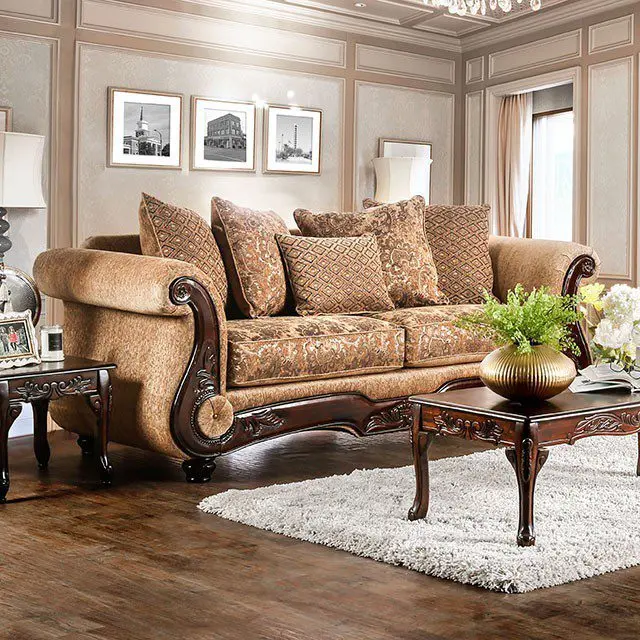
High-end traditional furniture for elegant home décor
Where Traditional Furniture Comes From: The Period Styles
Most of what we now call traditional furniture traces back to a handful of period styles from England, France, and early America. You do not need to memorize dates to use them, but knowing their signatures helps you name what you are looking at.
Queen Anne and Chippendale
Queen Anne furniture, which took shape in England in the early 18th century and was popular in the American colonies for decades after, is defined by graceful curves: the S-shaped cabriole leg, pad or slipper feet, and chair backs shaped to follow the body. Ornament is restrained, often a single carved shell. Chippendale, named for the London cabinetmaker Thomas Chippendale, built on those forms in the mid-18th century. The Victoria and Albert Museum describes his work as a fusion of rococo with Chinese and Gothic elements. Ball-and-claw feet, pierced chair splats, and more elaborate carving are its calling cards.
Louis XV and Louis XVI
French court furniture gave traditional design much of its elegance. Louis XV pieces belong to the rococo, which, according to the V&A’s rococo collection guide, emerged in France in the 1720s and was known for curved, asymmetric ornament and natural motifs. Think serpentine fronts, cabriole legs, shells, and flowing carved foliage. Louis XVI style reacted against that exuberance with straighter lines, tapered and fluted legs, and classical motifs such as laurel, urns, and ribbons, part of the wider neoclassical movement.
Hepplewhite, Sheraton, and the Federal Look
Neoclassicism, as the V&A explains, emerged in Britain and France in the 1750s and drew on the art of ancient Greece and Rome, especially the finds at Herculaneum and Pompeii. In late 18th-century England, the published designs associated with George Hepplewhite and Thomas Sheraton translated it into lighter furniture: slender tapered legs, contrasting veneers and inlay, and chair backs that are typically shield-shaped or rounded in Hepplewhite designs and more rectangular in Sheraton designs. In the young United States, these ideas became the core of the Federal style.
Victorian
The Victorian era, spanning Queen Victoria’s reign through 1901, layered several revivals on top of one another, including Gothic Revival, Rococo Revival, and Renaissance Revival. Victorian furniture tends to be heavier and more ornate, with deep carving, dark woods such as mahogany and walnut, deep button tufting, and plush upholstery. For a closer look at this branch of the family, browse our Victorian-style furniture collection.
Key Characteristics of Traditional Furniture
Whatever the period, traditional pieces share a recognizable set of features. A single piece rarely shows all of them, but most show several.
Symmetry and Balance
Traditional design is built on balance. Case pieces are usually symmetrical left to right, with matching doors, drawers, and hardware. Rooms follow the same logic: a sofa centered on a fireplace, a pair of matching armchairs facing it, twin lamps on twin side tables. That order is a large part of why traditional rooms feel composed and calm.
Carving and Applied Ornament
Carved shells, acanthus leaves, scrolls, rosettes, and beaded or rope moldings are common, along with applied details such as gilded accents, decorative trim, and ornate hardware. The amount varies: Queen Anne is restrained, Victorian and rococo pieces are lavish, and neoclassical designs favor crisp, orderly motifs.
Curved and Shaped Legs
Legs are one of the fastest ways to identify a period. Cabriole legs signal Queen Anne, Chippendale, or Louis XV influence; ball-and-claw feet point to Chippendale; tapered, fluted, or turned legs suggest Louis XVI, Hepplewhite, or Sheraton. Rolled arms, camelback sofa backs, and serpentine fronts carry the same curving vocabulary into upholstery and case goods.
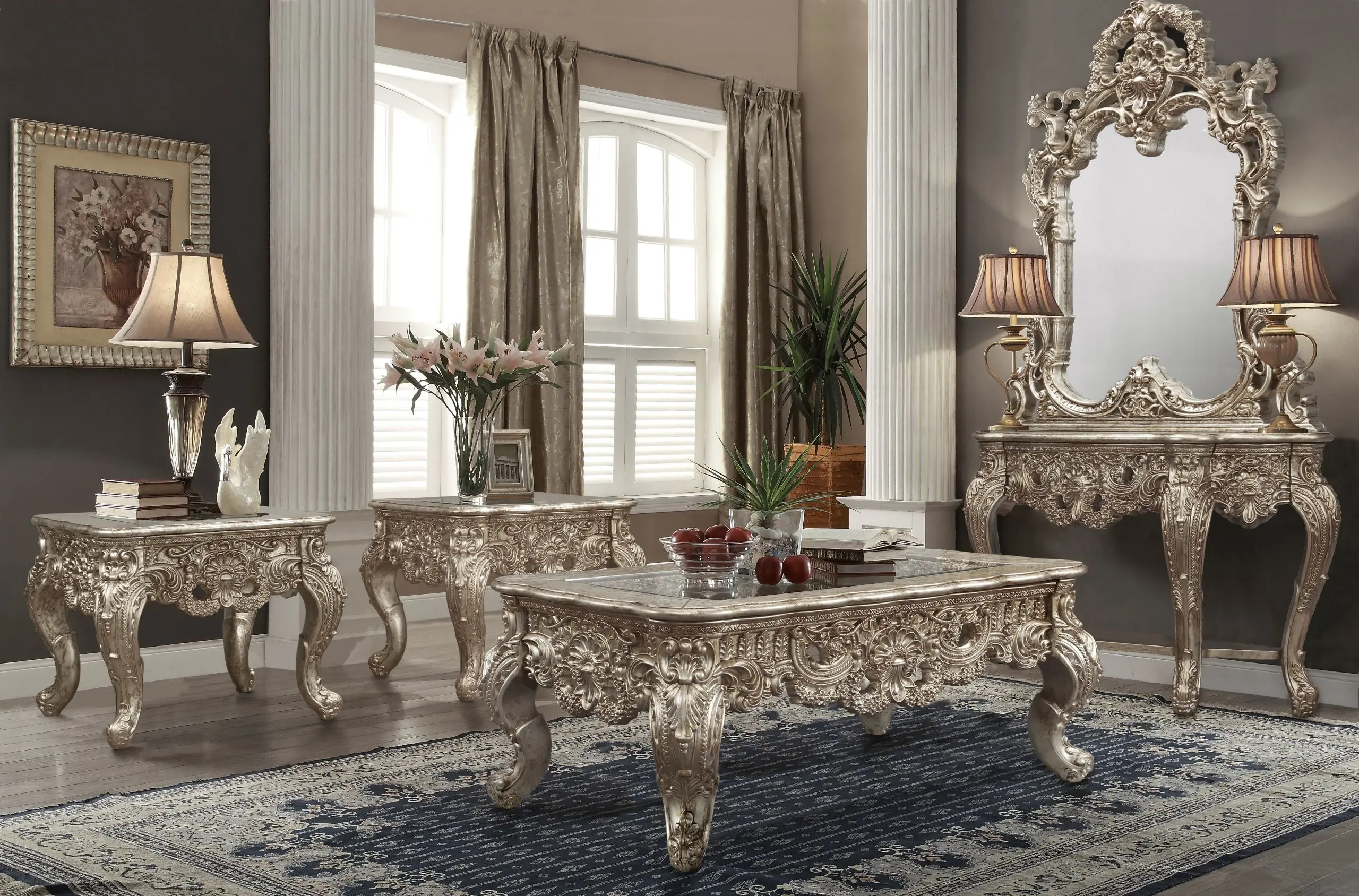
Premium traditional furniture pieces
Rich Woods and Deep Finishes
Mahogany, walnut, cherry, and oak are the classic woods, usually in warm, medium-to-dark stains that show off the grain. Many period pieces also used figured veneers and inlay for decoration. Today, traditional-style furniture is made from a range of solid woods, veneers, and engineered materials, so it is worth reading each product’s specifications rather than assuming from the look alone.
Formal Upholstery
Upholstered traditional pieces favor fabrics with weight and pattern: velvet, damask, brocade, jacquard, chenille, and leather. Tailoring details such as button tufting, nailhead trim, welting, skirts, and bullion fringe complete the formal look. Colors lean toward rich jewel tones, golds, creams, and deep neutrals.
Traditional vs Transitional vs Modern Furniture
These three labels are often confused because they overlap at the edges. The simplest way to separate them is to look at the lines, the ornament, and the overall mood.
| Feature | Traditional | Transitional | Modern |
|---|---|---|---|
| Roots | 18th- and 19th-century European and American period styles | A blend of traditional forms and contemporary simplicity | 20th-century design movements that rejected historic ornament |
| Lines | Curved, shaped, and detailed | Classic outlines with simplified edges | Straight, clean, and geometric |
| Ornament | Carving, moldings, gilding, decorative hardware | Minimal; detail comes from shape and texture | Little or none |
| Materials | Warm woods, marble, brass, velvet, damask | Wood mixed with metal, glass, and textured neutrals | Metal, glass, molded materials, lighter woods |
| Colors | Rich jewel tones, golds, deep neutrals | Soft neutrals such as cream, gray, and taupe | Neutrals with bold accents |
| Mood | Formal, layered, composed | Relaxed but refined | Open, sleek, minimal |
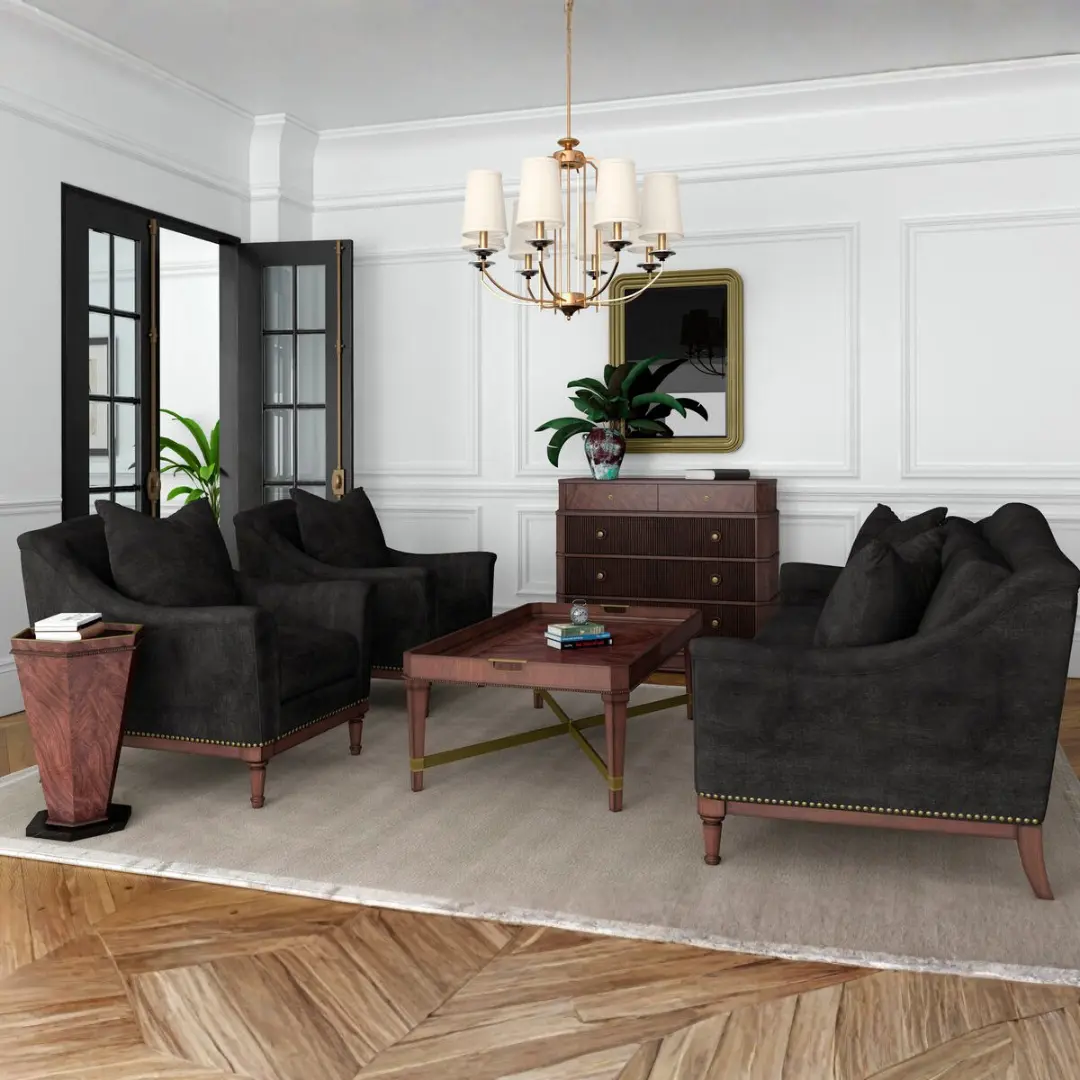
In practice, many homes sit somewhere on this spectrum. A carved traditional dining table under a simple modern chandelier is a common pairing, and transitional pieces are often the bridge that makes it work. You can compare the looks side by side in our transitional furniture and modern furniture collections.
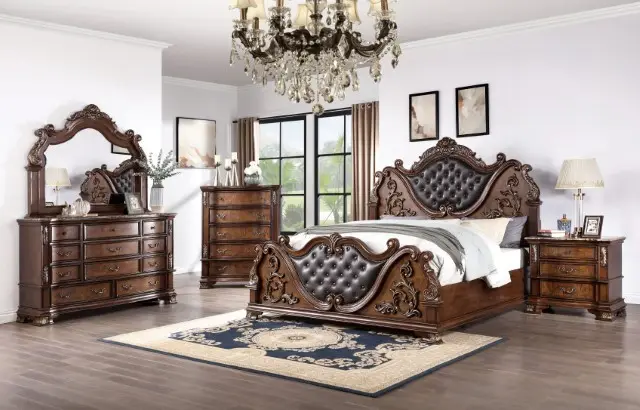
Traditional Furniture by Room
The style shows up a little differently in each room, though the same principles of balance and detail carry through.
Living Room
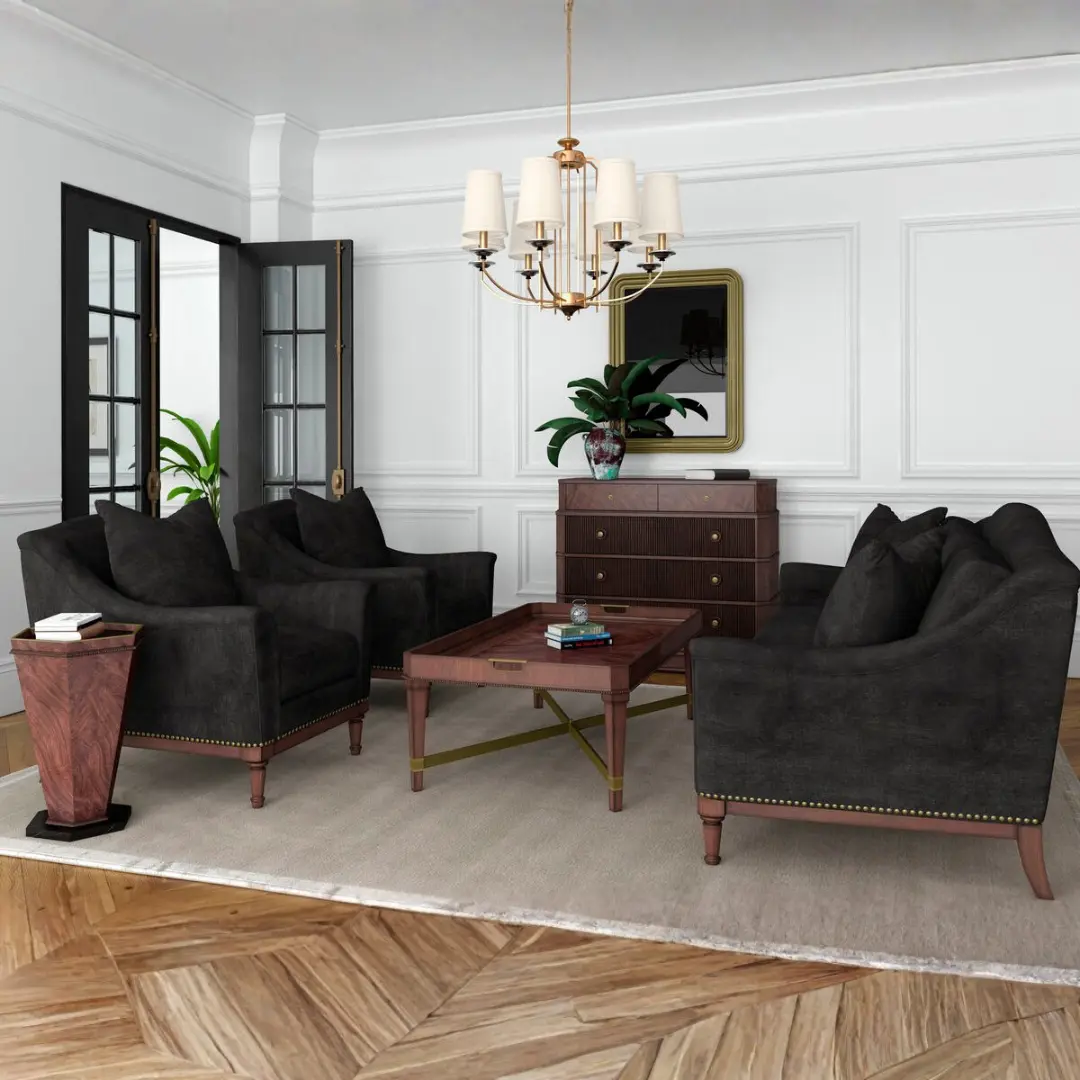
The traditional living room is usually anchored by a sofa with rolled arms or a carved frame, flanked by matching accent chairs and finished with a carved coffee table and side tables. Upholstery and drapery fabrics tie the room together. If the sofa is your starting point, our guide to choosing a traditional sofa set covers frames, fabrics, and sizing.
Dining Room
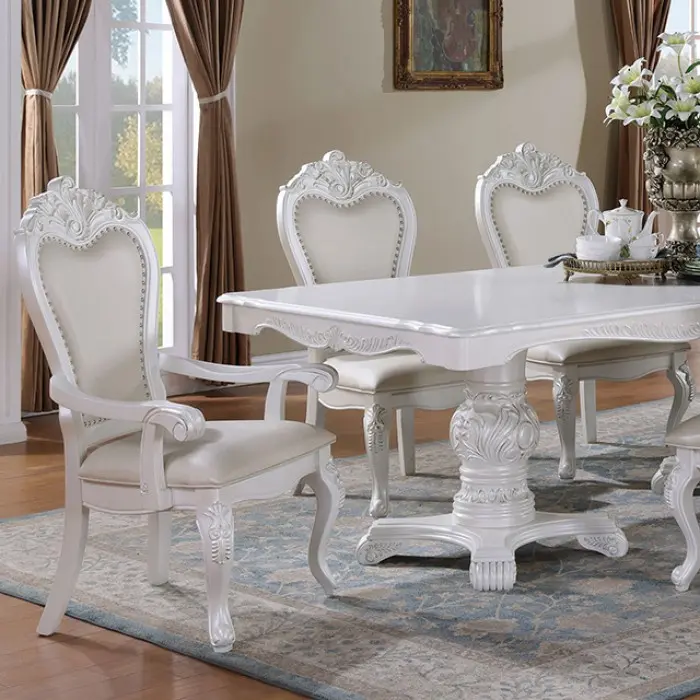
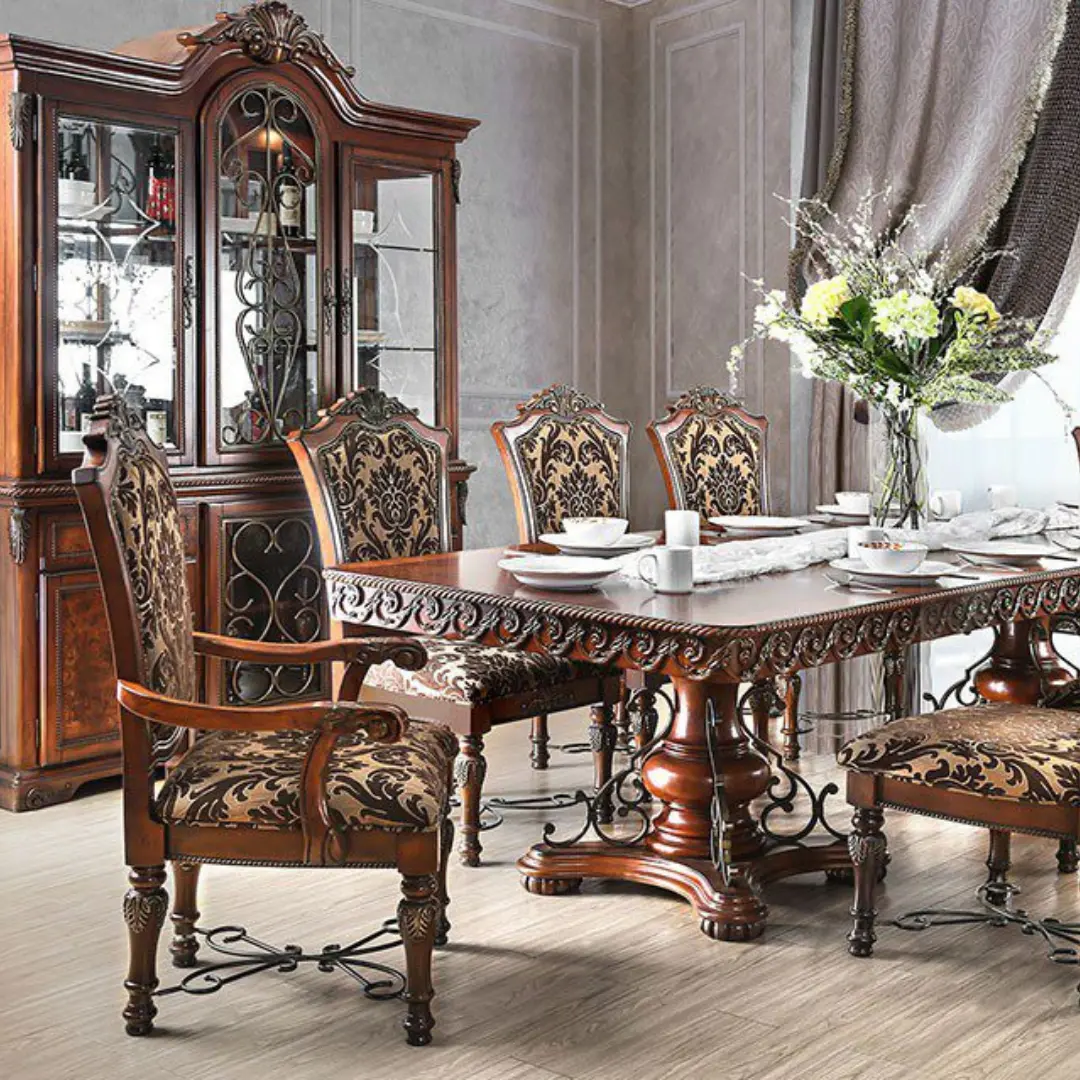
Dining rooms are where traditional furniture is most at home: a substantial table on carved or pedestal legs, upholstered side and arm chairs, and a buffet or china cabinet for display and storage. Browse traditional dining room sets to see how these pieces are coordinated.
Bedroom
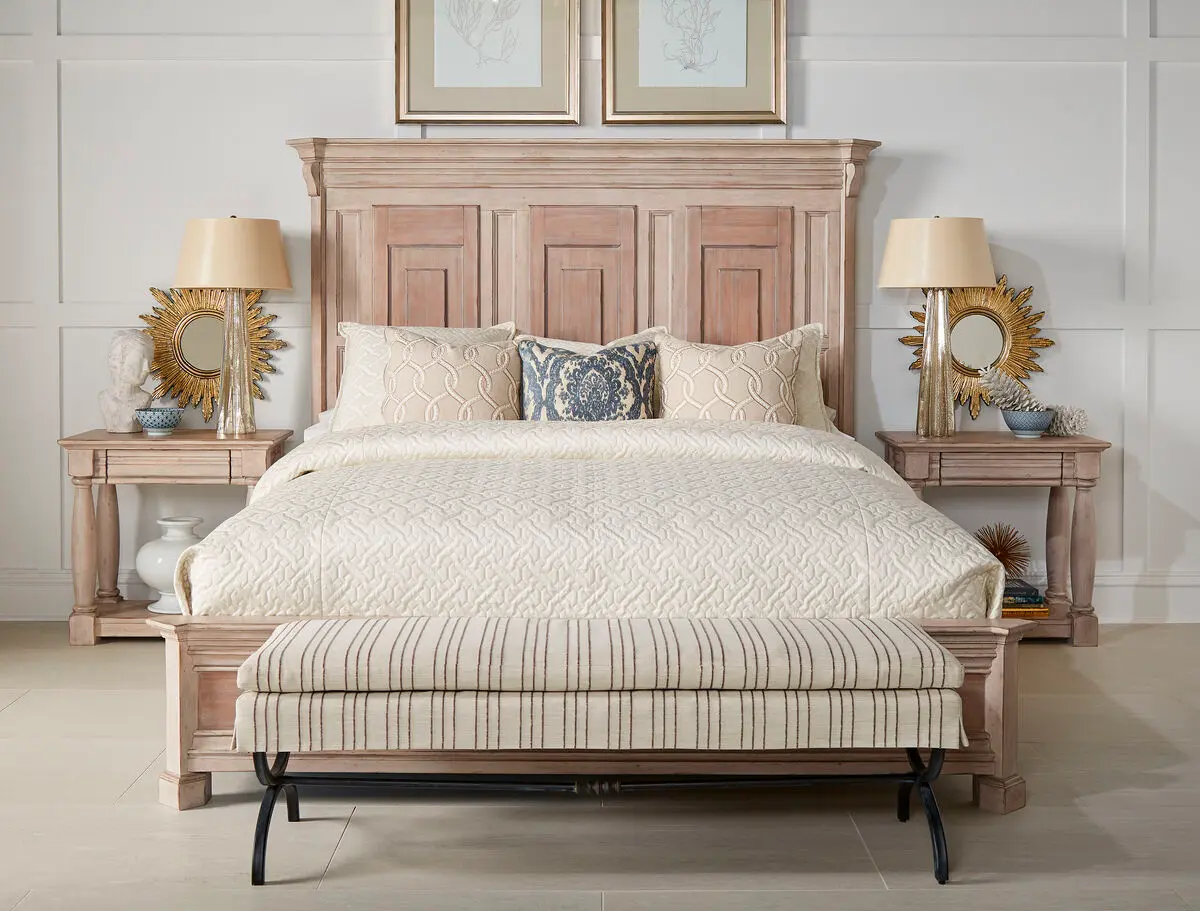
A traditional bedroom typically centers on a bed with a tall, shaped or tufted headboard, paired with matching nightstands, a dresser with mirror, and often a chest. Coordinated traditional bedroom sets make that matching look easy to achieve. Larger homes can carry more scale and more pieces; we cover that in traditional furniture for large homes.
How to Recognize Traditional Furniture
When you are looking at a piece in person or in a product photo, a few quick checks will tell you whether it is truly traditional, transitional, or simply “traditional-inspired.”
- Start with the legs and feet. Cabriole legs, ball-and-claw or bun feet, and turned or fluted legs are strong traditional signals. Plain square legs or metal bases usually point to transitional or modern design.
- Look for carved or applied ornament. Shells, scrolls, acanthus leaves, moldings, and decorative trim are hallmarks. If the only detail is the outline, the piece is probably transitional.
- Check the symmetry. Traditional case pieces and headboards are nearly always balanced left to right.
- Read the arms and backs. Rolled arms, camelback or shaped backs, and tufting point to traditional upholstery.
- Note the finish and hardware. Warm wood stains, gilded or antiqued accents, and brass or bronze pulls fit the style.
- Consider the fabric. Velvet, damask, brocade, and jacquard read traditional; flat linens and nubby neutrals lean transitional.
- Read the specifications. Style names describe the look, not the construction. Materials, wood type, and dimensions are listed on each product page.
If a piece passes most of these checks, it belongs in the traditional family. You can browse examples across rooms in our traditional style collection, and for a closer look at judging quality once you know the style, the buying guide linked above walks through joinery, materials, and finishes in detail.
Frequently Asked Questions
What is considered traditional furniture?
Traditional furniture is furniture that follows the forms and ornament of classic 18th- and 19th-century European and early American styles, such as Queen Anne, Chippendale, Louis XV, Louis XVI, Hepplewhite, Sheraton, and Victorian. It can be antique or newly made; the term describes the design, not the age.
What are the main characteristics of traditional furniture?
The defining features are symmetry, carved or applied ornament, curved or shaped legs such as the cabriole leg, warm wood tones like mahogany, walnut, and cherry, and formal upholstery in fabrics such as velvet, damask, and brocade, often with tufting or nailhead trim.
Is traditional furniture the same as antique furniture?
No. Antiques are original pieces from a historical period. Traditional furniture includes new pieces designed in those period styles. Most traditional furniture sold in stores today, including at Mobilia Cleopatra, is newly made in a traditional style.
What is the difference between traditional and transitional furniture?
Traditional furniture keeps the full period vocabulary of curves, carving, and rich finishes. Transitional furniture keeps classic outlines but simplifies them, with cleaner edges, less ornament, and softer neutral colors, so it sits between traditional and modern.
What woods are used in traditional furniture?
Mahogany, walnut, cherry, and oak are the classic choices, usually stained in warm medium-to-dark tones. Period makers also used decorative veneers and inlay. Modern traditional-style pieces vary in construction, so check the materials listed for each product.
Is traditional furniture out of style?
Traditional furniture has stayed in use for well over two centuries, which is the best argument that it is not a passing trend. What changes is how it is styled: lighter walls, simpler lighting, and fewer accessories keep a traditional room feeling current rather than dated.
Can you mix traditional and modern furniture?
Yes. A common approach is to let one or two traditional pieces, such as a carved dining table or a tufted sofa, act as the focal point and keep the surrounding lighting, art, and accessories simpler. Repeating a wood tone or color across both styles helps the mix look intentional.
Bringing Traditional Style Home
Traditional furniture is easier to understand than its reputation suggests. It is a family of styles rooted in the period designs of the 18th and 19th centuries, united by balance, carved and shaped detail, warm woods, and formal fabrics. Once you can spot a cabriole leg, a rolled arm, or a neoclassical tapered leg, the label on a product page starts to mean something specific, and it becomes much easier to build a room that feels coherent.
The next step depends on where you are. If you want to plan purchases, measure rooms, and compare materials, start with our traditional furniture buying guide. If you already know the look you want, explore our traditional furniture collection for sofa sets, dining rooms, and bedroom furniture in classic styles. And if you would like help matching pieces to your home, our team is happy to talk it through at (909) 999-1442.
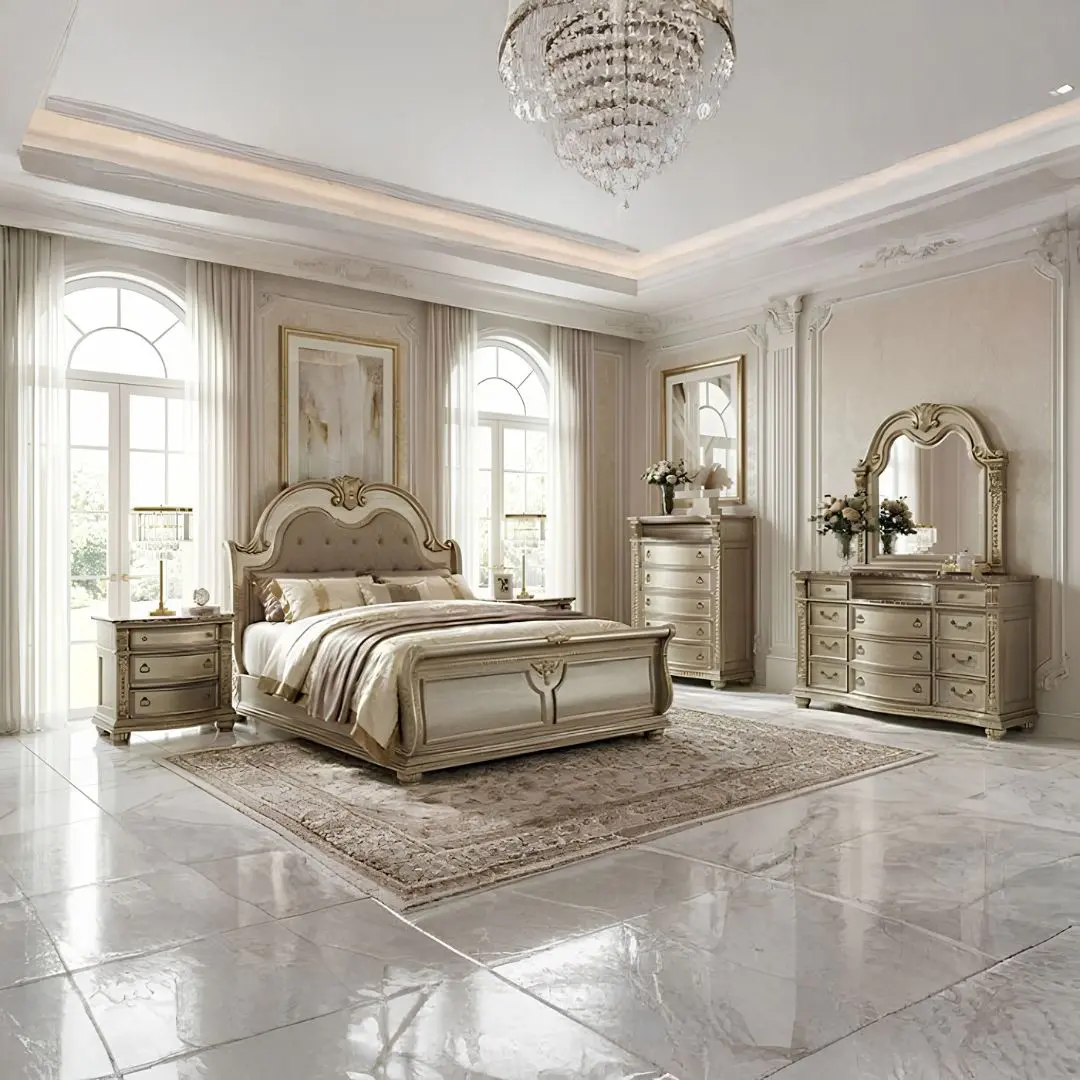
Traditional furniture aesthetic with elegant patterns