Free shipping · 0% for 6 months · White-glove available


Dining Table Height: How Tall Are Dining Tables?

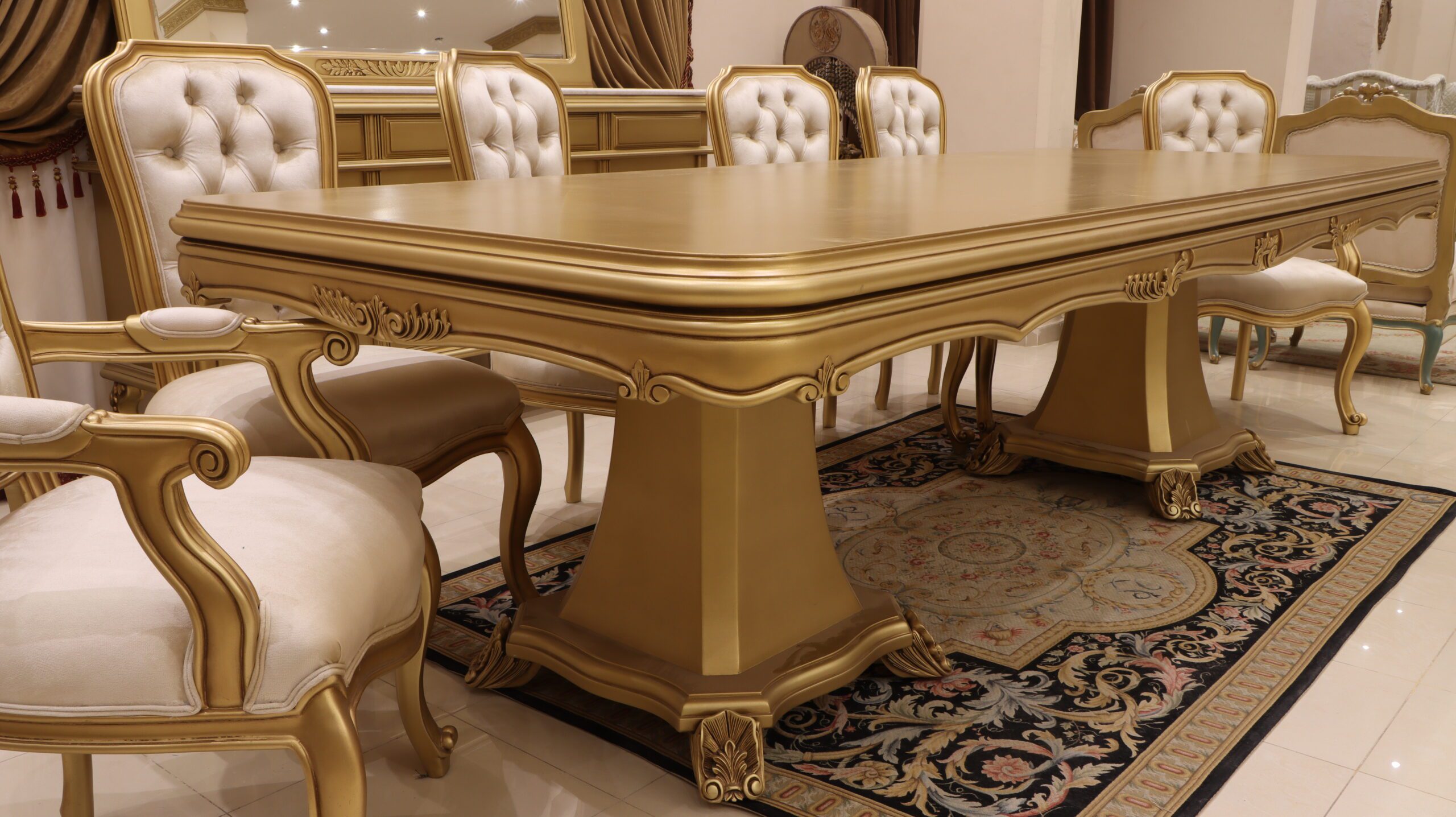
Reviewed by the Mobilia Cleopatra design team
Quick answer: The standard dining table height is 28 to 30 inches (71 to 76 cm) from the floor to the top of the tabletop, and 30 inches is the most common. Counter-height tables stand about 34 to 36 inches (86 to 91 cm) tall, and bar-height tables about 40 to 42 inches (102 to 107 cm). Whatever the style, leave 10 to 12 inches (25 to 30 cm) between the chair seat and the tabletop.
Dining table height is one of those details nobody notices when it is right and everybody feels when it is wrong. A table that sits too high leaves guests reaching up for their plates; one that sits too low presses against knees and makes long dinners uncomfortable. The good news is that the furniture industry settled on a small set of reliable heights decades ago, and once you know them, choosing the right table, chairs, and stools becomes straightforward.
This guide explains the standard dining table height and why it works, how counter-height and bar-height tables differ, how to pair chairs and stools correctly, how much space to leave around the table, and how to measure a table before you buy. You will also find a quick height chart you can use when comparing pieces in our dining room furniture collection.
Dining Table Height Chart
Use this chart as a quick reference. The heights are typical industry ranges measured from the floor to the top of the tabletop, so always confirm the exact dimensions listed for an individual table.
| Table type | Table height (inches) | Table height (cm) | Matching seat height |
|---|---|---|---|
| Standard dining table | 28–30 in | 71–76 cm | Dining chair, 17–19 in (43–48 cm) |
| Counter-height table | 34–36 in | 86–91 cm | Counter stool, 24–26 in (61–66 cm) |
| Bar-height (pub) table | 40–42 in | 102–107 cm | Bar stool, 28–30 in (71–76 cm) |
Two numbers do most of the work here. The first is the table height itself. The second is the gap between the seat and the tabletop, which should stay around 10 to 12 inches no matter which height you choose. If you remember that gap, you can pair almost any chair or stool with confidence.
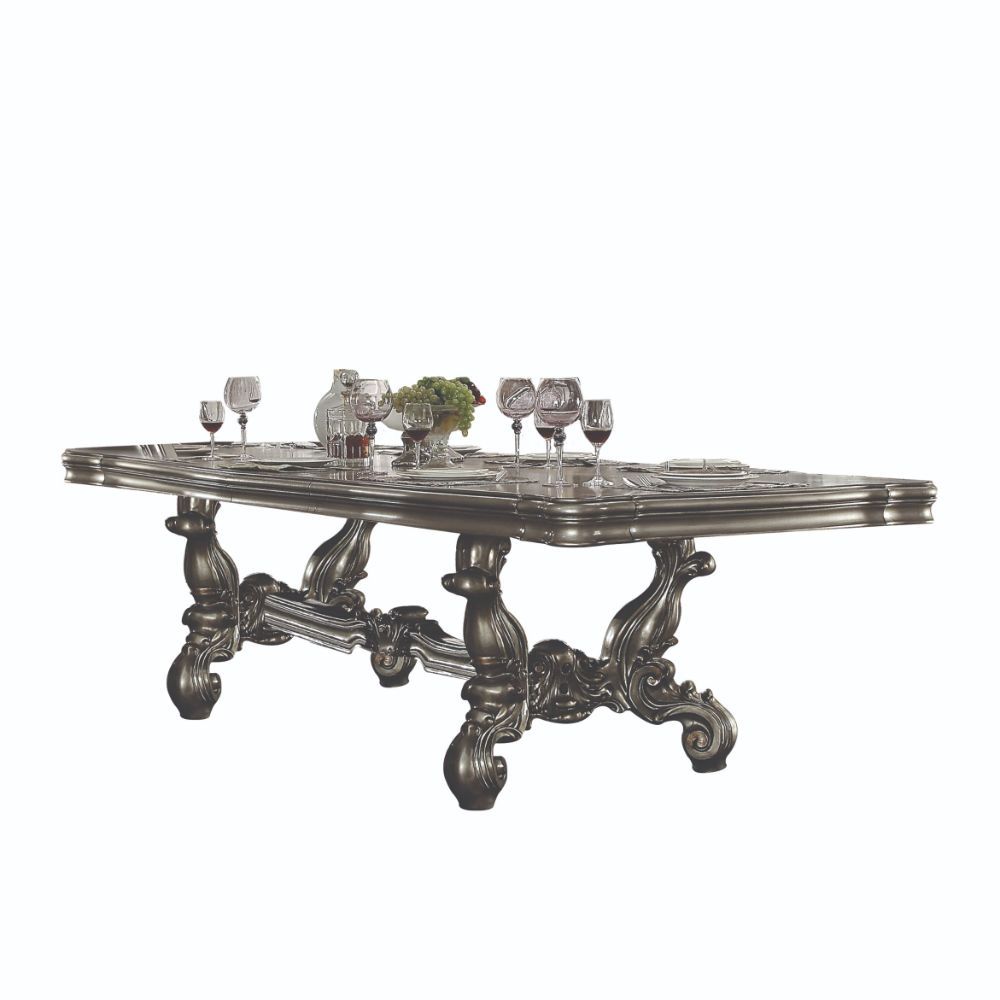
Versailles dining table in antique platinum by ACME
Standard Dining Table Height: 28 to 30 Inches
A standard dining table measures 28 to 30 inches tall, and 30 inches is the figure you will see most often on traditional and formal tables. This range has become the norm because it matches the seat height of a typical dining chair and the natural position of the forearms when a seated adult is eating.
Dining table height in inches, feet, and centimeters
If you are comparing tables from different sources, it helps to know the conversions. A 30-inch table is 2.5 feet or about 76 centimeters tall. A 29-inch table is about 74 centimeters, and a 28-inch table is about 71 centimeters. European and imported tables are often listed in centimeters, typically in the 72 to 76 cm range, which falls neatly inside the American standard.
Why 30 inches works
At this height, a seated diner’s elbows sit slightly above the tabletop, plates are easy to reach, and there is enough room under the table for thighs and knees. It also leaves space for the apron, the horizontal frame beneath the tabletop that gives many traditional tables their structure and carved detail. On a formal Victorian or French-style table, a deeper apron is part of the design, so it is worth checking the clearance underneath as well as the overall height.
Is 30 inches right for every household?
For most adults, yes. Households with very tall or petite family members sometimes prefer the upper or lower end of the range, and accessibility needs can change the picture as well. The comfort test is simple: sitting in the chair you plan to use, your forearms should rest on the table without lifting your shoulders, and your thighs should clear the underside comfortably.
Kitchen Table Height
Kitchen tables follow the same standard as dining tables: 28 to 30 inches tall. The difference between the two is usually size and style rather than height. A kitchen table tends to be smaller, more casual, and often round or square to fit an eat-in kitchen or breakfast nook, while a dining table is typically larger and more formal.
Some kitchens use a counter-height table instead, which lines up with a 36-inch kitchen counter and creates a continuous surface for casual meals and food preparation. If your kitchen is compact, a round dining table at standard height often seats more people comfortably than a square one of the same width, because there are no corners to work around.
Counter-Height and Bar-Height Tables
Raised tables bring a relaxed, social feel to a kitchen, family room, or entertaining space. They also offer a better view across an open-plan room and can double as an extra work surface.
Counter-height tables (34 to 36 inches)
A counter-height table matches the height of a standard kitchen counter, around 36 inches. It works well in open kitchens, where it can extend the counter or create a casual dining zone beside it. Pair it with counter stools or chairs that have a seat height of about 24 to 26 inches. Browse our counter height tables and matching counter height chairs and benches to see how the proportions work together.
Bar-height tables (40 to 42 inches)
Bar-height or pub tables are taller still, usually 40 to 42 inches. They suit entertaining spaces, home bars, and smaller rooms where a narrow, tall table feels less heavy than a wide, low one. Bar stools for this height have a seat height of about 28 to 30 inches and often include a footrest.
Choosing between standard and raised heights
Standard-height tables are the most comfortable choice for long, formal meals, for children, for older guests, and for anyone who prefers a chair with a back and arms. Counter- and bar-height tables feel more casual and social, but climbing onto a stool is not ideal for every guest. Many homes use both: a formal dining table in the dining room and a counter-height table in the kitchen.
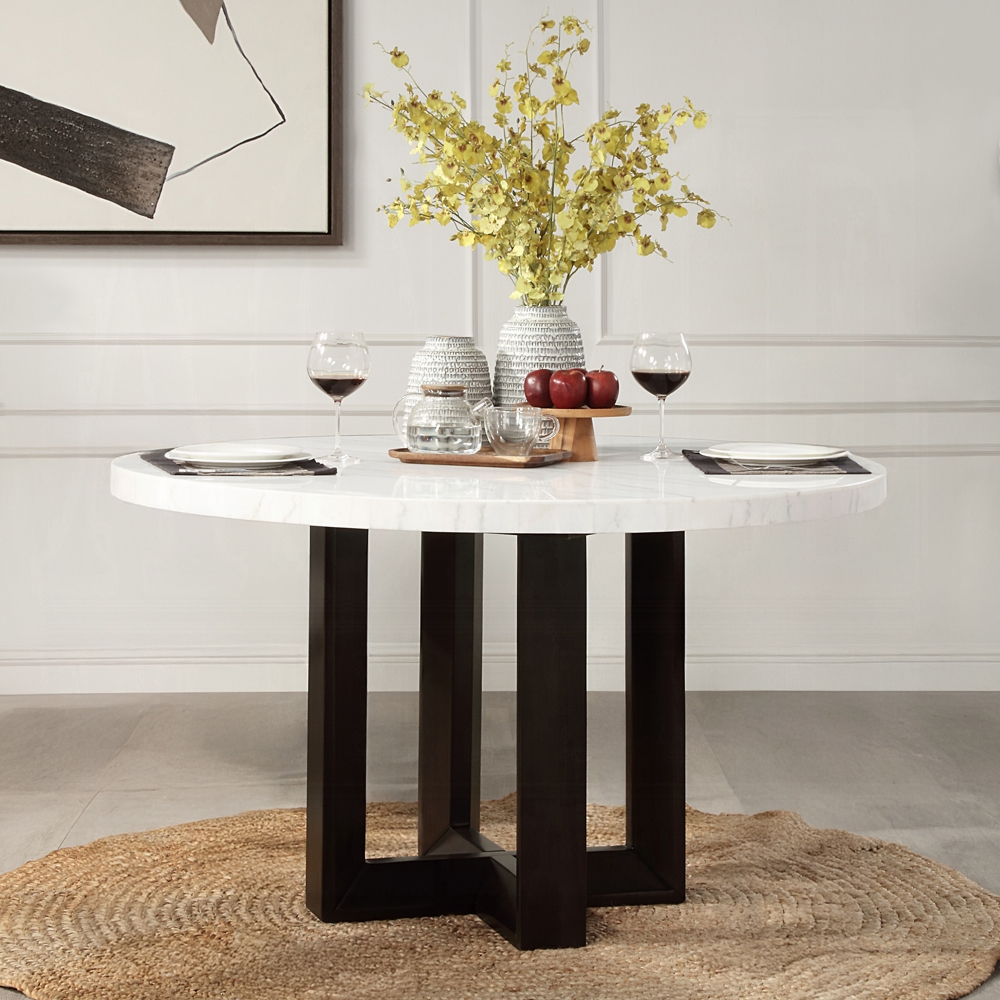
Edwyn round dining table with white marble top by ACME
Chair and Stool Height: The 10 to 12 Inch Rule
The right chair matters as much as the right table. The rule of thumb is to leave 10 to 12 inches (25 to 30 cm) between the top of the chair seat and the top of the table. That gap gives enough legroom under the table while keeping the tabletop at a comfortable eating height.
- Standard table (28–30 in): dining chair with a seat height of about 17 to 19 inches.
- Counter table (34–36 in): counter stool or chair with a seat height of about 24 to 26 inches.
- Bar table (40–42 in): bar stool with a seat height of about 28 to 30 inches.
Two more details are easy to overlook. First, measure the space between the seat and the underside of the apron, not just the tabletop, so that thighs and knees fit comfortably. Second, if you choose armchairs for the ends of the table, check that the arms slide under the tabletop or apron when the chair is pushed in. Upholstered and carved chairs vary more in seat height than simple wooden chairs, so confirm the measurements when you shop our dining chairs and benches.
Dining Table vs. Desk Height
Dining tables and desks are usually about the same height. Most desks also stand between 28 and 30 inches, which is why a dining table can serve as a temporary workspace. For long working sessions, though, a desk is designed differently: it often has a thinner top and no deep apron, which leaves more knee room for an office chair that sits higher and adjusts.
If you plan to use your dining table for work as well as meals, look for a design with enough clearance under the apron and pair it with comfortable chairs. A dining chair is built for an hour or two at the table, not a full workday, so cushioning and back support make a real difference.
Space Around the Table
Height is only part of the comfort equation. A table also needs enough room around it for chairs to slide back and for people to walk behind seated guests.
- Clearance to walls and furniture: leave about 36 inches (91 cm) between the edge of the table and a wall, sideboard, or other furniture. In a tight space, 30 inches can work, but it will feel snug when chairs are occupied.
- Space per person: allow about 24 inches (61 cm) of table length per diner so elbows do not collide. Wide armchairs and generous upholstered chairs need more.
- Lighting: a chandelier or pendant usually hangs about 30 to 36 inches above the tabletop, high enough to clear sightlines across the table while still lighting the surface.
If you are furnishing a large room with a long table and many chairs, our guide to space-saving tips for large dining room sets covers layout ideas in more detail.
How to Choose the Right Dining Table Height
Choosing the right height comes down to how you use the room, who sits at the table, and the style you want.
Think about how you dine
For family dinners, holidays, and formal entertaining, a standard 30-inch table with comfortable chairs is the classic choice. For quick breakfasts, homework, and casual gatherings, a counter-height table may suit the way you actually live.
Consider everyone who will sit there
Children, older relatives, and guests with mobility needs are usually more comfortable at a standard-height table with sturdy chairs. If accessibility is a priority, check the knee clearance under the table and the height of the chairs as carefully as the table height itself.
Match the room and the style
Formal Victorian, French-style, and traditional dining tables are almost always standard height, with carved aprons and legs that are part of their character. Contemporary and open-plan spaces are where counter-height designs shine. To see how table, chairs, and sideboard work together as one design, explore our dining sets, or read our guide on how to choose a dining room set.
Measure before you buy
Measure from the floor to the top of the tabletop for the table height, and from the floor to the underside of the apron for knee clearance. Measure your chair seat from the floor to the top of the cushion when it is compressed by a seated person. Then compare those numbers with the 10 to 12 inch rule. When you shop dining tables, the product details list the overall dimensions, so you can check the fit before your table arrives.
Frequently Asked Questions
What is the standard height of a dining table?
The standard height of a dining table is 28 to 30 inches (71 to 76 cm), measured from the floor to the top of the tabletop. Thirty inches is the most common height for traditional and formal dining tables, and it pairs with dining chairs that have a seat height of about 17 to 19 inches.
How tall is a dining table in centimeters and feet?
A standard dining table is about 71 to 76 centimeters tall. A 30-inch table equals 2.5 feet or roughly 76 cm, a 29-inch table is about 74 cm, and a 28-inch table is about 71 cm. Tables listed in centimeters, often 72 to 76 cm, fall inside the same standard range.
How tall is a kitchen table?
A kitchen table is usually the same height as a dining table, 28 to 30 inches. Kitchen tables tend to be smaller and more casual, but the height stays the same so that standard chairs fit. Some kitchens use a counter-height table of about 34 to 36 inches to line up with a 36-inch kitchen counter.
What is the difference between counter-height and bar-height tables?
A counter-height table is about 34 to 36 inches tall and pairs with stools that have a 24 to 26 inch seat. A bar-height table is taller, about 40 to 42 inches, and pairs with stools that have a 28 to 30 inch seat. Counter height suits kitchens, while bar height suits entertaining spaces and home bars.
What chair height do I need for a 30-inch table?
For a 30-inch dining table, choose chairs with a seat height of about 18 to 19 inches, at the upper end of the standard range, which leaves the recommended 10 to 12 inches between the seat and the tabletop. Also check the space between the seat and the underside of the apron so that knees and thighs fit comfortably.
Are dining tables and desks the same height?
Dining tables and desks are usually about the same height, between 28 and 30 inches. The main difference is that desks typically have a thinner top and no deep apron, which leaves more knee room for an adjustable office chair during long working sessions.
How much space do you need around a dining table?
Leave about 36 inches (91 cm) between the edge of the dining table and the nearest wall or piece of furniture, so guests can pull out their chairs and others can walk behind them. In a tight room, 30 inches can work. Allow about 24 inches of table length for each person.
Finding the Right Table for Your Home
For most homes, the right answer is a standard dining table of 28 to 30 inches paired with chairs that leave 10 to 12 inches of space between the seat and the tabletop. Counter-height and bar-height tables are excellent alternatives for casual kitchens and entertaining spaces, as long as everyone who uses them is comfortable on a stool. Add enough clearance around the table, measure before you buy, and your dining room will be as comfortable as it is beautiful.
At Mobilia Cleopatra, you will find dining tables in classic standard height as well as counter-height designs, from traditional, French-style, and Victorian pieces to contemporary options from trusted furniture makers. For a truly one-of-a-kind dining room, our exclusive Kleopatra Kingdom collection offers genuinely handmade dining furniture. Contact our team for help choosing the right size and height for your space.
