Free shipping · 0% for 6 months · White-glove available


White Living Room Furniture for Small Spaces: Ideas and Tips

Reviewed by the Mobilia Cleopatra design team
Quick answer: White living room furniture suits small spaces because light surfaces bounce light around the room and lower the visual weight of each piece, so walls and corners seem to sit farther away. Pick one main shade (bright white, ivory or cream), choose a fabric you can actually clean, such as performance fabric or leather, keep the layout open with raised legs and clear walkways, and add wood, texture and a few accent colors so the room feels warm, not sterile.
Every piece in a small living room takes up physical space and visual space: how much attention it pulls and how heavy it looks against the walls. Color shapes that second kind of space most, which is why white furniture keeps coming back as a smart answer for compact rooms.
White is not a single, flat choice, though. A brilliant white lacquer coffee table, an ivory tufted sofa and a cream bouclé accent chair all count as “white,” yet each creates a different mood and asks for a different level of care. Choose well and white makes a small room look brighter, calmer and more generous. Choose without a plan and the room can feel cold, or turn into a constant battle with smudges.
This guide covers why white works in small spaces, shades, pieces, materials, color pairing, layout and care, plus a few white sofas and sets from our current catalog.
Why White Furniture Works in Small Living Rooms
The appeal of white in a compact room comes down to light and visual weight. Pale surfaces reflect more of the light that reaches them, whether it comes from a window or a lamp, so a room furnished in white tends to read brighter than the same room furnished in deep brown or charcoal. Dark upholstery absorbs light and creates strong outlines; in a small room those outlines can make a sofa look like a wall inside the wall.
White also softens edges. When a sofa is close in tone to the walls behind it, the eye does not stop sharply at its silhouette. The piece blends into its surroundings, and the room feels less crowded even though the furniture takes up exactly the same floor area. Designers often call this lowering the visual weight of a piece.
A third benefit is flexibility. White is a neutral base that works with modern, transitional and traditional rooms, and it lets you change the personality of the space with pillows, throws, art and rugs instead of replacing large pieces.
Finally, white puts the focus on shape. Without a strong color competing for attention, the curve of a rolled arm, the line of a channel-tufted back or the carving on a traditional frame becomes the star. That is why white works as well on a clean modern sofa as it does on a classic, ornate one.
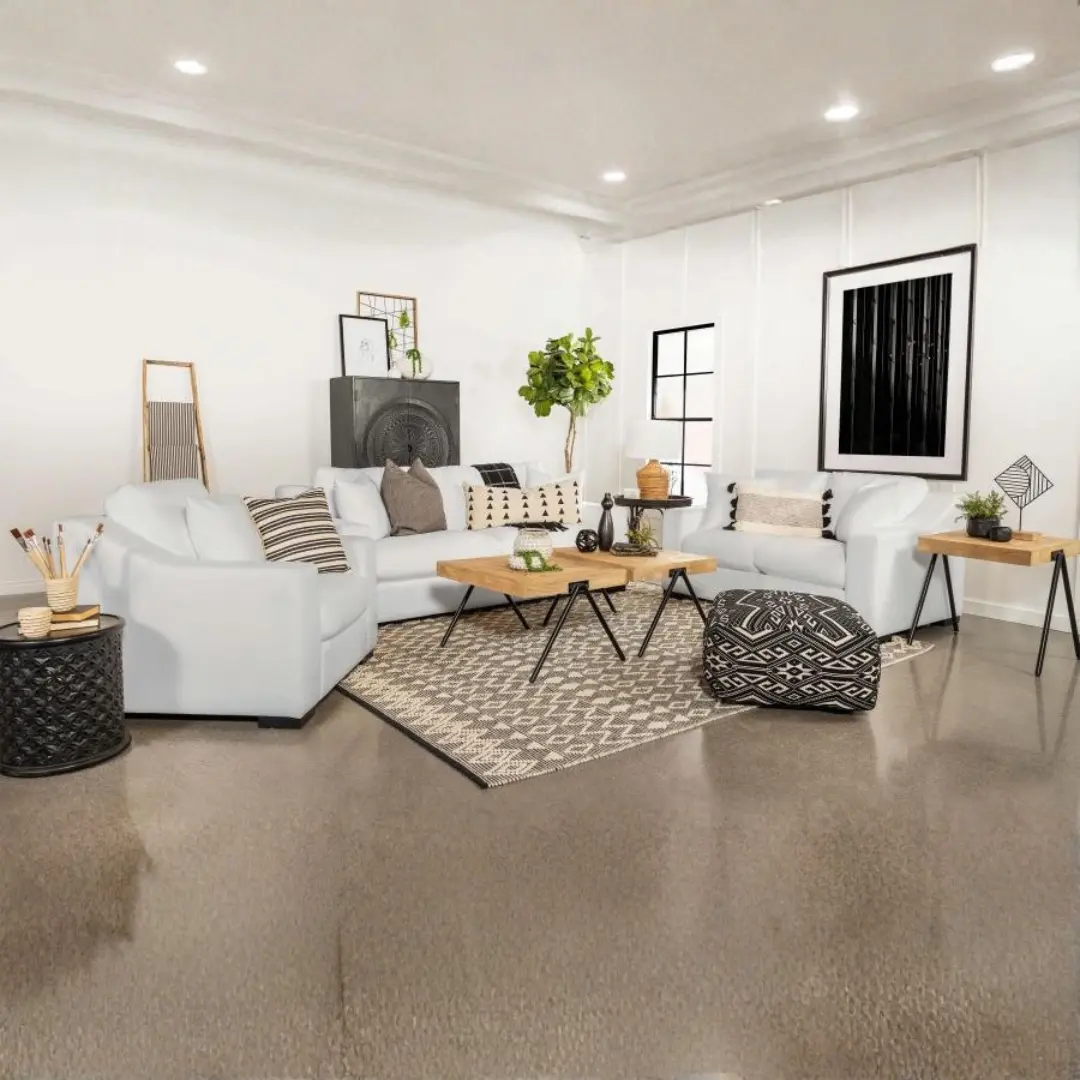
Ashlyn white sofa set by Coaster Furniture
Choosing Your Shade: Bright White, Ivory and Cream
Before you shop, decide which family of white you want. A room usually looks most intentional when one shade leads.
Bright white
Bright or optic white is crisp and clean, with little warmth. It pairs well with modern and contemporary rooms, chrome or black metal, glass and cool gray walls. Because it reflects the most light, it gives the strongest space-expanding effect, but it also shows dust, pet hair and denim transfer most clearly. It works best in rooms with good daylight; under warm bulbs it can look slightly gray or blue.
Ivory and off-white
Ivory and off-white carry a hint of yellow or beige, which makes them softer and more forgiving. They suit traditional, French-inspired and transitional interiors, especially next to gold or brass accents and warm wood. Off-white upholstery still brightens a small room, yet it feels more relaxed and hides minor marks better than pure white.
Cream
Cream is the warmest of the three, with a buttery undertone that looks inviting in rooms with north-facing windows or limited natural light, where bright white can feel flat. It works well with caramel leather, walnut and oak, rattan and earthy textiles.
A simple test helps: hold a fabric swatch against your wall paint in daylight and again in the evening under your own lamps. If the swatch looks dirty next to the wall, the undertones clash; choose a shade that sits slightly warmer or cooler until the two look like they belong together.
The Key White Pieces: Sofas, Sectionals, Accent Chairs and Coffee Tables
You do not need to furnish the whole room in white to get the benefit. In most small living rooms, one or two large white pieces do most of the work, and smaller items can add contrast.
White sofas and loveseats
The sofa is the largest piece in the room, so making it white has the biggest visual effect. Measure the wall first and leave space at each end for a side table or a clear path. In very tight rooms, a compact sofa or a loveseat paired with a chair often fits better than a full-length sofa. Browse our sofa collection for different widths and arm styles, and look at loveseats for smaller walls if you need a shorter piece. Slim or track arms save inches compared with deep rolled arms.
White sectionals
A sectional can work in a small room, as long as it is sized for it. An L-shaped piece tucked into a corner often seats more people than a sofa plus chairs, and it leaves the center of the room open. The key is proportion: check the length of both sides, the seat depth and whether a chaise will block a doorway. Our sectional sofas range from compact configurations to large reclining models better suited to open-plan rooms.
White accent chairs
An accent chair in white or cream adds seating without much visual bulk, especially if it has exposed legs and an open frame. If your sofa is white, you can also go the other way and choose chairs in a contrasting fabric to break up the scheme. See our accent chairs for options in both directions.
White coffee tables
A white lacquer, white marble-look or pale wood coffee table reflects light at the center of the room, where it is often darkest. Round or oval tops are easier to move around in tight spaces than sharp rectangles, and tables with open bases or slim legs keep the floor visible. Browse our coffee tables to find a top size you can reach easily from the sofa without crowding your knees.
If you prefer a coordinated look, a matching set takes the guesswork out of pairing shades. Our living room sets include white and off-white groupings of a sofa, loveseat and chair.
Materials That Make White Practical
The material you choose matters as much as the shade. The right one makes white easy to live with; the wrong one makes it stressful.
Performance fabric
Performance fabrics are engineered to resist stains and wear, so spills tend to bead on the surface long enough to be blotted away. For a white sofa in a busy home, this is often the most practical upholstery. Always check the manufacturer’s cleaning code (such as W, S or WS) before using any cleaner, because “performance” does not mean every product is safe on it.
Leather
White leather is a classic choice for small, modern rooms. Its smooth surface wipes clean more easily than most woven fabrics, and it does not trap pet hair. The trade-off is that light leather can pick up dye from dark denim and needs occasional conditioning with a product made for leather. Keep it out of strong direct sunlight to help prevent drying and yellowing.
Textured weaves, linen and bouclé
Textured fabrics such as bouclé, brushed linen blends and chenille add depth to an all-white scheme, and their surface can disguise minor wear better than a flat weave. They are softer and cozier, but loose loops can snag on pet claws, and natural linen may need more careful spot cleaning.
Lacquer, painted wood and stone looks
For tables, consoles and TV stands, white lacquer gives a glossy, light-reflecting finish that wipes clean with a soft, damp cloth. Avoid abrasive cleaners. Painted wood and white marble or marble-look tops offer similar brightness with a more classic feel; real marble should be protected from acidic spills such as wine and citrus.
Frames and legs
The frame finish changes the character of a white piece. Gold or bronze trim gives a traditional, glamorous look, chrome or black metal feels modern, and natural wood legs warm up the white and connect it to your floors.
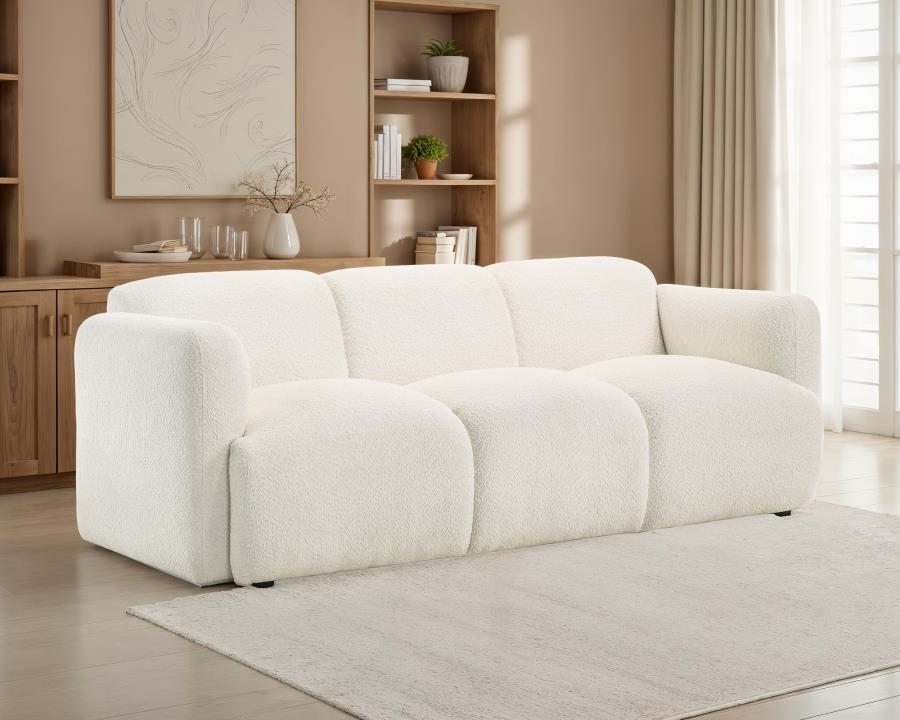
Dorset sculptural modern white sofa by Coaster Furniture
Pairing Colors and Textures So White Never Feels Sterile
The most common complaint about white rooms is that they can look cold or unfinished. The solution is layering: contrast, warmth and texture placed with intention.
- Add natural wood. A walnut side table, oak floor or wood-framed mirror instantly softens white upholstery and keeps the room grounded.
- Mix textures, not just colors. Combine smooth leather or lacquer with a nubby throw, a wool or jute rug, linen curtains and velvet pillows. In a mostly white room, texture creates interest that color usually provides.
- Use one or two accent colors. Sage, navy, terracotta or blush work well against white. Repeat each accent at least twice, for example in a pillow and a piece of art, so it looks planned.
- Bring in contrast. A few black or dark bronze elements, such as a lamp base, picture frames or table legs, give the eye a resting point and make the white look crisper. For a bolder take on contrast, see our ideas for black and silver living room decor.
- Add metallic warmth. Gold, brass and champagne accents pair especially well with ivory and cream, which is why white-and-gold sofa sets remain popular in traditional rooms.
- Include plants. Greenery adds life and color without adding clutter, and a single tall plant can fill an empty corner.
- Choose warm lighting. Bulbs in the warm white range keep white furniture from looking clinical at night. Layer a floor lamp, a table lamp and overhead light rather than relying on one fixture.
Wall color matters too: a soft warm white, greige or pale sand on the walls keeps the room light without the starkness of white on bright white.
Small-Space Layout Tips for White Living Room Furniture
White makes a room look bigger, but the layout determines whether it actually feels comfortable. These principles help a small living room function well. For a broader framework on sizing and selecting pieces, read our guide on how to choose living room furniture.
- Measure everything, including doorways. Note the room’s dimensions, window and door positions, outlets and vents, and the width of hallways and entry doors that furniture must pass through.
- Choose raised legs. Sofas and chairs on legs show more floor, which makes the room look larger than skirted pieces that sit flat on the ground.
- Keep walkways clear. Plan for a comfortable path between the entry and the main seating, and leave enough room between the sofa and coffee table to pass without turning sideways.
- Float, don’t line the walls. Pulling the sofa a few inches off the wall, or using a rug to define a seating zone, can make the room feel more intentional than pushing everything to the edges.
- Use multifunctional pieces. A storage ottoman, nesting tables or a sleeper sofa adds function without adding more pieces.
- Size the rug correctly. A rug large enough for at least the front legs of the sofa and chairs to rest on it ties the group together; a tiny rug makes the room look choppy.
- Use mirrors and light curtains. A mirror opposite a window doubles the daylight bouncing off your white furniture, and curtains hung high and wide make windows look larger.
- Edit accessories. White surfaces show clutter quickly. Keep a few meaningful objects on display and store the rest.
Keeping White Furniture Clean
White furniture is easier to keep looking fresh when care is a habit rather than a rescue mission. Vacuum upholstery weekly with a soft brush attachment, including seams and under cushions, and rotate or flip cushions so wear and sun exposure are even. Blot spills immediately with a clean, light-colored cloth; rubbing pushes the stain deeper into the fibers.
Follow the cleaning code on the label, and test any cleaner on a hidden spot first. Avoid bleach on upholstery, which can weaken fibers and cause yellowing. For leather, use a cleaner and conditioner made for leather; for lacquer and painted wood, a soft, slightly damp cloth is usually enough. Washable throws are a simple way to protect a favorite seat, especially with pets or children, and a professional upholstery cleaner is worth calling for deep or set-in stains.
For a full routine covering fabric, velvet, leather and wood, see our guide to maintaining living room furniture sets.
White Living Room Furniture at Mobilia Cleopatra
To help you picture the options, here are a few white and off-white pieces from our current catalog. Prices are rounded and accurate as of October 2026; check the product page for current pricing and availability.
| Piece | What stands out | Price (as of October 2026) |
|---|---|---|
| Queensbury White Sofa by Furniture of America | Transitional sofa with rolled arms, about 89 inches wide | About $890 |
| Ashlyn Upholstered Sloped Arm Sofa Set White by Coaster Furniture | Sofa, loveseat and chair in white fabric; transitional style | About $2,150 |
| White Living Room Sofa Set 3 Piece by McFerran | Sofa, loveseat and chair in white fabric with gold-finished trim | About $2,430 |
| Muse Mist White Sofa With Pillows by Diamond Sofa | Mist white performance fabric with black accent pillows; a long sofa for larger walls | About $2,560 |
| Thaddea White Power Reclining Sectional Sofa by Furniture of America | Large power reclining sectional; best for open-plan rooms | About $3,160 |
| Handmade Caval White Sofa by Kleopatra Kingdom | Neoclassical style, beech wood frame, linen upholstery, off-white with gold and bronze finishes | About $3,450 |
| Handmade Lion White Sofa by Kleopatra Kingdom | Carved beech wood frame, off-white tufted upholstery and gold detailing | About $3,980 |
The two Caval and Lion sofas belong to Kleopatra Kingdom, our handmade collection. Nearly every piece in that line is built from solid wood, finished in tones that include ivory and gold, and any item can be custom-made to your size, wood finish and upholstery, which is useful when a standard sofa is a few inches too long for your wall. Explore the full range of handmade living room furniture if a carved, traditional white piece fits your style. The other pieces above come from the name-brand vendors we carry.
Frequently Asked Questions
Is white furniture good for a small living room?
Yes, for most small rooms. White and other pale finishes reflect light and reduce the visual weight of each piece, so the room looks brighter and less crowded. The trade-off is upkeep, so choose a cleanable material such as performance fabric or leather, especially for the sofa.
Does white furniture make a room look bigger?
It helps the room feel bigger rather than changing its size. Light furniture blends with light walls, so silhouettes are softer and the eye moves around the room more easily. Raised legs, a well-sized rug, mirrors and a clutter-free layout strengthen the effect.
What is the best material for a white sofa?
Performance fabric is usually the most practical for busy homes because it is designed to resist stains. Leather wipes clean easily and does not hold pet hair, though light leather can pick up dye from dark clothing. Textured weaves such as bouclé look cozy and disguise minor wear but can snag.
Is a white sofa a good idea with kids or pets?
It can be, with the right choices. Pick performance fabric or leather, keep washable throws on the most-used seats, vacuum weekly and blot spills right away. A warm ivory or cream shade is also more forgiving than bright white.
How do you keep a white living room from feeling cold?
Layer warmth and texture: natural wood, a wool or jute rug, linen or velvet pillows, plants and warm-toned lighting. Add one or two accent colors and a few darker elements, such as black frames or bronze lamps, so the white has contrast.
Should I choose bright white or cream living room furniture?
Bright white suits modern rooms with plenty of daylight and cool accents. Cream and ivory suit traditional or cozy rooms, warm wood and gold accents, and spaces with limited natural light. Compare swatches against your wall color in daylight and lamplight before deciding.
What color rug goes with a white sofa?
Almost any color works, so the choice depends on the mood you want. A light natural fiber or soft neutral rug keeps a small room airy; a patterned, darker or two-tone rug adds contrast, anchors the seating area and hides everyday dirt better.
Final Thoughts
White living room furniture is one of the simplest ways to make a small space feel brighter, calmer and more open. The key is to treat white as a considered choice rather than a default: pick one shade that suits your light and style, choose materials you can realistically maintain, and balance all that brightness with wood, texture, accent colors and a few darker notes.
Start with the largest piece, usually the sofa or a compact sectional, and build around it with light-looking accent chairs, a well-proportioned coffee table and clear walkways.
If you would like help choosing white pieces for your room, call our team at (909) 999-1442 or visit our Upland showroom at 280 N Benson Ave, Suite 6, Upland, CA 91786 to see fabrics and finishes in person.
