Free shipping · 0% for 6 months · White-glove available


How to Blend Modern and Vintage Furniture in Your Living Room

Reviewed by the Mobilia Cleopatra design team
Quick answer: To blend modern and vintage furniture, let one style lead (roughly two-thirds to four-fifths of the room) and use the other as a deliberate accent. Build the space around one statement piece, keep walls and large upholstery in a calm, neutral palette, and repeat at least one color, wood tone or metal finish across old and new pieces so they look related. For a transitional living room, pair clean-lined sofas with one or two vintage-inspired pieces, such as a carved coffee table or a tufted accent chair. When you shop, judge each piece by silhouette, scale and finish first, and by era second.
Some of the most memorable living rooms are not tied to one decade. A sleek sofa sits next to a carved side table, and a pair of Victorian-inspired chairs faces a minimalist media wall. The room feels collected over time rather than bought in one weekend, which is the appeal of mixing modern and vintage furniture.
The hard part is getting the mix right. Too many ornate pieces and the room feels like a museum; too few and the one classic chair looks out of place. This guide covers how to choose a lead style, plan a transitional living room, tie eras together with color and texture, and shop for new pieces that sit comfortably beside your own heirlooms.
A quick note: Mobilia Cleopatra sells new furniture, including Victorian-style, French-style and traditional designs alongside modern pieces. We do not sell, restore or appraise antiques. The advice below works whether your “vintage” element is a piece you already own or a new design inspired by an earlier era.
What Blending Modern and Vintage Furniture Really Means
People use “vintage,” “antique” and “retro” loosely, so it helps to define what you are actually mixing. In everyday usage, antique usually describes a piece that is around a century old or more, while vintage covers pieces from a few decades ago, often mid-century designs. Retro and vintage-inspired describe new furniture made to echo an older look, such as a cabriole-leg side table, a button-tufted Chesterfield-style sofa or a gilded mirror with a carved crest.
Modern is just as broad. Strictly, modern design is the twentieth-century movement known for clean lines and little ornament, while contemporary means what is current now. In practice, modern and contemporary pieces tend to be lower, lighter and plainer, while vintage and classic-style pieces bring carving, curves, tufting, turned legs and richer finishes.
Blending the two is not about splitting the room evenly. It is about a conversation between pieces, where the simplicity of one style makes the detail of the other easier to appreciate. A carved frame looks more striking beside a low, clean-lined sofa than surrounded by other carved frames.
That is why the strongest mixed rooms share three traits: a clear lead style, a short list of repeating elements (color, wood tone, metal, fabric), and enough breathing room for each special piece to be seen.
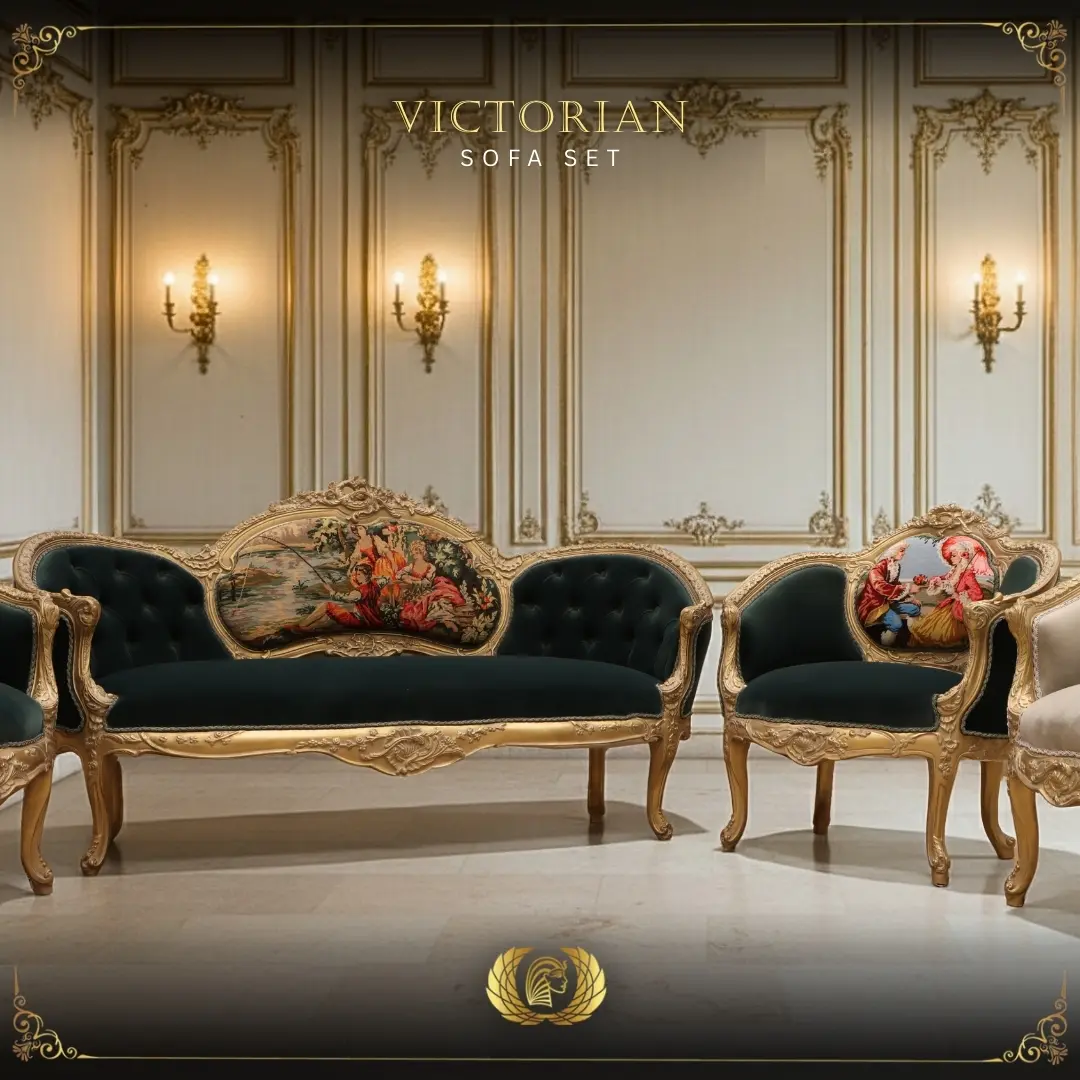
Handmade 3-piece Victorian Green sofa set (Kleopatra Kingdom)
Pick a Lead Style and Build Around One Statement Piece
Before you buy anything, decide which style will dominate. Designers often describe this as an 80/20 or 70/30 balance: most of the room speaks one language, and a smaller share adds contrast. These ratios are rules of thumb, not formulas, but they prevent the most common problem in mixed rooms, which is two equally loud styles competing for attention.
Modern-led rooms
If you love open space, light walls and simple shapes, let modern lead. Keep the sofa, media console and lighting contemporary, then introduce vintage character through one or two pieces with real presence, such as a carved console, an ornate mirror or a pair of classic armchairs. The vintage notes become the focal point precisely because they are rare.
Vintage-led rooms
If you are drawn to rich wood, carving and traditional upholstery, let the classic style lead and use modern pieces to lighten it. A glass or metal coffee table, simple drum lamps, a plain area rug or abstract art keeps a traditional room from feeling heavy or dated. Our Victorian-style furniture collection shows how much ornament a single piece can carry, which is exactly why one or two of them are often enough to set the tone.
Choosing the anchor piece
Every successful mixed room has a hero: an heirloom cabinet, a sculpted sofa or a dramatic carved chair. Place it where the eye lands first and plan everything else to support it. If your anchor is ornate, keep its neighbors simple; if it is a bold modern sofa, frame it with one or two classic accents.
How to Design a Transitional Living Room With Vintage-Inspired Furniture
Transitional design sits between traditional and contemporary, which makes it the most natural home for a modern and vintage mix. It borrows comfort and warmth from classic interiors and restraint and clean lines from modern ones. If you want vintage-inspired furniture without a period look, transitional is the framework to use.
Start with the envelope. Transitional rooms usually rely on soft neutrals such as warm white, greige, taupe, stone and muted sage. These colors flatter both a polished wood finish and a brushed metal frame. Keep architectural details simple, or paint trim and walls the same shade so the furniture carries the character.
Next, choose a calm main seating group. A sofa with a tailored track or gently rolled arm in a solid fabric is the backbone of most transitional rooms. Browsing transitional style furniture is a useful way to see this middle ground: silhouettes that are neither stark nor ornate, finishes that work with warm and cool palettes, and upholstery in quiet textures.
Then layer in vintage-inspired character in measured doses:
- One carved or curved table. A coffee table or side table with turned legs, a scalloped apron or an antiqued finish adds history without changing the room’s mood.
- A pair of classic chairs. Wingback, bergere or tufted chairs facing a modern sofa create a conversation area with built-in contrast.
- A traditional rug. A Persian- or Oriental-style rug can introduce pattern and color that the rest of the room keeps deliberately quiet.
- Classic lighting or mirrors. A crystal chandelier over a contemporary layout, or a gilded mirror over a plain console, bridges the two styles instantly.
Finally, edit. If a corner feels busy, remove one accessory before adding anything new. Vintage-inspired elements should read as intentional highlights, not the default for every surface.
Tie the Room Together With Color, Wood Tones and Texture
When pieces from different eras look like they belong together, it is usually because something repeats, giving the eye a thread to follow across the room.
Use a restrained color palette
Limit the room to a base neutral, one or two supporting tones and a single accent color. If your classic armchair is upholstered in deep green velvet, echo that green in a modern throw pillow, a piece of abstract art or a glass vase across the room. This simple repetition tells the viewer the chair was planned, not leftover.
Coordinate wood tones and metals
Woods do not need to match, but they should relate. Keep wood tones within the same temperature family, such as warm walnut with honey oak, and let one wood dominate. Metals work the same way: brass hardware on a French-style cabinet can be picked up by a brass floor lamp, connecting the classic piece to the modern ones around it.
Layer contrasting textures
Texture is one of the easiest bridges between styles. Classic furniture brings velvet, damask, carved wood and gilding; modern pieces bring glass, lacquer, stone and metal. A velvet sofa beside a glass coffee table, or a marble-top side table next to a tufted chair, creates depth. Contrast the textures, keep the colors related, and the room feels rich rather than chaotic.
If you prefer to see this approach in a fully classic setting, our guide to styling a Victorian living room in a modern home goes deeper into balancing ornate pieces with contemporary architecture.
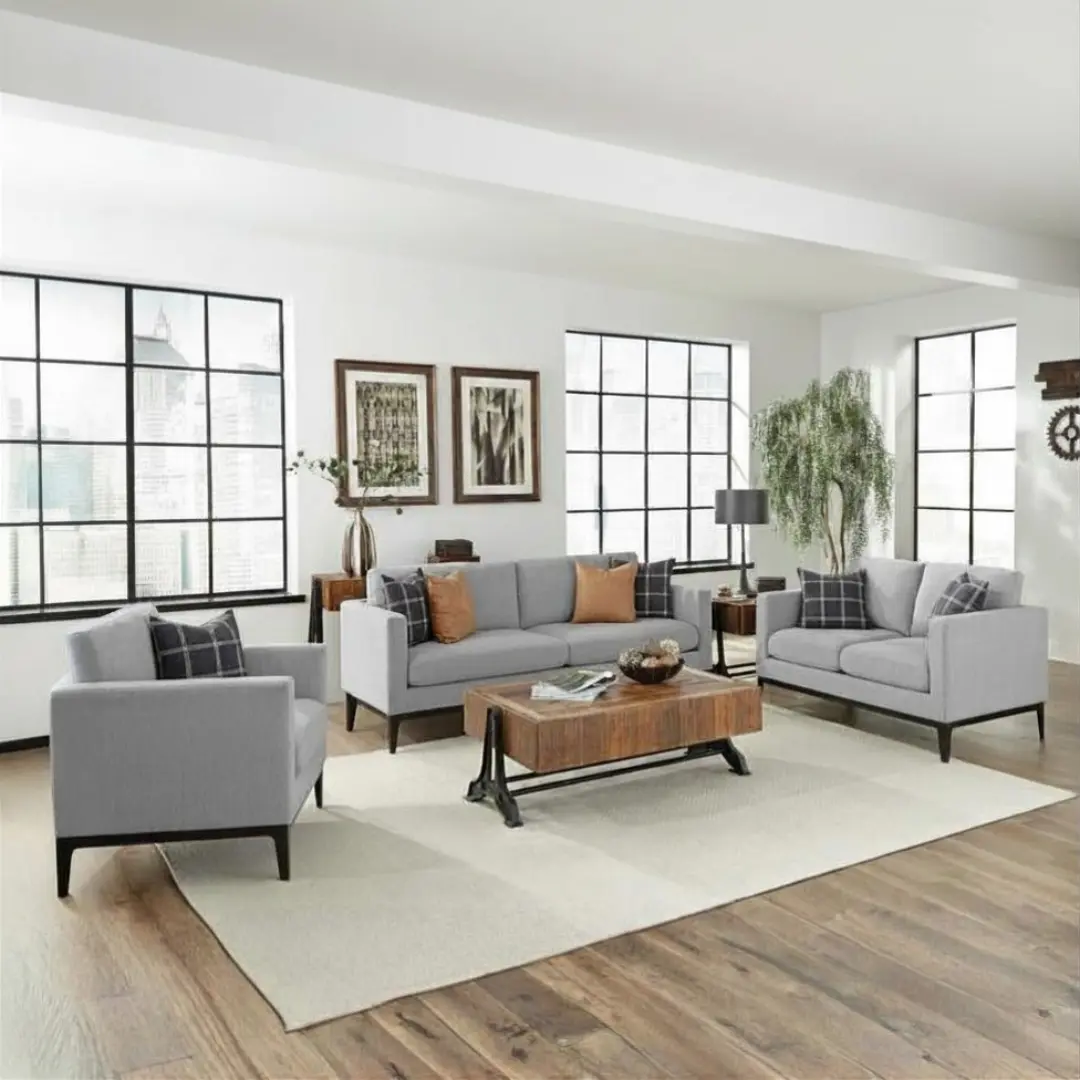
Apperson mid-century sofa set by Coaster Furniture
Play With Shape, Scale and Contrast
Once color and finish are under control, shape becomes your most powerful tool. Modern furniture tends toward straight lines, low profiles and open bases. Classic and vintage-inspired furniture tends toward curves, carving and visual weight. Placing the two side by side creates a pleasing tension, as long as scale is managed.
Pair opposites on purpose. A square-armed modern sofa looks softer next to a round, carved coffee table, and a curvy Rococo-inspired chair looks crisper beside a rectangular glass side table. When shapes alternate, the eye keeps moving.
Watch the visual weight. Many traditional and Victorian-style designs are substantial, with tall backs and heavy bases. Spread heavier pieces around the room rather than grouping them on one side, and give each some open space. Raised legs on modern sofas and tables let light pass underneath and keep the room from feeling crowded.
The coffee table deserves special attention because it sits at the center of every seating group. It is often the easiest place to introduce contrast. A glass or marble table can lighten a room full of carved wood, while a carved or gilded table can give a minimalist room its focal point. Browse coffee tables in modern and classic styles with your sofa’s lines in mind, and choose the opposite of what the sofa already offers.
Symmetry is the final tool. Matched pairs, such as two classic chairs flanking a modern fireplace, give a mixed room an orderly frame that makes the stylistic contrast feel calm.
Choosing Seating That Works With Both Modern and Vintage Furniture
Seating takes up the most space in a living room, so it does most of the work in a mixed scheme. The sofa usually sets the baseline, and chairs provide the contrast.
The sofa: a calm foundation
For most mixed rooms, the safest choice is a sofa with a clear, uncomplicated silhouette in a solid fabric. It acts as a neutral stage for more expressive pieces. If you prefer a more traditional room, a camelback or rolled-arm sofa in a solid, quiet fabric still works, as long as the surrounding accents are simpler. Browsing a range of sofas from tailored to traditional helps you compare arm shapes, back heights and leg styles side by side.
Accent chairs: where the character lives
Accent chairs are the easiest way to add vintage character without committing an entire room to it. A pair of tufted, carved or wingback chairs opposite a modern sofa instantly creates the old-and-new dialogue designers aim for. You can also reverse the formula: put a sleek, sculptural chair beside a classic sofa. Our selection of accent chairs includes both directions, so you can test what your room needs.
Practical checks for mixed seating
- Seat height: keep seats in a conversation group at a similar height so guests sit at the same eye level.
- Arm height: mismatched arms are fine, but tables beside each seat should still be within easy reach.
- Fabric: pick upholstery that suits how you live. Velvet and silk-look fabrics are luxurious, while tighter weaves and leather are easier to maintain in busy homes.
How to Shop for Furniture That Blends Modern and Vintage Styles
Shopping for a mixed room is different from buying a coordinated set. Instead of asking “does this match?”, ask “does this relate?”
- Start with what you already own. Photograph your heirlooms or vintage finds and note their wood tone, metal finish and dominant shape. These become the reference points for every new purchase.
- Measure the room and the anchor pieces. Scale mistakes are the hardest to fix. Note sofa length, coffee table height and the clearance you need for walkways.
- Buy the foundation first. Choose the sofa and rug before smaller accents. A complete living room set can be a smart base for a modern-led room, because it gives you a consistent backdrop to which you can add one or two classic accent pieces.
- Look for “bridge” pieces. Some designs naturally straddle eras: a sofa with a clean back but subtly turned legs, a side table with a classic shape in a modern finish, a mirror with a simple frame in antiqued gold. These help the bolder pieces relate to each other.
- Add character pieces last. Once the base is in place, you will see exactly where a carved table, a pair of classic chairs or a statement cabinet will have the most impact.
Style-specific collections are useful at this stage. Browsing French-style furniture, for example, shows how gentle curves, cabriole legs and antiqued finishes can introduce old-world grace in a single piece. If you want a cleaner counterpoint, the modern and contemporary styles offer the simple lines that let classic designs stand out.
For a one-of-a-kind statement piece, Mobilia Cleopatra’s Kleopatra Kingdom collection is handmade, and it can serve as the heirloom-quality anchor of a room. For broader buying advice on sizing, layout and materials, see our guide on how to choose living room furniture.
Common Mistakes to Avoid When Mixing Furniture Styles
Even well-chosen pieces can clash if the overall plan slips. Watch for these common issues.
- Splitting styles 50/50. When neither style leads, the room feels undecided. Pick one to dominate.
- Too many statement pieces. One or two showpieces get noticed. Five compete with each other, and none of them shines.
- Ignoring undertones. A red-toned cherry piece next to a yellow-toned oak floor and a gray-washed table can look accidental. Keep wood undertones related, or separate very different woods with a rug or a painted piece.
- Clustering by era. Placing all vintage-inspired pieces in one corner and all modern pieces in another creates two rooms in one. Mix them within each grouping.
- Overfilling surfaces. Mixed rooms look best with breathing room. Group small objects on a tray and leave some surfaces clear.
If you own a genuine antique, protect it while it becomes part of daily life. Keep it out of direct sun and away from heating vents, use coasters and felt pads, and consult a professional conservator before cleaning, refinishing or repairing a valuable piece.
Frequently Asked Questions
How do I choose furniture that blends vintage and contemporary elements?
Start by deciding which style will lead, then choose pieces from the other style that share at least one element with the room: a color, a wood tone, a metal finish or a shape. Look for bridge pieces, such as a clean-lined sofa with classic turned legs or a traditional silhouette in a modern finish. Judge each piece by scale and silhouette before era, and keep the backdrop neutral so the mix reads as intentional.
How do stylish people mix vintage and modern furniture at home?
They keep the bones of the room simple and let a few characterful pieces do the talking. A calm modern sofa, plain walls and good lighting form the base, and a carved table, ornate mirror or family heirloom provides personality. They repeat colors and finishes across old and new pieces and edit often.
How do I choose seating that works with both modern and vintage furniture?
Choose a sofa with a simple, solid-color silhouette as the foundation, then add contrast through accent chairs. Classic wingback, tufted or carved chairs work beautifully opposite a modern sofa, and a sculptural modern chair can freshen a traditional sofa. Keep seat heights similar within a conversation group, and make sure every seat has a table within reach.
How do you incorporate vintage furniture into a modern home?
Begin with one meaningful piece and give it a prominent spot, such as a console in the entry or a cabinet in the living room. Surround it with simpler modern furniture, repeat its color or finish elsewhere in the room, and add more vintage or vintage-inspired pieces gradually while the room still feels open.
Can you mix antique and modern furniture in the same living room?
Yes. Antique and modern furniture often look better together than either does alone, because the contrast highlights the craftsmanship of the older piece and the clean lines of the newer one. Keep one style dominant, manage the visual weight of heavier antique pieces, and protect valuable antiques from sun, heat and spills. For cleaning or repair of a valuable antique, consult a professional conservator.
What is the 80/20 rule for mixing furniture styles?
The 80/20 rule is a designer guideline suggesting that roughly 80 percent of a room follow one main style while about 20 percent introduces a contrasting style. It is not a strict formula, and many rooms work at 70/30, but it is a helpful reminder to let one style lead so the room feels cohesive.
Does Mobilia Cleopatra sell vintage or antique furniture?
No. Mobilia Cleopatra sells new furniture, including Victorian-style, French-style and traditional designs, modern and contemporary pieces, and the handmade Kleopatra Kingdom collection. These new classic-style pieces pair well with modern furniture or with vintage pieces you already own. For help planning a mixed room, call our team at (909) 999-1442.
Bringing Old and New Together With Confidence
Blending modern and vintage furniture is less about following rules and more about creating balance. Let one style lead, build around a single statement piece and repeat a few colors, woods and finishes so every era in the room feels connected. Use contrast in shape and texture to keep the space interesting, and leave enough breathing room for the special pieces to be seen.
The result is a living room that feels personal and layered, and that can grow with you as you add new finds over time, whether your vintage element is an heirloom or a newly made Victorian- or French-style piece.
For help choosing pieces that bridge both worlds, call the Mobilia Cleopatra design team at (909) 999-1442. At our Upland showroom at 280 N Benson Ave, Suite 6, Upland, CA 91786, you can see classic and modern designs side by side.
