Free shipping · 0% for 6 months · White-glove available


How Egyptian Handmade Furniture Is Made


Egyptian handmade furniture has long occupied a distinctive place in the world of luxury interiors. Known for its intricate detailing, solid wood construction, and old-world artistry, this style of furniture blends generations of craftsmanship with refined European influences to create pieces that feel timeless, elegant, and deeply personal. In today’s luxury furniture market, where many consumers are moving away from mass-produced furnishings in favor of heirloom-quality design, handcrafted Egyptian furniture continues to stand out for its authenticity and artisanal value.
Unlike factory-made furniture that prioritizes speed and uniformity, handmade Egyptian furniture is rooted in patience, precision, and human expertise. Every carved frame, upholstered headboard, gilded accent, and polished surface reflects countless hours of skilled labor. From selecting premium hardwoods like solid beech wood and mahogany to applying hand-finished detailing inspired by Rococo, Baroque, and French Classical interiors, the process is remarkably meticulous.
For discerning homeowners and interior designers in the United States, understanding how Egyptian handmade furniture is made offers more than insight into craftsmanship. It reveals why bespoke luxury furniture commands lasting value and why artisan-built pieces remain central to sophisticated interior spaces. High-end handcrafted furniture is not simply decorative; it represents structural integrity, personalized design, and a connection to centuries of furniture-making traditions.
At Mobilia Cleopatra, craftsmanship remains at the center of every collection. The brand’s approach combines traditional woodworking techniques with elevated luxury standards, creating custom furniture pieces that reflect both heritage artistry and contemporary refinement. To appreciate the true value of handmade luxury furniture, it is essential to understand the journey each piece takes—from raw wood and artisan sketches to the finished statement furniture found in elegant living rooms, bedrooms, and palace-inspired interiors.
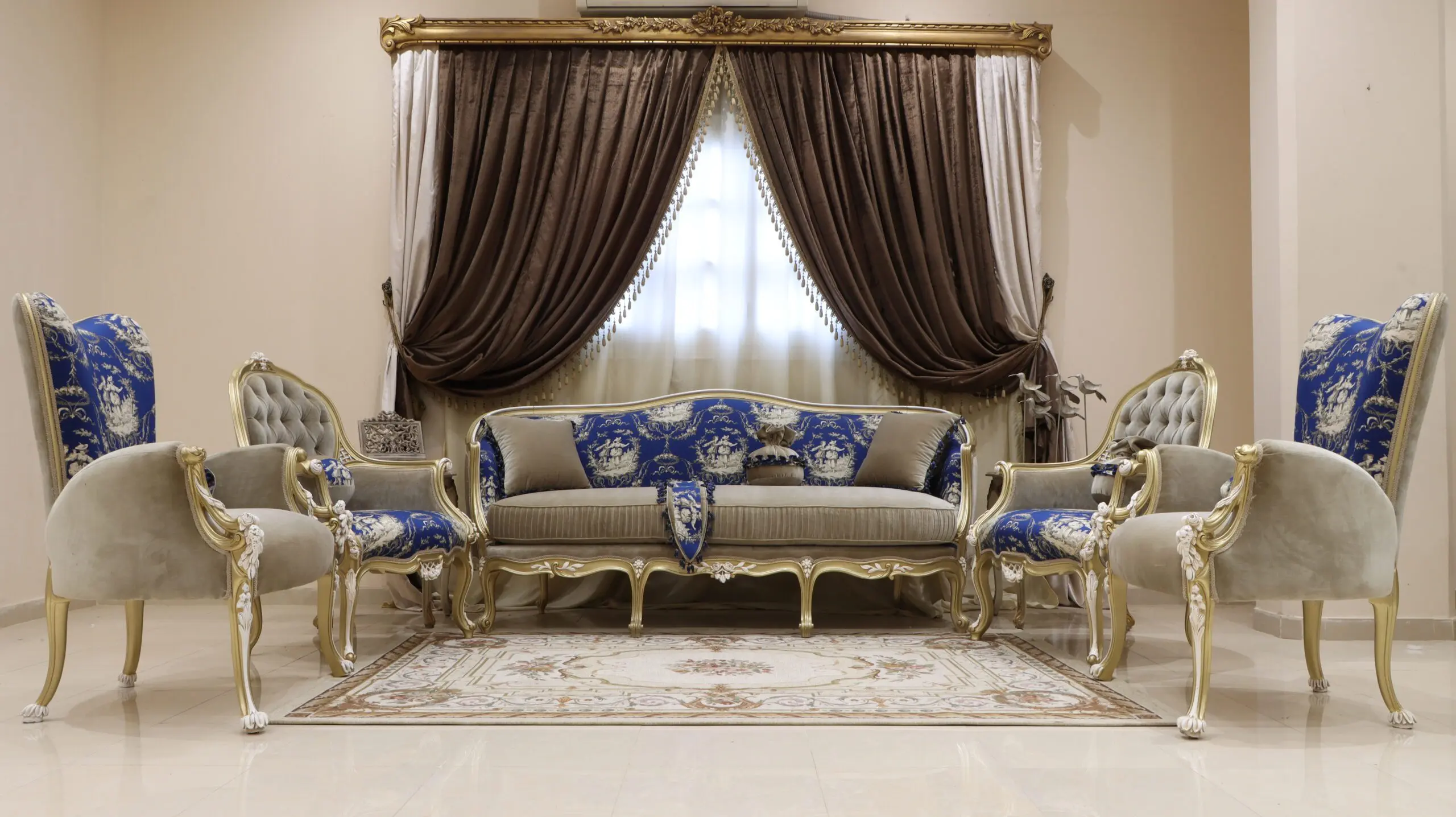
Egyptian Handmade Furniture
The Heritage Behind Egyptian Handmade Furniture
Egyptian handmade furniture is deeply connected to a long tradition of artisan woodworking and decorative craftsmanship. While Egypt is globally recognized for its ancient architectural heritage, its furniture-making traditions have also evolved through centuries of cultural exchange, artistic development, and luxury design influences. Today’s handcrafted Egyptian furniture reflects a fusion of Middle Eastern artistry and European classical sophistication, resulting in furniture pieces known for ornate carving, structural durability, and luxurious detailing.
Furniture craftsmanship in Egypt has historically been passed from one generation to another through family-run workshops and artisan studios. Skilled woodworkers spend years mastering carving techniques, frame construction, upholstery tailoring, and decorative finishing methods before producing luxury pieces independently. This apprenticeship-based approach preserves traditional woodworking methods that are increasingly rare in large-scale furniture manufacturing.
European influence played a major role in shaping modern Egyptian luxury furniture aesthetics. Styles such as Louis XV, Louis XVI, Victorian, Rococo, and Baroque became especially influential in high-end Egyptian interiors during the nineteenth and twentieth centuries. Egyptian artisans adapted these styles using local craftsmanship traditions, creating a distinctive interpretation of French Classical and palace-style furniture design.
This combination of European inspiration and Egyptian artisan expertise remains central to modern handcrafted furniture collections. Curved silhouettes, floral motifs, gilded ornamentation, tufted upholstery, and hand-carved wood detailing are still widely used in luxury bedroom furniture, dining collections, and formal living room interiors.
For luxury furniture buyers in the United States, this heritage represents more than visual beauty. It signifies continuity, craftsmanship, and authenticity in a market increasingly dominated by mass production. Handmade Egyptian furniture carries a sense of permanence and individuality that machine-produced furnishings often lack. Every carved detail and polished finish reflects the hands of skilled artisans rather than automated assembly lines, giving each piece a level of character that cannot be replicated through industrial manufacturing.
What Makes Handmade Egyptian Furniture Different From Mass Production
The difference between handmade Egyptian furniture and mass-produced furniture begins with philosophy. Artisan-made furniture prioritizes craftsmanship, customization, and structural integrity, while factory manufacturing focuses primarily on efficiency, volume, and cost reduction. This distinction becomes visible in every stage of production, from materials selection to final finishing.
Mass-produced furniture is often manufactured using engineered wood, automated cutting systems, and assembly-line construction. While these methods allow companies to produce furniture quickly and inexpensively, they frequently compromise longevity and design individuality. In contrast, handcrafted Egyptian furniture is built through a labor-intensive process that emphasizes precision and detail.
One of the most important distinctions lies in the construction methods. Handmade luxury furniture typically relies on traditional joinery systems such as mortise and tenon construction rather than staples or synthetic fasteners. These methods create stronger structural stability and allow furniture to maintain durability over decades of use. Skilled artisans carefully assemble each frame by hand, ensuring balance, proportion, and strength.
Customization also plays a significant role. Bespoke Egyptian furniture is often created according to specific client preferences, allowing adjustments in dimensions, upholstery fabrics, wood finishes, decorative carvings, and luxury detailing. This level of personalization is difficult to achieve within mass manufacturing environments where standardized production limits flexibility.
Another defining characteristic is artistic individuality. Hand carving introduces subtle variations that make every piece unique. Whether it is an ornate Rococo sofa, a tufted headboard, or a carved dining table, artisan detailing creates visual depth that automated production methods cannot reproduce authentically.
Luxury consumers increasingly value this distinction because handmade furniture offers emotional and functional longevity. Rather than purchasing disposable furnishings designed around trends, buyers invest in heirloom-quality pieces intended to remain relevant for generations. Handmade Egyptian furniture therefore represents not only aesthetic luxury but also craftsmanship-driven value rooted in authenticity, durability, and timeless design principles.
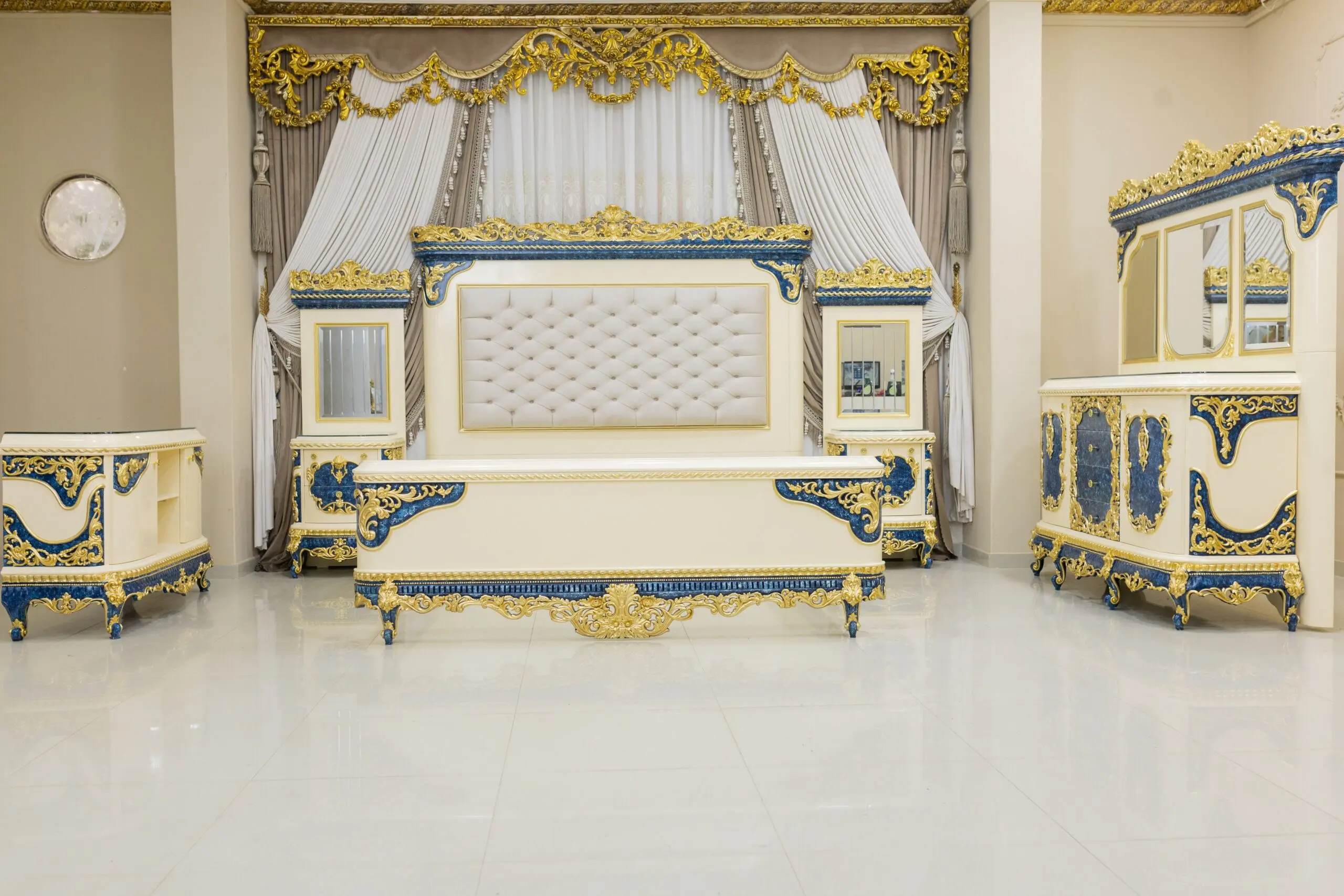
Egyptian Handmade Furniture
Selecting Premium Materials for Luxury Furniture
Exceptional handmade furniture begins with exceptional materials. In luxury Egyptian furniture manufacturing, the quality of wood, upholstery, metals, and decorative elements directly affects both visual sophistication and structural performance. Premium materials are carefully selected not only for appearance but also for durability, longevity, and compatibility with traditional craftsmanship techniques.
Solid beech wood is among the most commonly used materials in handcrafted Egyptian furniture due to its strength, stability, and carving capabilities. Its dense grain structure allows artisans to execute intricate decorative carving without compromising the integrity of the frame. Mahogany, walnut, and oak are also frequently incorporated into luxury furniture collections because of their rich coloration and long-term durability.
Unlike mass-produced furniture that often relies on particleboard or engineered materials, handmade luxury furniture uses solid hardwood construction to ensure structural stability. This is especially important for large statement pieces such as carved beds, dining tables, and formal seating collections.
Upholstery materials further elevate the luxury experience. Velvet upholstery remains highly popular for classic Egyptian interiors because of its rich texture and elegant visual depth. Silk fabrics, linen upholstery, and premium woven textiles are also commonly used depending on the design style and level of formality desired. Upholstery tailoring is performed manually to ensure clean lines, symmetrical tufting, and refined finishing.
Decorative accents contribute another layer of sophistication. Gold leaf detailing, brass hardware, marble tops, and crystal embellishments are frequently incorporated into luxury furniture pieces inspired by palace-style interiors. These elements require careful hand application to maintain consistency and craftsmanship quality.
Material selection also impacts the longevity of furniture. High-density foam cushioning improves comfort retention, while natural wood veneers and lacquer finishes protect surfaces from wear over time. Every component is chosen with both beauty and functionality in mind.
At Mobilia Cleopatra, the emphasis on premium materials reflects a commitment to creating furniture that feels substantial, refined, and enduring. The result is furniture that not only enhances luxury interiors visually but also maintains structural and aesthetic quality for years to come.
The Furniture Design and Customization Process
The creation of handmade Egyptian furniture begins long before artisans start carving wood or applying upholstery. Every luxury furniture piece starts with a carefully planned design process focused on proportion, functionality, and aesthetic harmony. In bespoke furniture manufacturing, this stage is critical because it transforms conceptual inspiration into personalized interior solutions.
The process often begins with sketches or digital renderings that establish the overall silhouette and decorative direction of the piece. Designers consider architectural proportions, interior style preferences, room dimensions, and intended functionality before finalizing the design. Whether creating a grand Louis XVI bedroom set or a Rococo-inspired living room sofa, precision during the planning stage ensures visual balance throughout the final product.
Customization is one of the defining features of luxury handmade furniture. Unlike mass-produced collections with fixed dimensions and limited finishes, bespoke furniture allows clients to personalize nearly every element. Upholstery fabrics, wood stains, decorative carvings, gilded accents, tufting patterns, and sizing can all be tailored to complement specific interior spaces.
Interior coordination also plays a major role in custom furniture design. Designers frequently work alongside homeowners, architects, or interior decorators to ensure each furniture piece integrates seamlessly into the broader environment. In palace-style interiors or luxury residential projects, consistency between furniture, wall treatments, flooring, lighting, and decorative accessories is essential for achieving a cohesive visual identity.
Once the design is approved, artisans create production templates that guide woodworking, carving, and upholstery teams throughout manufacturing. Measurements must remain exact to preserve structural symmetry and decorative alignment. Even small inconsistencies can affect the final appearance of handcrafted luxury furniture.
This personalized approach is one reason high-end handmade furniture remains highly valued in the American luxury market. Clients are not simply purchasing furniture; they are commissioning pieces designed specifically for their lifestyle and aesthetic preferences. The result is furniture that feels deeply intentional, architecturally harmonious, and impossible to duplicate through mass production.
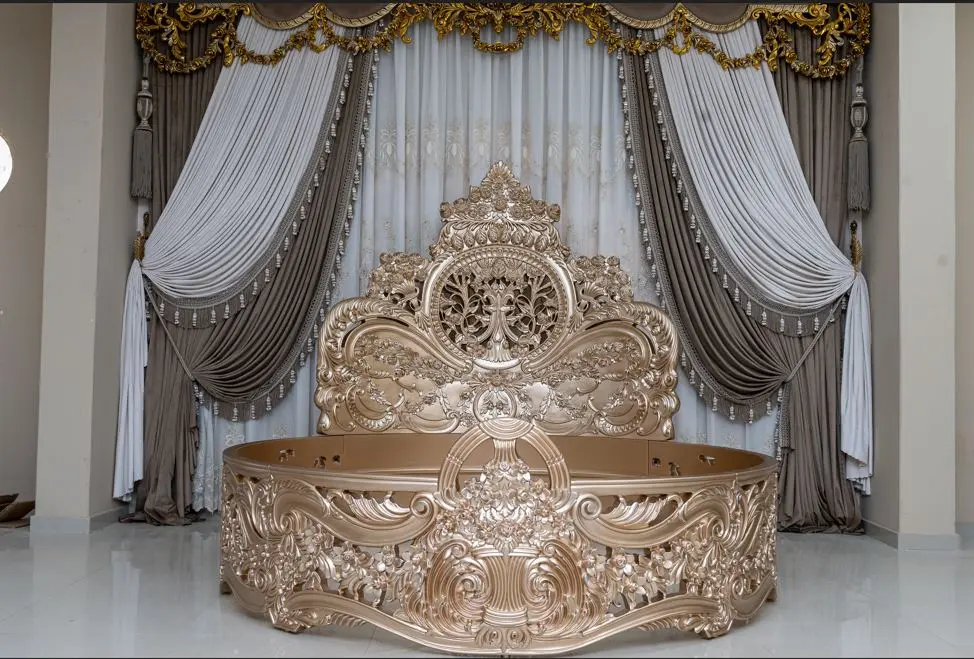
Egyptian Handmade Furniture
How Artisan Woodworkers Build Handmade Furniture Frames
The structural frame is the foundation of every handmade furniture piece. In luxury Egyptian furniture manufacturing, the quality of frame construction determines not only durability but also the long-term performance and stability of the furniture itself. Skilled artisan woodworkers approach frame building with a level of precision rarely found in automated manufacturing environments.
The process begins with selecting and preparing hardwood materials. Solid beech wood is particularly valued because it provides strength while remaining workable enough for carving and shaping. Before construction begins, wood is properly seasoned and dried to reduce the risk of future warping or cracking.
Traditional woodworking methods remain central to frame construction. Rather than relying heavily on industrial fasteners or synthetic adhesives, artisans use mortise and tenon joinery systems that physically interlock wood components together. This centuries-old technique improves structural stability and creates stronger furniture capable of lasting for generations.
Each frame component is cut, assembled, and reinforced by hand. Artisans carefully inspect alignment, weight distribution, and proportional balance throughout the process. Curved arms, carved legs, and decorative frames require especially advanced woodworking skills because structural integrity must be maintained even within highly ornamental designs.
Frame construction also varies depending on the furniture category. Luxury beds require reinforced support systems capable of handling long-term pressure and weight distribution, while formal seating collections demand ergonomic precision and stability. Dining tables and cabinets must balance visual elegance with everyday functionality.
Unlike factory-built furniture that prioritizes rapid assembly, handcrafted furniture manufacturing allows artisans to refine each structural detail individually. Minor adjustments are made throughout the process to improve durability, comfort, and finishing quality.
The result is furniture that feels substantial, stable, and enduring. Well-constructed handmade furniture often outlasts mass-produced alternatives by decades because its structural integrity is rooted in traditional craftsmanship rather than production speed. This commitment to construction quality is one of the defining characteristics that distinguishes luxury handcrafted furniture from disposable furniture manufacturing.
The Art of Hand Carving and Decorative Detailing
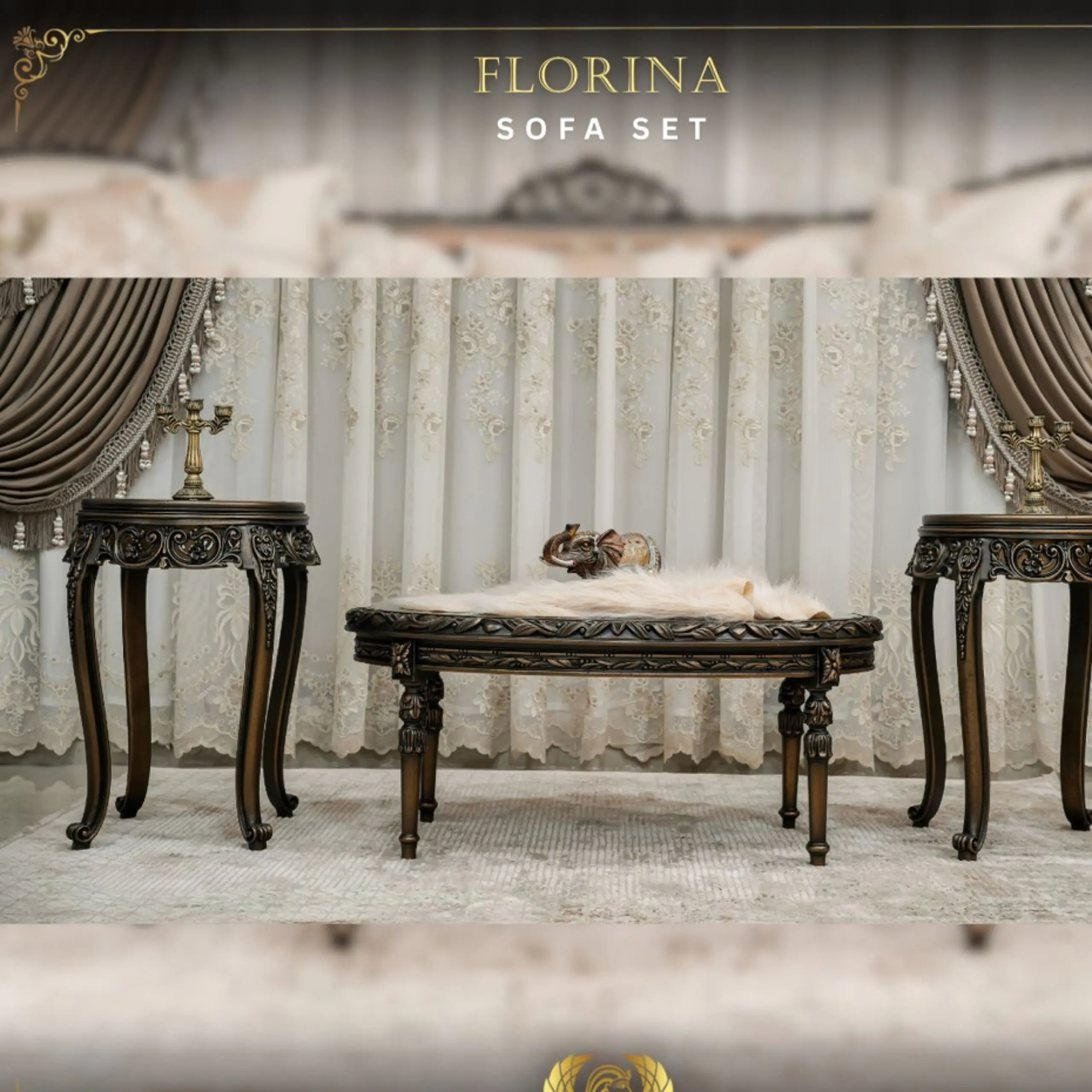
Hand carving is one of the most recognizable characteristics of Egyptian handmade luxury furniture. This decorative process transforms solid wood into sculptural artwork, giving furniture depth, elegance, and architectural character. In many luxury interiors, carved detailing becomes the defining visual feature that elevates a piece from functional furniture to artisanal design.
The carving process requires years of technical training and artistic discipline. Skilled artisans use specialized tools to shape floral motifs, scrollwork, acanthus leaves, crown details, and ornamental relief patterns directly into hardwood surfaces. Each carved section must maintain symmetry while preserving the structural integrity of the furniture frame beneath it.
Rococo and Baroque influences remain especially prominent in Egyptian luxury furniture carving. These styles emphasize movement, curvature, ornamentation, and dramatic visual layering. Curved sofa frames, carved cabriole legs, decorative crowns, and elaborate mirror detailing are commonly inspired by classical European interiors while reflecting Egyptian craftsmanship traditions.
Decorative molding is often applied manually to enhance architectural definition. Furniture artisans carefully layer carved trim, gilded accents, and ornamental borders to create depth and sophistication. In palace-style interiors, these details contribute to the luxurious atmosphere associated with traditional European-inspired design.
Hand-applied gold finishes and gilded detailing further enhance carved furniture pieces. Rather than using factory coating methods, artisans often apply antique gold finishes manually to highlight decorative contours and preserve dimensional texture. This process creates a softer, more refined appearance than machine-applied metallic finishes.
One of the most valuable aspects of hand carving is individuality. Because carving is executed manually, no two pieces are completely identical. Subtle variations in texture, depth, and detailing give handmade furniture a sense of authenticity that mass production cannot replicate.
For luxury homeowners and designers, these details communicate craftsmanship immediately. Intricate carving reflects both artistic mastery and production time, reinforcing the exclusivity associated with bespoke furniture. In many ways, decorative carving remains the clearest visual expression of true artisan-made luxury furniture.
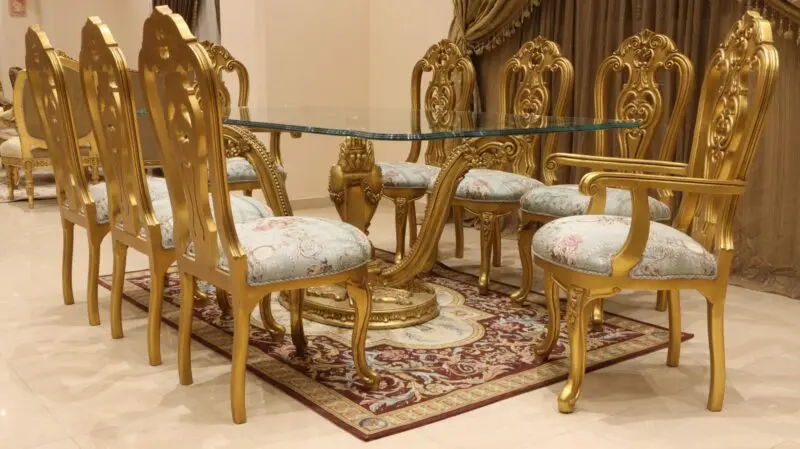
Egyptian Handmade Furniture
The Upholstery Process in Luxury Egyptian Furniture
Upholstery is one of the final stages that brings handmade luxury furniture to life. Beyond comfort, upholstery defines much of a piece’s visual personality, influencing how it interacts with light, texture, and surrounding interior elements. In handcrafted Egyptian furniture, upholstery is treated as an artisanal discipline requiring technical precision and aesthetic refinement.
The process begins with preparing the cushioning structure. Premium foam cushioning is layered carefully to achieve both comfort and shape retention. High-density materials are preferred because they maintain support and prevent premature sagging over time. Luxury seating collections often incorporate multiple cushioning layers to create a balance between softness and durability.
Once the cushioning is complete, artisans begin upholstery tailoring. Fabrics must be measured, cut, and stretched with extreme accuracy to maintain clean lines and proper tension. Symmetry is especially important in classical luxury furniture where tufting patterns, decorative seams, and fabric alignment contribute significantly to visual elegance.
Button tufting is frequently used in handcrafted Egyptian furniture, particularly in upholstered beds, sofas, and accent chairs inspired by Victorian or French Classical interiors. Deep tufting creates dimensional texture while reinforcing the luxurious appearance associated with palace-style design.
Velvet upholstery remains a defining material in many luxury collections because of its rich texture and ability to enhance carved frames and gilded detailing. Silk fabrics introduce a more formal elegance, while linen upholstery offers a softer and more transitional interpretation of classic luxury interiors.
Artisans also pay close attention to finishing details such as decorative piping, nailhead trim, and concealed stitching. These subtle elements contribute to the refined appearance expected in high-end handmade furniture.
Because upholstery is completed manually, artisans can customize fabrics, colors, textures, and detailing according to the client’s preferences. This flexibility allows homeowners and interior designers to coordinate furniture precisely with broader interior palettes and architectural themes.
The result is furniture that feels visually layered, comfortable, and highly personalized. Upholstery is not simply a finishing step; it is an essential part of the craftsmanship process that defines both the tactile and visual luxury of handmade Egyptian furniture.
How Mobilia Cleopatra Preserves Traditional Handmade Craftsmanship
In a furniture industry increasingly driven by automation and rapid production cycles, preserving traditional craftsmanship has become both a challenge and a responsibility. Mobilia Cleopatra approaches luxury furniture manufacturing with a commitment to maintaining the artisanal methods that define authentic handmade Egyptian furniture while adapting them to the expectations of modern luxury interiors.
The brand’s production philosophy centers on handcrafted quality rather than mass output. Skilled artisans remain involved throughout every stage of manufacturing, including frame construction, decorative carving, upholstery tailoring, finishing, and quality inspection. This hands-on process ensures that each piece reflects the precision and individuality associated with true luxury craftsmanship.
Customization is another key part of the brand’s approach. Rather than offering only standardized collections, Mobilia Cleopatra emphasizes bespoke furniture production that allows clients to personalize dimensions, finishes, fabrics, carving details, and decorative accents. This flexibility supports interior designers and homeowners seeking furniture tailored specifically to their architectural spaces and lifestyle preferences.
Traditional techniques remain central to the manufacturing process. Mortise and tenon joinery, hand carving, wood polishing, gilding, and artisan upholstery methods continue to be integrated into modern furniture collections. These techniques not only preserve historical craftsmanship traditions but also improve the durability and longevity of the furniture itself.
At the same time, the brand incorporates modern quality standards and design expectations. Furniture must perform well within contemporary luxury homes while retaining the timeless elegance associated with classical craftsmanship. This balance between heritage artistry and modern refinement allows handmade Egyptian furniture to remain relevant within today’s luxury interior market.
For American consumers, transparency in craftsmanship has become increasingly important. Understanding how furniture is made, what materials are used, and who creates each piece helps establish trust and long-term value. Mobilia Cleopatra’s emphasis on artisanal production offers an alternative to disposable furniture culture by prioritizing craftsmanship, customization, and enduring design quality.
Egyptian Handmade Furniture
FAQs
What is Egyptian handmade furniture?
Egyptian handmade furniture refers to artisan-crafted furniture produced using traditional woodworking, carving, upholstery, and finishing techniques. These furniture pieces are typically made by skilled craftsmen rather than automated machinery and often feature ornate detailing inspired by European classical styles such as Rococo, Baroque, and Louis XVI.
How is handmade Egyptian furniture made?
The process begins with design planning and material selection, followed by handcrafted frame construction using solid hardwoods. Artisans then perform carving, decorative detailing, upholstery tailoring, and finishing by hand. Traditional joinery methods such as mortise and tenon construction are commonly used to improve structural durability.
What wood is commonly used in Egyptian luxury furniture?
Solid beech wood is one of the most widely used materials because of its strength and carving capability. Mahogany, walnut, and oak are also frequently incorporated into luxury handcrafted furniture collections due to their durability and rich natural appearance.
Why is handcrafted furniture more expensive than factory-made furniture?
Handmade furniture requires significantly more labor, time, and technical expertise than mass-produced furniture. Skilled artisans individually construct, carve, upholster, and finish each piece, which increases production quality and long-term value. Premium materials and customization also contribute to higher pricing.
What makes luxury handmade furniture high quality?
High-quality handmade furniture combines premium materials, durable joinery systems, precise upholstery work, and detailed finishing techniques. Structural integrity, artisan craftsmanship, and customization all contribute to the elevated quality associated with luxury handcrafted furniture.
How long does it take to make custom handmade furniture?
Production timelines vary depending on complexity, carving detail, upholstery selection, and customization requirements. Highly detailed bespoke furniture pieces may require several weeks or even months to complete because every stage is performed manually.
What is mortise and tenon joinery in furniture making?
Mortise and tenon joinery is a traditional woodworking method where one piece of wood fits securely into another through an interlocking connection. This technique creates stronger structural stability than many modern assembly methods and is commonly used in heirloom-quality furniture construction.
Is Egyptian handmade furniture durable?
Yes. Handmade Egyptian furniture is often extremely durable because it uses solid hardwood construction, traditional joinery systems, and artisan craftsmanship techniques designed for longevity. Properly maintained handcrafted furniture can remain functional and visually appealing for generations.
What styles influence Egyptian luxury furniture design?
Egyptian luxury furniture is heavily influenced by French Classical, Rococo, Baroque, Victorian, Louis XV, and Louis XVI design traditions. These styles are often interpreted through Egyptian artisan craftsmanship, resulting in richly decorative and elegant furniture collections.
How can you tell if furniture is truly handmade?
Signs of genuine handmade furniture include hand carving variations, solid wood construction, detailed joinery, custom upholstery work, and individually applied finishes. Unlike machine-produced furniture, handmade pieces often display subtle differences that reflect artisan involvement.
What upholstery materials are used in luxury Egyptian furniture?
Velvet upholstery is especially common in luxury Egyptian interiors, though silk, linen, woven textiles, and premium custom fabrics are also frequently used. Upholstery materials are selected based on comfort, durability, and overall interior style.
Is handmade furniture a good long-term investment?
Handmade luxury furniture is often considered a strong long-term investment because of its craftsmanship quality, structural durability, and timeless design appeal. Unlike disposable furniture trends, heirloom-quality handcrafted furniture can retain both functional and aesthetic value for decades.
Conclusion
The process behind Egyptian handmade furniture reveals far more than decorative artistry. It reflects a philosophy of craftsmanship rooted in patience, technical skill, and a deep respect for materials and tradition. From solid hardwood frame construction and intricate hand carving to luxury upholstery tailoring and gilded finishing, every stage contributes to furniture that feels enduring, sophisticated, and uniquely personal.
In today’s luxury furniture market, consumers increasingly seek authenticity and long-term value rather than temporary trends. Handmade Egyptian furniture satisfies that demand by combining structural integrity with timeless design language inspired by classical European interiors and artisan woodworking heritage. Each piece carries the visual richness and individuality that can only be achieved through skilled human craftsmanship.
For homeowners, interior designers, and luxury buyers in the United States, understanding how handcrafted furniture is made provides important insight into quality, durability, and investment value. True luxury furniture is not defined solely by appearance. It is defined by the integrity of its materials, the expertise behind its construction, and the artistry embedded within every detail.
Mobilia Cleopatra continues to preserve these traditions by creating handcrafted furniture collections that balance heritage techniques with refined modern luxury standards. Through custom furniture production, artisan woodworking, and premium materials, the brand maintains the enduring legacy of Egyptian handmade craftsmanship while serving the evolving needs of contemporary luxury interiors.
As mass production continues to dominate much of the furniture industry, handmade Egyptian furniture remains a powerful reminder that exceptional craftsmanship cannot be rushed or replicated by automation. It is a form of functional art designed not only to furnish a home but also to create spaces filled with elegance, permanence, and character.
